



Properly assessing the actual situation, clearly identifying potential, and proposing feasible solutions are considered important bases for step-by-step promoting sustainable development of Sín Thầu tourism.
.jpg)
In the socio-economic picture of Sín Thầu commune, tourism is identified as a field with plenty of room for development. Especially, the areas of Tả Kố Khừ, A Pa Chải, and Tá Miếu villages are identified as spaces rich in potential for developing cultural tourism, ecotourism, experiential tourism, and border tourism.
According to assessments, these villages are located on the route to conquer the junction of the Vietnam - China - Laos border. The landscape here bears immense, majestic, and sacred beauty with green mountains and forests, pristine white ban flower seasons, and blooming wild sunflowers creating brilliant carpets of color that attract tourists. The pristine and unique natural space easily touches anyone who visits.
.jpg)
Sín Thầu has a fresh, dry climate, favorable for experiential tourism activities, exploration, and conquering nature. This is an attractive destination for tourists who love the journey to conquer the 4 poles: East - West - South - North of Vietnam.
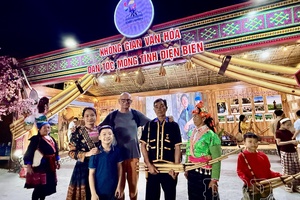
In addition, the villages still preserve relatively intact traditional cultural values of the Hà Nhì people. Many unique festivals are maintained, such as the Hồ Sự Chà traditional New Year, the Dế Khù Chà rainy season New Year, and the Gạ Ma Thú Village Worship Ceremony; among them, the Gạ Ma Thú Village Worship Ceremony has been recognized as a national intangible cultural heritage. This is a unique cultural resource, creating an important foundation for developing community tourism associated with preserving national identity.
.jpg)
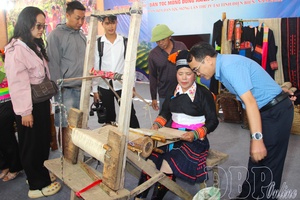
Furthermore, the Hà Nhì people still preserve traditional crafts such as pounding banh giay (sticky rice cakes), weaving conical hats, weaving household items, and manual sewing. Local cuisine with rustic dishes and distinct flavors of the westernmost land is an attractive factor, leaving an unforgettable impression on visitors. Besides, folk games, songs, and especially the warm hospitality style, expressed through traditional wine-offering tunes, contribute to creating a unique identity for community tourism here.
According to statistics, on average, there are about 2,000 visitors each year conquering the A Pa Chải milestone at the Vietnam - Laos - China border junction. In 2020 alone, despite the impact of the Covid-19 pandemic, 1,300 visitors were recorded. This is considered an important potential source of visitors for community tourism in Sín Thầu when organized and exploited methodically.
.jpg)
However, to date, Sín Thầu tourism has not yet become an economic sector with clear contributions. Tourism activities in the area are mainly spontaneous, small-scale, and lack master planning and long-term development orientation.
Visitors to Sín Thầu currently mostly travel in small groups, mainly visiting the A Pa Chải milestone, combined with experiencing nature and trekking. High seasonality and short stay duration, mainly within the day or one to two nights, make economic efficiency from tourism not commensurate with potential.
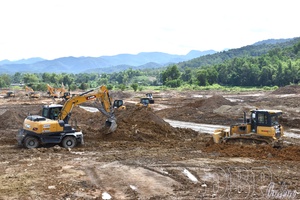
In addition, the system of technical facilities serving tourism in Sín Thầu still has many limitations. In the commune, there are almost no accommodation establishments meeting standards; food and accommodation services are mainly organized by people themselves, are temporary, and do not fully ensure conditions for environmental hygiene, food safety, and service quality. Community tourism is still in the nascent stage and has not formed a model point with spillover effects.
.jpg)
One of the biggest “bottlenecks” for Sín Thầu tourism development is transport infrastructure and auxiliary service infrastructure. The road from the provincial center to the commune is long, with many steep and winding sections; landslides often occur in the rainy season, causing difficulties for movement. Electricity, domestic water, and telecommunications systems in some villages are unstable; tourism institutions such as parking lots, public toilets, rest stops, signboards, and tourism information centers have hardly been invested in.
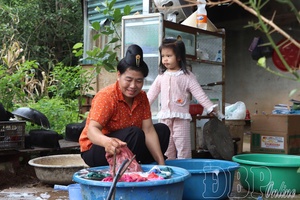
On-site tourism human resources are lacking and weak. Most people work in agriculture and have not been methodically trained in tourism operations, communication skills, service, and guiding guests. State management of tourism at the commune level faces many difficulties because officials in charge of culture - tourism work part-time, lack in-depth expertise, while the workload is increasing after implementing the two-level local government model.
Vice Chairman of Sín Thầu Commune People’s Committee Đỗ Thùy Giang said: “Sín Thầu tourism is facing the requirement to shift from spontaneous to oriented, from fragmented to methodical. Without master planning and synchronous investment in infrastructure and people, it is very difficult to effectively exploit the unique values that the locality possesses.”
From the above situation, Sín Thầu commune clearly determined the need to focus on consolidating the system of cultural and sports institutions and building a foundation for sustainable tourism development, associated with preserving indigenous cultural values and maintaining national defense - security in border areas.
.jpg)
According to Đỗ Thùy Giang, first of all, Sín Thầu commune orients to review and plan key tourist destinations such as A Pa Chải, Tá Miếu, and Tả Tố Khừ villages of the Hà Nhì people, the area associated with the 3-country junction milestone and A Pa Chải flagpole; gradually forming a community - culture - ecology - border tourism route, connecting with neighboring areas.
In particular, the preservation and promotion of traditional cultural values of the Hà Nhì ethnic group, from housing architecture, festivals, folk knowledge to community activities, are identified as important “soft resources” to create characteristic and distinct tourism products. Combined with the advantages of mountain and forest landscapes, cool climate, and rich vegetation, Sín Thầu has conditions to develop forms of ecotourism, nature experience, and trekking at an appropriate level, associated with environmental protection and sustainable livelihoods for people.
Emphasizing the locality’s determination, Đỗ Thùy Giang affirmed: “Sín Thầu commune wishes to continue receiving the attention and support of the province and departments and sectors to gradually remove difficulties in infrastructure, mechanisms, and policies. We determine that cultural and tourism development must go hand in hand with preserving identity, maintaining the border, and improving people’s lives.”
Diệp Chi
.jpg)
.jpg)
.jpg)
.jpg)
.jpg)

.jpg)

.jpg)
.jpg)
You have 500/500 characters left
Please enter 5 or more characters!!!