



In Tìa Dình commune, when a rural electrification project was launched, some households initially voiced their opposition. Some residents spoke frankly: garden land is the family’s livelihood and cannot be used arbitrarily for power poles. Others questioned why electricity intended to serve other areas required poles to be erected on their land.
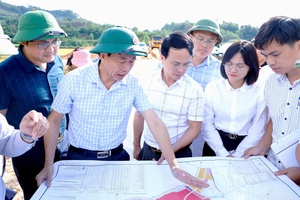
Diverging opinions made village meetings tense, at times seeming to leave little room for consensus. Faced with this reality, local authorities chose not to rush implementation. Meetings were reorganized, not to “announce plans”, but to allow residents to fully express their concerns. Maps of the power line route were displayed at the communal cultural house, with each pole location clearly identified. Some households requested that poles be relocated away from farmland; others asked for firm commitments to restore land after construction. Every concern was recorded, none dismissed as “too difficult.”
Once firmly opposed to allowing a power pole on his family’s production land, Vừ A Chía of Tìa Mùng village, Tìa Dình commune, recalled the project’s rollout. According to him, the biggest concern was the impact on livelihoods. “At first, I disagreed because our land is used year round for growing corn and cassava. Putting a power pole there would make cultivation very difficult. Later, the commune organized village meetings with commune officials, the Fatherland Front Working Committee, mass organizations, and the power company. Each pole location was discussed openly where it would cross farmland, where it could be avoided. People could monitor everything from surveying to construction. When I saw the work carried out exactly as agreed at the meetings, my concerns eased. When the lights finally came on and daily life became more convenient, I realized the decision had been the right one,” Chía said.
.jpg)
Thanks to this dialogue-based and consensus-driven approach, by early 2025, the national power grid had reached Tìa Dình, Na Son, Phình Giàng, Pu Nhi and Mường Luân communes, bringing electricity to 100 percent of villages.
In implementing the policy of building village cultural houses, Si Pa Phìn commune followed a people-centered approach, ensuring democracy and transparency from the preparation stage. For each component, the scope of impact, construction plans, and the rights and responsibilities of all parties were discussed openly so residents could understand, monitor and supervise the process.
As one of the affected households, Sùng A Cua of Mạy Hốc village said his family had also been concerned about the impact on their production land. However, seeing that the policy was clear and everything was discussed publicly, and understanding that the cultural house would serve the entire community, his family voluntarily donated 500 square meters of land.
In Nà Tấu commune, the Xôm-Pọng-Nậm Pọng inter-village road project was implemented under challenging conditions, especially during the rainy season when muddy dirt roads made travel and agricultural transport difficult. From the preparation stage, local authorities held meetings to fully inform residents about the policy, scale, plans and implementation timeline. After receiving the information, further meetings were organized for detailed discussions. Road maps were displayed at village cultural houses, with each section of the route, road width and drainage locations openly reviewed.
Lý A Páo of Nậm Pọng village recalled: “At village meetings, we asked very carefully which sections would be raised, which areas were prone to flooding, and where rainwater would flow. Officials explained clearly and even drew diagrams for us, so everyone understood how the road would be built.”
During construction, a Community Investment Supervision Board was established with representatives from the villages. Residents directly monitored earthworks, concrete pouring and drainage construction, comparing them with what had been agreed upon. At one point, villagers requested a recheck of road thickness in several low lying sections.
“We felt some sections were being done too quickly, so we asked for work to stop and be checked carefully. Once it was verified and done according to the agreement, people felt reassured”, Páo said.
Upon completion, the inter-village road was inspected and accepted with the participation of local residents.
Drawing from grassroots practice, the province has identified the implementation of grassroots democracy regulations as a consistent task in governance and administration, particularly in areas prone to disputes such as public investment, land clearance and rural infrastructure development. The focus is on transparency, dialogue, listening to and resolving grassroots feedback, and strengthening the role of the People’s Inspection Boards and Community Investment Supervision Boards, ensuring residents can monitor and supervise projects from the outset.
Speaking on efforts to promote grassroots democracy, Mùa A Vảng, alternate member of the Party Central Committee, Deputy Secretary of the provincial Party Committee and Chairman of the Vietnam Fatherland Front Committee of the province, said: “Practice shows that where people are involved in discussions from the beginning, fully informed, and able to directly monitor implementation, policies have a greater chance of taking root sustainably. Public oversight enhances transparency, builds trust and fosters a shared sense of responsibility within the community.”
As a new spring arrives, it brings renewed confidence and expectations among residents for livelihood oriented projects and policies implemented through consensus. At the grassroots level closest to the people and the clearest testing ground for policy effectiveness, when citizens are informed, consulted and able to follow implementation, each policy has the conditions to become a shared undertaking of the community and take hold in daily life in a lasting way.
Mai Khôi
.jpg)

.jpg)
.jpg)
.jpg)
.jpg)
.jpg)
.jpg)
.jpg)
.jpg)
.jpg)
You have 500/500 characters left
Please enter 5 or more characters!!!