Solving problem of redundancy and shortage of cadres at grassroots level

ĐBP - After one year of deploying the two-tier local government model, Điện Biên province has achieved many positive results in streamlining the apparatus, contributing to elevating the validity and efficiency of state management.

However, the operational process has also exposed local inadequacies, namely the imbalance of redundant and missing cadres among different localities and units. Confronted with this reality, the province has proactively deployed, rotated, and rearranged the cadre team to overcome human resource imbalances and step-by-step upgrade operational efficiency.

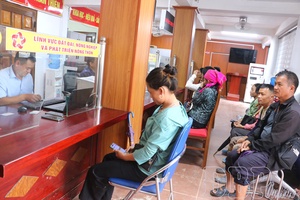
The entire province currently has 45 commune-level administrative units, including 3 wards and 42 communes, with more than 23,400 cadres, civil servants, and public employees. At the provincial level, specialized agencies were downscaled from 19 to 14, representing a 26.3% reduction, while dozens of departments, boards, and public career units were also restructured. At the commune level, 100% of localities have fully established specialized organs and Public Administration Service Centers, ensuring smooth operations under the new model.

However, the structural rearrangement has also resulted in an imbalance in human resources. While some central wards and communes experience a surplus of cadres post-merger, many deep, remote, and border communes suffer from a shortage of specialized personnel, particularly in the fields of justice, finance-accounting, and socio-cultural affairs.

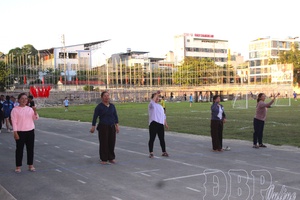
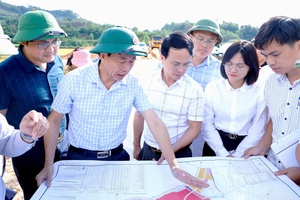
With the dedicated care of the province, Pu Nhi is one of the disadvantaged communes receiving many deployed and rotated cadres. In the photo: Pu Nhi commune cadres disseminate and mobilize residents to implement the guidelines and policies of the Party and State.

This human resource disparity leads to resource waste in redundant localities while directly undermining the quality of task execution in understaffed areas. Certain communes face hardships in resolving administrative procedures and deploying specialized tasks, especially as workloads intensify following accelerated decentralization and empowerment to the grassroots-level. Recognizing these field realities, Điện Biên province directed functional agencies to conduct a comprehensive review of the civil servant and cadre team based on job positions, professional capacity, and task requirements across each area. Consequently, functional bodies formulated plans to deploy, rotate, and reallocate personnel from surplus locations to deficit areas, ensuring alignment with professional expertise and practical demands.

The policy was swiftly materialized through deployment drives conducted in May 2026. In Mường Thanh ward, four cadres were transferred to work in Pu Nhi and Thanh An communes. Simultaneously, Điện Biên Phủ ward also deployed numerous civil servants from the Fatherland Front block and socio-political organizations to take up duties in understaffed localities.

Personnel rearrangement is also being actively executed internally within each locality. For instance, Mường Chà commune redeployed nine cadres and civil servants between the government block, the party block, and socio-political organizations, supplemented personnel for the Commune General Service Center, and rotated several cadres to other understaffed communes.

Nguyễn Hữu Đại, Chairman of the Mường Chà commune People’s Committee, noted: “The adjustments are executed under the principles of publicity and transparency, based on job positions and the practical capacity of cadres, aiming to maximize individual strengths while ensuring the overall balance of the apparatus.”

The results after one year of operating the two-tier local government model demonstrate that the arrangement and allocation of cadres have been drastically executed. The Organizing Board of the provincial Party Committee issued deployment decisions for 1,428 cadres, civil servants, and public employees, while the Department of Home Affairs decided on the deployment of 2,038 cadres and civil servants, alongside transferring 14,273 public employees and workers to the 45 commune-level administrative units.

To date, communes and wards basically guarantee the number of cadres and civil servants according to the temporary quotas prescribed in the guidelines and directives of the Government and the province. Specifically, the total number of cadres and civil servants in the communal government block stands at 1,593 people out of a quota of 1,535, representing a surplus of 58 individuals, while the Party block records 1,247 people out of a quota of 1,193, representing a surplus of 54 individuals. The remaining redundant personnel will continue to undergo downsizing according to a designated roadmap leading up to 2030.

Reality demonstrates that these deployments and rotations have contributed to overcoming cadre shortages in many localities, timely supplementing human resources for specialized fields, upgrading work resolution quality, and easing pressure on the grassroots-level cadre team. The personnel restructuring also minimizes surpluses in central wards, creating conditions for cadres to train and accumulate practical experience within new working environments. These initial results reflect the province’s firm determination to elevate the operational validity and efficiency of the two-tier local government model. Through a proactive, flexible, and methodical approach, the local problem of redundant and missing cadres is being step-by-step resolved, contributing to ensuring that the grassroots-level apparatus operates smoothly to meet development and public service demands.

Hà Linh
Comment

You have 500/500 characters left

Please enter 5 or more characters!!!

Recent news

  • 'New health insurance policy brings greater benefits to participants

    New health insurance policy brings greater benefits to participants

    SOCIAL AFFAIRS -
    ĐBP - From July 1, 2026, a series of new health insurance regulations officially came into effect, providing participants with broader and more practical benefits. Higher reimbursement levels, expanded coverage and stronger application of digital technology in management and supervision are expected not only to reduce the financial burden of medical treatment but also to strengthen social welfare across Điện Biên province.
  • 'Crop diversification opens new economic opportunities in ethnic minority areas

    Crop diversification opens new economic opportunities in ethnic minority areas

    ECONOMY -
    ĐBP - Converting low-yield farmland into high-value perennial industrial crops and fruit trees has become a key strategy in Điện Biên province’s agricultural restructuring. Across mountainous and border areas, selecting crops suited to local soil and climate conditions while promoting value chain production has delivered encouraging results. The approach is gradually transforming traditional farming practices, increasing household incomes and creating sustainable livelihood opportunities for ethnic minority communities.
  • 'Ripe pineapple season on Phình Giàng hillsides

    Ripe pineapple season on Phình Giàng hillsides

    ECONOMY -
    ĐBP - These days, across the highland hillsides of Phình Giàng commune, the bustling atmosphere of harvesting pineapples spreads throughout the villages. Amidst the continuous rolling hills and ridges, lush green pineapple fields are dotted with the brilliant golden hue of ripe pineapples, each fruit plump and heavy...
  • 'Helping people in disaster-prone areas settle down early - Part 2: More drastic involvement needed

    Helping people in disaster-prone areas settle down early - Part 2: More drastic involvement needed

    SOCIAL AFFAIRS -
    ĐBP - Resettlement areas only truly realize their significance when residents are relocated to stable, safe places with conditions to develop long-term livelihoods. Therefore, alongside completing basic infrastructure, untangling difficulties regarding capital and procedures, and elevating the responsibility of related units stand as urgent requirements for the public to achieve early settlement.
  • 'Heritage - the engine of Điện Biên’s new growth

    Heritage - the engine of Điện Biên’s new growth

    CULTURE - SPORTS -
    ĐBP - Intangible cultural heritage is not only the crystallization of history and identity but also a vital endogenous resource that can help Điện Biên realize its ambitions for growth in a new era. As the province targets double-digit economic growth, tourism development is no longer simply about preserving heritage or promoting destinations; it is about awakening the unique cultural values embedded in local traditions and transforming them into a sustainable engine of economic development.
  • 'Symbol of sovereignty amidst borderlands

    Symbol of sovereignty amidst borderlands

    TRAVEL -
    ĐBP - In the westernmost region of the country, the A Pa Chải flagpole on the Khoan La San mountain range in Sín Thầu commune stands as a sacred symbol of national sovereignty and ethnic pride.
  • 'Điện Biên cooperatives: Adapting for breakthrough

    Điện Biên cooperatives: Adapting for breakthrough

    ECONOMY -
    ĐBP - Cooperatives in Điện Biên are step-by-step affirming their role as vital bridges connecting production with the market. Many units have proactively modernized their production methods, boldly invested in technology, and expanded their business sectors and operational scales.
  • 'Lotus fragrance at Leng Su Sìn Border Post

    Lotus fragrance at Leng Su Sìn Border Post

    TRAVEL -
    ĐBP - Amidst the borderlands of Sín Thầu, a small lotus pond quietly shows off its colors, preserving the historical story of Heroic Martyr Trần Văn Thọ - the border guard soldier who dedicated his entire heart to the local people and the westernmost land of the Fatherland.
  • 'A meaningful playground for senior citizens

    A meaningful playground for senior citizens

    CULTURE - SPORTS -
    ĐBP - Vibrant, exciting, and filled with laughter, the 7th Điện Biên provincial Sports Competition for Senior Citizens in 2026 was successfully co-organized by the provincial Association of Senior Citizens and the Department of Culture, Sports and Tourism. Far from being just an occasion for exchanges and talent showcases, the competition has truly become a useful playground, contributing to upgrading the health and spiritual lives of the elderly while spreading the physical training movement among senior citizens.
  • 'The man who reclaims broken lives

    The man who reclaims broken lives

    SOCIAL AFFAIRS -
    ĐBP - Early morning in Búng Lao, mist still lingers on the hillsides. Inside a farm nestled at the foot of the mountain, a man diligently writes in a worn-cornered notebook. Occasionally, he looks up toward the rows of houses behind the barns, where several people have just woken up after a long night. They are individuals undergoing drug rehabilitation.
  • 'Each family is a cell of the society

    Each family is a cell of the society

    SOCIAL AFFAIRS -
    ĐBP - June 28 every year - Vietnam Family Day - is not only an occasion to honor fine traditional cultural values but also a time for each individual to look back at their role and responsibility in building and preserving the hearth. In the flow of industrialization, modernization, and international integration, the family further asserts its foundational position as a healthy “cell” that determines the sustainable development of society.
  • 'Heightening public awareness to prevent risk of disease spread

    Heightening public awareness to prevent risk of disease spread

    ECONOMY -
    ĐBP - African swine fever continues to emerge across many localities in the province, causing significant damage to the livestock sector. While authorities and sectors at all levels concentrate on controlling and containing the disease, cases of some households arbitrarily dumping dead pig carcasses into rivers, streams, ravines, or public places still occur. This irresponsible behavior not only pollutes the environment but also harbors latent risks of spreading pathogens, causing the disease to potentially spread wider and creating difficulties for prevention and control work.