Developing tourism from culture

ĐBP - Điện Biên is home to 19 ethnic groups with numerous distinct traditional cultural values in festivals, costumes, cuisine, and customs, with the entire province currently holding 24 national intangible cultural heritages alongside majestic natural landscapes, establishing major potential for Điện Biên to exploit and develop tourism.

Exploiting cultural elements to develop tourism both preserves traditional cultural identity and spreads values to elevate public income. The key issue involves determining how to exploit traditional cultural identity, what tourism products to build, and how to introduce and promote them so tourists know and visit to experience. Practical reality over recent years shows Điện Biên selected several ethnic minority villages to develop into cultural tourism and community-based tourism villages, as 8 Mường Thanh basin villages were selected as cultural tourism villages in 2003 yet operated sluggishly for many years afterward.

Later, several ethnic minority villages in other areas across the province sought tourism development directions by visiting and learning models and methods from other localities, yet tourism development remained mainly small-scale and fragmented by individual households without concentration, orientation, or master planning.

Clearly identifying potential and advantages in tourism development, the 15th provincial Party Congress Resolution set targets to turn tourism into a spearhead economic sector, leading party committees and local authorities at all levels to attend to developing tourism sustainably and competitively based on three pillars: historical - spiritual tourism; ethnic cultural identity and natural landscape discovery tourism; and resort, entertainment, and healthcare tourism.

From that orientation, localities selected villages possessing traditional culture and distinct natural landscapes to develop community-based tourism, ensuring that when cultural heritage and natural landscapes connect strategically with community-based tourism, ethnic minority groups gain opportunities to master livelihoods, achieve sustainable poverty reduction, and develop deeply while preserving traditional cultural identity.

From the above orientation, several representative villages of Thái, Mông, and Hà Nhì ethnic groups were constructed into centers for preserving, promoting, and introducing traditional cultural values, cuisine, and distinct community-based tourism spots. To enhance impressions on tourists, the province selected and invested in constructing 7 representative community-based tourism villages, leading Nà Sự village in Mường Chà commune, A Pa Chải village in Sín Thầu commune, Phiêng Lơi village in Điện Biên Phủ ward, Quan Chiêng village in Mường Lay ward, Lồng village in Quài Tở commune, Che Căn village in Mường Phăng commune, and Huổi Nhả village in Mường Pồn commune to develop community-based tourism synchronously and sustainably linked to preserving ethnic traditional cultural identity, with each village attached to specific living habits and culture of each ethnic group, representing villages that developed community-based tourism models whose tourist attraction, product creation, and destination promotion remained lacking in distinctiveness.

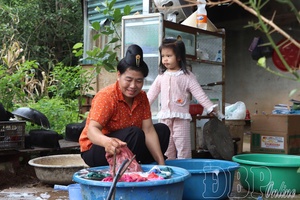
Most ethnic residents engage in tourism spontaneously without much knowledge of constructing tourism services, communication skills or attitudes, or measures guaranteeing tourist safety. For community-based tourism to become a livelihood for sustainable poverty reduction, ethnic residents require training and hands-on guidance to build and preserve cultural identity. When a village is designated as a tourism spot, residing villagers join hands to clean homes, sweep village roads, create clean landscapes, and preserve customs, habits, and traditional crafts.

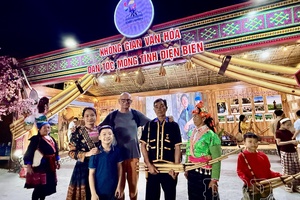
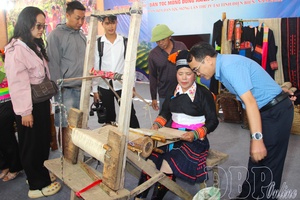
Villagers run homestays right inside traditional stilt houses, preserving culture through brocade weaving, festival activities, folk art performances featuring Xòe dances, Sạp dances, panpipe sounds, and Tính lutes while tourists experience and savor local native cuisine. Everyday living tasks, when attended to and executed collectively, build destinations attracting tourists to sightsee, experience, and explore culture, awakening traditional culture and heritage through community-based tourism models to create livelihoods where products created by villagers preserve culture while delivering additional income.

To develop sustainable tourism from culture requires building unique and novel products that entice tourists to experience and generate income sources. Beyond orientations and support from party committees and local authorities, ethnic minority villagers themselves carry responsibilities to conserve and preserve traditional culture and intangible cultural heritage, which stands as the true potential to develop tourism and build public livelihoods.

Hà Anh
Comment

You have 500/500 characters left

Please enter 5 or more characters!!!

Recent news

  • 'Turning culture into a development resource

    Turning culture into a development resource

    CULTURE - SPORTS -
    ĐBP - Designating culture as a spiritual foundation and endogenous resource for sustainable development, Điện Biên province deployed numerous solutions to elevate the spiritual and cultural life of the people, preserving and promoting traditional values, through which cultural values spread deeply across the community, contributing to building a rich identity and developing image for Điện Biên.
  • 'Silent footsteps find martyrs’ remains

    Silent footsteps find martyrs’ remains

    NEWS - POLITICS -
    ĐBP - There are marches without gunfire, only silent footsteps tracing memories to find martyrs still lying behind. Amid the mist atop Pha Đin peak, the journey gathering 2 martyrs’ remains within the “500-day-and-night Campaign to boost searching, gathering, and identifying martyrs’ remains” represents a journey of gratitude, rediscovering names for fallen soldiers.
  • 'Điện Biên synchronously renovates park, greenery, and sidewalk system

    Điện Biên synchronously renovates park, greenery, and sidewalk system

    SOCIAL AFFAIRS -
    ĐBP - The system of parks, trees, and sidewalks plays a crucial role in creating landscapes, enhancing living quality, and forming a modern urban appearance. In Điện Biên province’s Điện Biên Phủ and Mường Thanh wards, despite serving as the provincial development core, the system of trees, parks, and landscape infrastructure exhibits numerous limitations requiring synchronous renovation under planning to satisfy green, smart, and sustainable urban construction requirements.
  • 'OCOP: Điện Biên’s tourism ambassadors

    OCOP: Điện Biên’s tourism ambassadors

    TRAVEL -
    ĐBP - After years of implementation, the One Commune One Product (OCOP) Program has encouraged many producers to improve product quality, refine production processes, build brands and expand markets. As tourism increasingly shifts toward deeper, experience-based development, integrating OCOP products into tourist experiences is seen as a way to create more sustainable added value for both products and destinations.
  • 'Keepers of ethnic groups’ cultural identities

    Keepers of ethnic groups’ cultural identities

    CULTURE - SPORTS -
    ĐBP - Điện Biên is home to 19 ethnic groups living together, with each community contributing to creating a colorful cultural mosaic. Through the flow of integration and development, those traditional values continue to be cherished, preserved, and handed down across generations.
  • 'Joining hands to collect martyrs’ relatives’ DNA samples

    Joining hands to collect martyrs’ relatives’ DNA samples

    SOCIAL AFFAIRS -
    ĐBP - Guided by the moral traditions of “When drinking water, remember its source” and “Repaying gratitude,” over recent days, police forces across Điện Biên province have been actively coordinating with functional units to boost collecting DNA samples from relatives of martyrs whose identities remain unconfirmed.
  • 'Developing tourism from culture

    Developing tourism from culture

    TRAVEL -
    ĐBP - Điện Biên is home to 19 ethnic groups with numerous distinct traditional cultural values in festivals, costumes, cuisine, and customs, with the entire province currently holding 24 national intangible cultural heritages alongside majestic natural landscapes, establishing major potential for Điện Biên to exploit and develop tourism.
  • 'Empowering women to tackle social challenges together

    Empowering women to tackle social challenges together

    SOCIAL AFFAIRS -
    ĐBP - The implementation of Project 938 on “Communication, education, advocacy and support for women to address social issues affecting women during the 2017-2027 period,” launched by the Prime Minister, has created a solid foundation for government agencies, sectors and the Women’s Union at all levels to play a leading role in addressing social issues from the grassroots.
  • 'Synchronously coordinating execution of 500-day-and-night campaign

    Synchronously coordinating execution of 500-day-and-night campaign

    NEWS - POLITICS -
    ĐBP - These days, alongside the entire country, at martyrs’ cemeteries across Điện Biên province, collecting martyrs’ remains samples to serve DNA testing is deployed urgently. Each collected biological sample demonstrates a spirit of responsibility, deep gratitude, and close synchronous coordination among sectors and forces during the execution of this sacred duty.
  • 'Listening to the people’s voices

    Listening to the people’s voices

    NEWS - POLITICS -
    ĐBP - Over a year of operating under the two-tier local governance model, the gap between party committees, local authorities, and residents has narrowed continuously. Voter contacts, dialogues, and field trips to the grassroots level by commune leaders have become occasions for residents to confide their thoughts and aspirations, thereby resolving difficulties and obstacles promptly.
  • 'Greener choices gain ground in Điện Biên

    Greener choices gain ground in Điện Biên

    ECONOMY -
    ĐBP - From changing shopping habits to choosing clean energy and environmentally friendly modes of transport, the green transition is becoming an increasingly popular choice among people in Điện Biên province. As consumers change their behavior, businesses are proactively adapting their services and production models, helping drive socio-economic development in a greener and more sustainable direction.