



Faced with this situation, the party committees and authorities of the localities along with relevant units have stepped up dialogue, dissemination, and direct explanations so that people in the project areas clearly understand the guidelines and policies to agree on handing over the land. With a flexible and soft yet drastic approach, most key projects have basically completed land clearance to create conditions for accelerating progress and striving for completion according to the set plan.
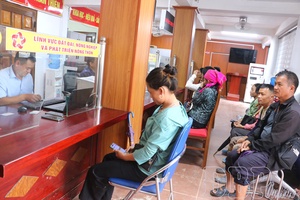
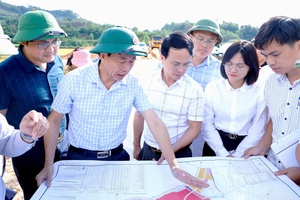
At the end of December 2025, the Management Board for Agricultural and Rural Development Projects organized a dialogue with several households in tổ dân phố 5 of Điện Biên Phủ ward belonging to the Nậm Rốm River Basin Multi-Disaster Management Project area. At the dialogue, the project owner publicized and clarified contents related to compensation, the legal basis for determining compensation prices, and land clearance plans. The opinions and recommendations of the people regarding compensation levels and payment times were received and answered frankly by functional agencies, which helped the people better understand the guidelines and policies of the State. After many meetings and dialogues, the households have now agreed and handed over the site for the contractor to construct the project.
Đàm Văn Quyên, who serves as the head of tổ dân phố 5 in Điện Biên Phủ ward, shared that the fact that the project owner and functional agencies went directly to the dialogue helped clarify many contents related to compensation policies. People were able to express their thoughts and aspirations while obstacles were resolved promptly, which created more peace of mind and trust.
.png)
Mường Thanh ward is a key area for implementing many large projects of the province, such as the Dynamic Road Project and the Nậm Rốm River Basin Multi-Disaster Management Project. To create consensus in land clearance, the ward People’s Committee proactively established specialized working groups to go directly to the grassroots level to dialogue and specifically explain each legal policy and each cadastral file for each household. Officials persisted in “going to every alley and knocking on every door,” regardless of holidays or evenings, to listen to the thoughts and aspirations and promptly resolve the legitimate recommendations of the people.
Trần Văn Sinh, the Vice Chairman of the Mường Thanh ward People’s Committee, stated that the form of dialogue is implemented flexibly and diversely, ranging from group meetings of households, residential groups, and villages to meeting each family privately. The components of the dialogue include the party committee, authorities, mass organizations, specialized agencies, project owners, and representatives of the residential group or village. The motto is “listen to the people, speak so they understand,” in which cadastral records are publicized and the origin of land is clearly explained to eliminate the mentality of comparison. Reasonable recommendations that do not yet have specific regulations are synthesized and reported to competent authorities, while contents outside the scope of policy are answered frankly and clearly to avoid creating unrealistic expectations.
The implementation practice shows that land clearance in the ward has faced many difficulties due to land documents and the perception of some people. Some households had not fully declared the origin of their land previously, leading to unclear legal records and making it difficult to establish compensation plans. Additionally, the mentality of comparing interests between households while not clearly understanding the legal differences also caused obstacles.
Faced with that reality, the Mường Thanh ward People’s Committee requires the team of officials doing dissemination and dialogue work to master and promptly update new regulations and policies. They must listen to and respect the legitimate recommendations of the people while proactively proposing that competent authorities adjust or supplement policies when necessary. Along with compensation for land, additional support items are resolved right at the ward level, which has contributed to shortening processing times and reducing frustration among the people.
Thanks to promoting dialogue and dissemination, land clearance in Mường Thanh ward has achieved many positive results. The Nậm Rốm River Basin Multi-Disaster Management Project has completed land clearance with 100% of households agreeing. Regarding the Dynamic Road Project, the vast majority of households have received money and handed over the site. Only one household has not yet handed over due to obstacles in support policies during the transition period between the Land Law 2013 and the Land Law 2024, which is currently waiting for guidance from specialized departments and branches.
Thanks to the effective implementation of dialogue, land clearance for key projects in Thanh Yên commune has seen clear changes. Specifically, at package No.8 belonging to the Dynamic Road Project, many households previously did not agree to hand over the site because they were concerned about the compensation plan. The commune People’s Committee proactively met, dialogued, and directly explained and removed each obstacle, thereby creating the consensus of the people. To date, 100% of affected households have handed over the entire clean site to the construction unit. From being behind schedule, the package has now completed over 90% of the volume.
Reality shows that dialogue is the “key” to removing “bottlenecks” and creating social consensus in the land clearance of key projects. When people are listened to, given thorough explanations, and have their legitimate rights guaranteed, the handing over of land will become voluntary. This contributes significantly to the successful implementation of key projects and promotes local socio-economic development.
Phạm Trung
.jpg)

.jpg)
.jpg)
.jpg)
.jpg)
.jpg)
.jpg)
.jpg)
.jpg)
.jpg)
You have 500/500 characters left
Please enter 5 or more characters!!!