



Part 2: Party members set examples, villages remain harmonious
To secure that consensus, grassroots cadres and party members have chosen the most practical approach: taking the lead, acting first, explaining clearly for the people to understand, and more importantly, willingly sacrificing personal interests for the common good.
Putting common interests first
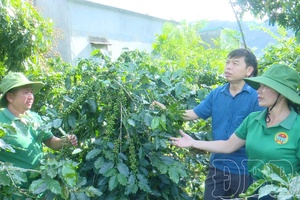
Following administrative boundary restructuring, two villages, Ma Lù Thàng and Huổi Lèng in Mường Tùng commune, were merged into the new Ma Lù Thàng village. Initially, due to changes in population size and an expanded communal space, a segment of residents could not help feeling concerned about customs, practices, and long-standing community ties. Throughout that process, Sùng A Cử, then Head of Ma Lù Thàng village, was among those directly involved in dissemination and public mobilization. With three years serving as Cell Secretary and six years as village head, he thoroughly understood the sentiments of the people while possessing extensive experience in handling grassroots issues.
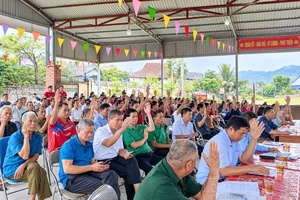
For Sùng A Cử, gaining public consensus requires cadres to first stay close to the people and listen to them. Unclear issues were clarified directly at village meetings, while specific concerns were addressed individually without avoiding differences in customs, traditions, or community living habits. However, upon completing the village merger, although fully capable of continuing his grassroots role, Sùng A Cử proactively stepped aside to make way for younger generations. When asked why he did not continue working in the village, he cheerfully shared that when the organization undergoes restructuring, a party member must place the common interest first, stepping down to create conditions for younger people to strive, train, and mature.
After nine years dedicated to village work, stepping away was by no means easy, yet Sùng A Cử understood that when an organization changes, the most critical matter is not whether one retains a position, but whether collective affairs continue to run effectively.
.jpg)
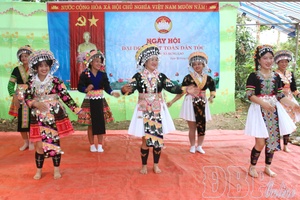
Prior to the merger, 100% of households in Hô Hài village, Mường Chà commune, were Protestant, whereas in Nậm Đích village, around 30% practiced religion. Differences in religious life initially caused some residents to feel hesitant about the merger. In that situation, Thùng Văn Kiêm, former Secretary of the Nậm Đích Village Party Cell, directly took part in outreach and mobilizing villagers. Rather than dwelling on differences, he sought common ground to initiate conversations, explaining that Hô Hài was historically split from Nậm Đích and that both villages comprise members of the Hmông ethnic group sharing numerous cultural traits and customs.
Thùng Văn Kiêm’s approach helped residents reflect on their shared community ties, recognizing commonalities and long-term benefits in building a unified community. Once residents understood and reached consensus, Thùng Văn Kiêm chose to step aside for younger personnel. He expressed that given his limited specialized qualifications, he did what he could, and since the village cell had younger, better-qualified individuals ready to take on leadership, he needed to create conditions for them to work and mature.
From Ma Lù Thàng to Nậm Đích, different stories converge at a single point: party members do not stand aside from the restructuring process. They are the active agents directly disseminating policies, directly confronting public concerns, and directly embracing personal changes for the common cause, thereby cementing faith in the Party’s guidelines.
Changing positions without changing responsibilities
Restructuring and merging villages alters administrative boundaries and population scales, consequently leading to reassignments for grassroots cadres. Despite changes in their job positions, cadres and party members continue contributing their experience, prestige, and local insight to the community through appropriate duties.
Prior to the reorganization, Lò Văn Phương served as Secretary of the Hin 1 Village Party Cell. Following the merger of Hin 1 and Hin 2 into the new Hin village, Lò Văn Phương transitioned to become Head of the Hin Village Front Work Board. To him, this role change allowed him to continue staying close to the people, mobilizing them, and contributing to community building. Lò Văn Phương shared that as a party member, he always complies with organizational assignments, affirming that shifting from cell secretary to head of the Front Work Board does not change his commitment to fulfilling his duties, staying close to the people, listening to their voices, and acting as a bridge between party committees, authorities, and the people.
In Na Sang commune, there were 117 non-professional workers across residential groups and villages prior to the restructuring. After reorganization, over 70 people were reassigned to continued posts, while the remainder were submitted for policy entitlements according to regulations. Throughout this process, many experienced shifts in positions and duties, but the overarching objective remained selecting competent, prestigious, and responsible individuals to continue serving the community.
Trần Hồng Quân, Deputy Secretary of the Party Committee and Chairman of the People’s Committee of Na Sang commune, stated that arranging, rotating, or resolving retirement entitlements is considered based on the capacity, aspirations, and actual conditions of each individual. The supreme objective is to ensure that grassroots affairs remain uninterrupted while maintaining solidarity and stability within the community.
Streamlining the apparatus does not mean erasing the contributions of those long attached to the grassroots. What matters most is assigning the right person to the right job, promoting the strengths and experience of each cadre, while facilitating youth participation, training, and progressive assumption of duties. On that basis, village reorganization infuses new vitality into the grassroots political system, where every cadre and party member continues to serve as a core nucleus connecting, rallying, and accompanying the people.
Phạm Quang
.jpg)
.jpg)
.jpg)
.jpg)
.jpg)
.jpg)
.jpg)
.png)
.jpg)
.jpg)
.png)
You have 500/500 characters left
Please enter 5 or more characters!!!