



Double challenges
Unlike previous elections, the upcoming polls are being held under particularly unique circumstances. The entire political system is focused on administrative restructuring, mergers of local units, downsizing, and transitioning to the two-tier local government model. This means that many localities, having just stabilized their organizational structures and personnel, must simultaneously handle a large and complex workload directly related to the election, within a shorter timeframe.
.jpg)
In addition, election procedures and timelines have been compressed. Key milestones such as consultative conferences, publication of candidate lists, handling of complaints and denunciations, and the authority to determine polling areas and election bodies have been adjusted to align with the two-tier model. As for campaigning, in addition to in-person voter meetings, online or hybrid formats are now permitted, with strict requirements for technical readiness, information security, and cybersecurity.
As preparations got underway, difficulties began to surface in many highland, remote, and hard-to-reach communes across the province. Vast terrain, scattered populations, challenging transport, especially during the rainy season, weak electricity and telecommunications infrastructure, and uneven capacity and experience among grassroots officials following administrative mergers have all directly affected the pace and quality of election preparations.
.jpg)
Although considered relatively favorable, Núa Ngam commune still faces its own set of challenges. According to Cao Văn Toàn, Vice Chairman of the Núa Ngam commune People’s Committee, the commune has 33 villages. After reviewing facilities and on-the-ground conditions, it identified nine electoral units with 16 polling stations. While most units meet basic requirements, one polling unit located in Sơn Tống village stands out for its compounded difficulties.
“This village is 50 kilometers from the commune center, accessible only by gravel roads, without access to the national power grid, and with unstable mobile phone signals. The polling unit here serves a large number of voters from four highland villages, most of whom are Hmong people. These factors pose major challenges for venue preparation as well as for outreach and consensus building among residents”, Toàn said.
Similarly, election preparations in Mường Mùn commune are being carried out across a vast area with a predominantly ethnic minority population, many villages facing extreme hardship, and difficult transport conditions. The commune has 31 villages, of which 28 are classified as extremely disadvantaged, accounting for more than 90 percent. The hilly terrain and poor transport links complicate inspections, professional guidance, and the organization of election activities at the grassroots level.
One of Mường Mùn’s biggest challenges is its weak electricity and information infrastructure. Three villages - Co Sản, Hua Mùn, and Hạt Lẩu- are still not connected to the national power grid, while two villages lack mobile phone coverage altogether. This significantly hampers direction, coordination, information exchange, and voter outreach. In addition, more than 1,200 voters from the commune are working away from home, many of them overseas, making voter list verification, compilation, and management to ensure citizens’ voting rights a demanding task.
Proactive and flexible action
Fully aware of these challenges, the provincial Party Committee, People’s Council, and People’s Committee moved early to provide strong, unified leadership from the provincial level down to the grassroots. Central directives were promptly disseminated and translated into concrete action; election committees at all levels were established and strengthened; and communications, training, inspections, and supervision were rolled out in a coordinated manner, with a strong focus on the grassroots.
.jpg)
At the local level, a proactive and flexible approach is clearly evident. In Sáng Nhè commune, home to nearly 20,000 people, more than 99 percent of them ethnic minorities, local authorities have adapted creatively. According to Phạm Ngọc Điện, Chairman of the Sáng Nhè commune People’s Committee, polling areas have been arranged flexibly, making use of village cultural houses, school facilities, and even the homes of village heads or Party cell secretaries where infrastructure is lacking.
“Voter list reviews and compilation are conducted carefully and updated regularly, especially given the large number of migrant workers. At the same time, voter outreach has been stepped up through various methods suited to local conditions, from grassroots loudspeaker systems and village meetings to visual communications, helping raise awareness and responsibility among voters and build consensus. Any issues arising in practice have been promptly reported and addressed with guidance from higher level authorities, ensuring overall progress is not disrupted”, Điện said.
Alongside similar measures, authorities in Mường Mùn commune have placed strong emphasis on professional training for officials directly involved in election work, while dispatching staff to villages to assess conditions, disseminate election regulations, and provide timely support. Election communications have been integrated with community activities, leveraging the influence of respected figures among ethnic minority communities to enhance effectiveness. In villages without electricity or mobile coverage, officials have been sent directly to ensure no information gaps remain.
.jpg)
According to Cao Văn Toàn, Vice Chairman of the Núa Ngam commune People’s Committee, nine working teams have been deployed to villages to inspect and urge election preparations. Outreach has been intensified through multiple channels, with particular emphasis on trilingual communication and effective use of grassroots loudspeaker systems. For the polling unit in Sơn Tống village, officials have proactively arranged personnel, mobilized support forces, and flexibly selected a school as the polling venue due to the absence of a cultural house, ensuring convenience and safety for voters.
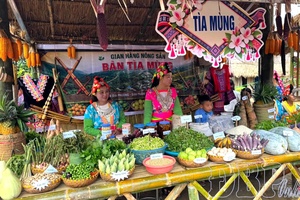
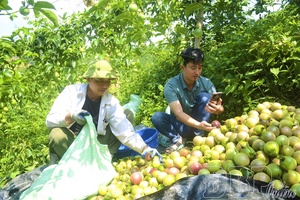
“We have also coordinated with Border Guard forces to select Sơn Tống village as the venue for the “Green Chung cake Festival”. This allows us to integrate election outreach, bring information closer to voters, and foster a positive, trusting atmosphere and stronger bonds between authorities, forces, and local residents”, Toàn added.
To better support grassroots preparations, the provincial Election Committee and its standing bodies have implemented a range of practical measures. The Standing Committee of the Vietnam Fatherland Front in Điện Biên province organized election training for Front officials and election workers from the provincial to commune levels to promptly address emerging issues. The province also seconded 27 civil servants from departments and agencies to directly support 27 key communes, strengthening local capacity for election organization and management.
.jpg)
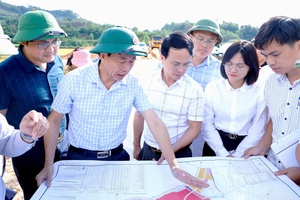
Notably, the provincial Election Committee recently established nine inspection teams led by members of the Standing Board of the provincial Party Committee and leaders of the People’s Council, People’s Committee, Vietnam Fatherland Front, and relevant departments. These teams have conducted on-site inspections in 45 communes and wards, not only supervising but also providing hands-on guidance and resolving difficulties, ensuring the election is conducted in full compliance with regulations, in a unified and effective manner.
With strong political resolve, thorough preparation, and practical, innovative approaches, Điện Biên province is moving steadily toward election day, ensuring the vote truly becomes a nationwide festival of democracy and further strengthening public trust in the Party, the State, and local authorities in this new stage of development.
Hà Linh
.jpg)

.jpg)
.jpg)
.jpg)
.jpg)
.jpg)
.jpg)
.jpg)
.jpg)
.jpg)
You have 500/500 characters left
Please enter 5 or more characters!!!