



Restructuring agricultural and tourism spaces
As the eastern gateway of Điện Biên province on the Pha Đin - Tuần Giáo - Sơn La connection axis, Quài Tở is identified as one of the highland region’s key areas for industrial crops, commercial agriculture, and community tourism. Post-merger, instead of scattered development as before, the locality has step-by-step reorganized its production space toward regional linkage, connecting infrastructure with livelihoods and long-term development orientations.
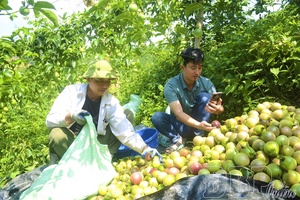
From small, fragmented cultivation areas in the past, many households have proactively switched their crops, participated in production linkages, and applied new techniques. What deserves attention is not the scale of the area, but the change in the development mindset of the highland people. As of the end of 2025, the harvested coffee area in the commune reached 547.15 hectares with an output of about 6,565.8 tons. Notably, at certain points, the coffee price exceeded VND 30,000/kg, making the 2025 harvest season one of the most successful and exciting crops for the locals in recent years. Not only yielding a bumper crop with high prices, the coffee tree continues to affirm its core role, contributing to raising incomes and creating economic development momentum for the locality.
.jpg)
Seeing those achievements, many young laborers who used to work far away have now returned to develop local agriculture, no longer viewing leaving the village as the only choice to change their lives. Since the moment people started seeing development opportunities right in their homeland, skepticism has gradually narrowed.
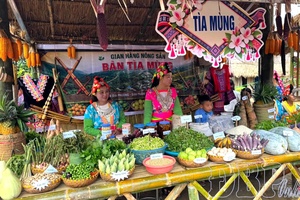
Not just shifting in agriculture, Quài Tở has begun forming a direction for community tourism linked with the cultural identity of the Mông ethnic group. Lồng village, with 116 households and more than 550 people, has now become the first Mông ethnic community tourism model in Điện Biên province. Residents participate in running homestays, maintaining community art troupes, and developing experiential activities connected with the landscape linking the Pha Đin Pass and Pu Pha Đin tourist areas. The fact that the Mông people proactively preserve their cultural identity to develop tourism not only opens up new livelihoods but also creates tighter community cohesion in the highlands.
During this year’s rainy season, parents in some high-altitude villages of Quài Tở do not have to keep their children home from school for days due to muddy, slippery roads and transport separation. Expanded inter-village roads have facilitated the journey to school after every heavy rain. In Thẩm Nặm village, the morning sound of motorcycles carrying students down to the school site has become familiar amidst the mist-covered mountain slopes.
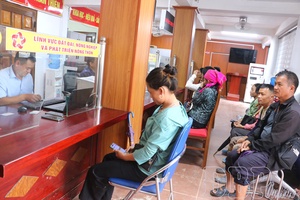
In Xá Tự village, Vàng Dũng Dủa still remembers the first time he was guided through administrative procedures right in his village instead of going down to the commune center as before. He shared that since he was old, he used to be very hesitant when hearing about paperwork, but now that officials come directly to guide them, he feels the State is truly close to the people.
For many households in Quài Tở, the most memorable milestone is the first truck trips carrying coffee out of the village after the roads were cleared. Previously, agricultural products were mainly transported by motorcycle or carried on foot through muddy dirt roads every rainy season. Now, trucks can drive close to the production areas. This change is not merely about convenient production labor but shows that the highlands are truly connected to the external pace of development.
Closing the information gap through presence
In highland areas, when information on social networks spreads faster than the speed of officials reaching the grassroots, if the local government is not close to the people and the grassroots, the information gap can easily be manipulated by distorted interpretations.
From that reality, the grassroots government apparatus after consolidation operates in a direction of sticking to the locality, staying close to the people, and handling work right at the grassroots. Officials visit villages more frequently, and many procedures are resolved directly in residential areas, significantly reducing the travel time of highland residents. Some officials travel dozens of kilometers of mountain roads just to clarify a piece of misinformation spreading on social media. Some village meetings last from early morning until late at night to clarify every issue that residents are concerned about. These tasks do not create slogans, but they create substantial stability from the grassroots level.
.jpg)
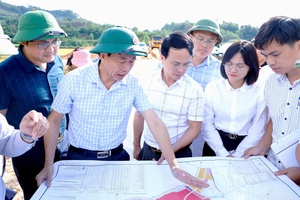
In a context where cyberspace has become a new front, direct dialogue between the heads of the party committee, the local government, and the people remains the most effective way to maintain trust. Quài Tở has organized two direct dialogue sessions, where many “hot” issues of public concern were exchanged and clarified by the commune leaders.
After sáp nhập, the hardest part in Quài Tở does not lie in reorganizing the apparatus, but in ensuring that the people do not feel left out of the development process. Sometimes, public trust does not begin with grandiose things; it starts with children attending school more regularly after the rainy season, elderly people saving a trip to the commune center, or a crop transport truck successfully overcoming the slope at the end of the village.
“The people do not need to hear overly grandiose things. They just need to see officials coming to the village, listening to what the people say, and resolving tasks for them,” Mùa A Só, Secretary of the Thẩm Nặm village Party Cell said.
This rustic statement clearly reflects a grassroots principle: stability does not come from generic explanations but from the ability to resolve problems right where they arise.
Citizens as the subjects of development
After nearly a year of operating the 2-tier local government model, what Quài Tở has maintained is not just grassroots stability but a shift in the role of the people regarding the development process of their own homeland. Residents no longer stand outside policies or just wait for state support. They begin participating by choosing to stay in their homeland to start businesses, proactively transforming production, preserving cultural identity, running tourism, and raising awareness to maintain village stability against misinformation in cyberspace.
.jpg)
According to Giàng A Dế, Secretary of the Party Committee and Chairman of the People’s Council of Quài Tở commune, the most important thing after nearly a year is not just consolidating the apparatus but gaining public consensus with the local long-term development direction.
“Quài Tở identifies developing coffee, macadamia, and community tourism as the core pillars tied to the advantage of the province’s eastern gateway. But more important than all is that the local government must continue to accompany and stay close to the people so that they truly become the subjects of the development process,” Giàng A Dế said.
Late in the afternoon in Xá Tự village, Vàng Dũng Dủa stood on his front porch looking at the electric lights spreading along the mountain slope. The man who once doubted the merger policy now slowly said that now that there are roads, electricity, and officials coming to the village more often, the people must think differently. This statement not only reflects a change in life but shows a deeper movement: when people see development results through their own daily lives, trust will be formed in a more natural and sustainable way than any dissemination.
Practical experience in Quài Tở shows that protecting the Party’s ideological foundation in the highlands does not begin with grandiose things or unsubstantial slogans. It begins with shortening the distance between policy and daily life, between the government and the people, so that residents can truly participate, benefit, and share the responsibility of maintaining the stability of their own homeland. In Quài Tở today, trust is not kept by words; it is kept by specific actions and by the very participation of the people in the future of their villages.
Lường Phượng

.jpg)
.jpg)
.jpg)
.jpg)
.jpg)
.jpg)
.jpg)
.jpg)
.jpg)
.jpg)
You have 500/500 characters left
Please enter 5 or more characters!!!