Combating African swine fever for sustainable livestock development

ĐBP - Pig farming remains one of the most important sectors of agriculture in Điện Biên province. With a total pig population of nearly 312,000, pigs are not only an essential source of food but also a valuable asset and form of savings for many households. However, the outbreak of African swine fever (ASF) since the beginning of 2026 has posed a major challenge to the province’s goal of developing a safe and sustainable livestock industry.

Statistics show that over the past six months, African swine fever has affected more than 2,250 households across 406 villages and hamlets in 30 communes and wards. More than 9,500 pigs, with a combined weight exceeding 500 tons, have been culled. These figures not only reflect the severity of the disease but also highlight the significant economic losses and direct impact on the livelihoods of livestock farmers.

Health officials guide residents of A2 village, Thanh Yên commune, in disinfecting livestock facilities to prevent African swine fever.

African swine fever currently has no specific treatment. Once an outbreak occurs, losses are almost inevitable. Therefore, disease prevention remains the most important solution. Only through proactive prevention and early containment can the livestock sector maintain stable development, minimize risks, and ensure a reliable food supply for the market.

In response to the complex developments of the disease, the provincial Department of Agriculture and Environment has directed specialized agencies to work closely with local authorities in implementing comprehensive disease prevention and control measures in accordance with regulations. Surveillance of livestock herds has been strengthened, while new outbreaks are being detected early, isolated, and handled promptly. At the same time, sanitation, disinfection, and decontamination activities have been carried out regularly, and communication campaigns promoting biosecure farming practices have been intensified.

However, practical experience has shown that the efforts of authorities can only be fully effective with the active participation of livestock farmers. The awareness and proactive actions of each farming household constitute the strongest line of defense against disease outbreaks. Many households have already shifted toward biosecure production methods by regularly cleaning livestock facilities, monitoring feed and water sources, restricting access to farming areas, and closely observing the health of their animals on a daily basis. These positive changes should continue to be expanded and replicated.

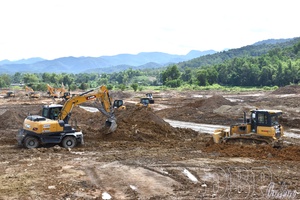
Residents of Thanh Nưa commune cull infected pigs.

The agricultural sector also advises farmers to strictly comply with disease prevention measures, particularly the principle of the “Five no’s”: No concealing disease outbreaks, no trading or transporting sick or dead pigs; No slaughtering or consuming meat from sick or dead pigs; No disposing of pig carcasses into the environment; No feeding untreated food waste to pigs.

These are not only mandatory regulations but also responsibilities toward the community, helping prevent the disease from spreading on a larger scale.

In addition, farmers are encouraged to closely manage breeding stock, feed, and water sources; regularly clean and disinfect livestock facilities; monitor animal health daily; and promptly notify veterinary authorities when unusual symptoms are detected. Reporting disease outbreaks early does not increase losses; on the contrary, it enables rapid containment and response, limits transmission, and reduces damage for the entire community.

Among disease prevention measures, vaccination remains the most proactive, effective, and sustainable solution. Using funding allocated for agricultural development in 2026, the Department of Agriculture and Environment has supplied sufficient vaccines for livestock and poultry disease prevention. Mass vaccination campaigns help establish active immunity within animal populations, build herd immunity, reduce the risk of disease outbreaks, and provide a solid foundation for the stable development of the livestock industry.

Health officials in Thanh Yên commune disinfect pig pens.

The goal of sustainable livestock development depends not only on the size of animal herds but also on the ability to control diseases effectively. Therefore, preventing and controlling African swine fever is no longer solely the responsibility of the agricultural sector or veterinary services; it is a shared responsibility of local authorities, specialized agencies, and every livestock farming household.

When each citizen raises awareness, strictly follows biosecurity measures, actively participates in vaccination programs, and cooperates closely with relevant authorities, Điện Biên’s livestock sector will gradually overcome disease challenges and develop in a safe, efficient, and sustainable manner, making a positive contribution to the province’s agricultural economic growth.

Tùng Lĩnh
Comment

You have 500/500 characters left

Please enter 5 or more characters!!!

Recent news

  • 'Combating African swine fever for sustainable livestock development

    Combating African swine fever for sustainable livestock development

    ECONOMY -
    ĐBP - Pig farming remains one of the most important sectors of agriculture in Điện Biên province. With a total pig population of nearly 312,000, pigs are not only an essential source of food but also a valuable asset and form of savings for many households. However, the outbreak of African swine fever (ASF) since the beginning of 2026 has posed a major challenge to the province’s goal of developing a safe and sustainable livestock industry.
  • 'Increasing benefits, reducing burdens for people

    Increasing benefits, reducing burdens for people

    SOCIAL AFFAIRS -
    ĐBP - Starting from July 1, 2026, multiple new regulations of the Law on Health Insurance officially take effect, expanding benefits for participants toward more favorable and flexible medical examination and treatment. These adjustments do not only create conditions for the public to access quality medical services and alleviate the burden of treatment costs but also continue to affirm the role of health insurance as an important pillar in the social security system, heading toward the goal of universal healthcare.
  • 'Xa Dung brings resolution into reality

    Xa Dung brings resolution into reality

    NEWS - POLITICS -
    ĐBP - Returning to Phì Nhừ village, Xa Dung commune today, the green hue of newly planted coffee and macadamia areas in recent years is gradually blanketing the degraded cassava and corn fields. This transformation is the initial result of implementing the commune’s Resolution on agricultural restructuring. Bringing the Party’s Resolution into practice has created consensus among the People and step-by-step shaped a new economic development direction for the locality.
  • 'An anchor from new policy

    An anchor from new policy

    SOCIAL AFFAIRS -
    ĐBP - The Government’s Decree No.192/2026/NĐ-CP, taking effect on July 15, 2026, has introduced multiple special allowance regimes for the healthcare sector, including an increase in on-duty allowances and monthly support for village health workers. The policy is expected to create motivation for the grassroots medical workforce to feel secure in their work, upgrading the quality of public healthcare right from the frontline.
  • 'Key to sustainable agricultural development

    Key to sustainable agricultural development

    ECONOMY -
    ĐBP - Điện Biên is gradually making a significant shift from a production-oriented mindset to an agricultural economic mindset. At the heart of this transformation is the development of linkages among farmers, cooperatives, and enterprises, creating concentrated raw-material zones connected to processing facilities and consumer markets.
  • 'Executive Board of Điện Biên provincial Party Committee successfully concludes 14th conference

    Executive Board of Điện Biên provincial Party Committee successfully concludes 14th conference

    NEWS - POLITICS -
    ĐBP - Continuing the program of the 14th Conference of the Executive Board of Điện Biên provincial Party Committee (enlarged), this afternoon, July 3, under the direction of Trần Tiến Dũng, Member of the Party Central Committee, Secretary of the provincial Party Committee, and Head of the provincial National Assembly Deputy Delegation, alongside the Standing Board of the provincial Party Committee, the conference continued with presentations, discussions, and voting to pass the Resolution of the 14th Conference of the Executive Board of Điện Biên provincial Party Committee for the 2025-2030 tenure.
  • 'Pu Lau enters honey pineapple season

    Pu Lau enters honey pineapple season

    ECONOMY -
    ĐBP - Located more than 50km from the provincial center, Pu Lau village in Mường Nhà commune is step-by-step affirming its position as a concentrated local honey pineapple production zone.
  • 'Master planning paves the way for sustainable growth

    Master planning paves the way for sustainable growth

    ECONOMY -
    ĐBP - To establish a solid foundation for coordinated development and meet governance requirements following the administrative restructuring, Điện Biên province is accelerating the preparation and approval of master plans for communes and wards.
  • 'New health insurance policy brings greater benefits to participants

    New health insurance policy brings greater benefits to participants

    SOCIAL AFFAIRS -
    ĐBP - From July 1, 2026, a series of new health insurance regulations officially came into effect, providing participants with broader and more practical benefits. Higher reimbursement levels, expanded coverage and stronger application of digital technology in management and supervision are expected not only to reduce the financial burden of medical treatment but also to strengthen social welfare across Điện Biên province.