The people’s consensus - the key to building new-style rural areas

ĐBP - Visiting Chiềng Sinh commune today, many hamlets have clean concrete roads, solar-powered lamp posts, and national flags hanging along the routes. The coffee and macadamia gardens stretch green across the hillsides. The lives of people in the highland villages are “changing their skin and flesh” every day.

This result is thanks to the joint efforts and consensus of the people and the local party committee and government in the social mobilization for building new-style rural areas.

The road into Ly Xôm village, Chiềng Sinh commune, is solidly concreted and clean.

The road into Ly Xôm village, Chiềng Sinh commune, has been solidly concreted, with a lighting system. This result is thanks to the joint effort and consensus of the people in building new-style rural areas. In early 2025, implementing the model of bright, green, clean, beautiful, and safe hamlets, the Ly Xôm village residential area received VND 100 million in funding from the new-style rural area building capital source to install a lighting system on the road into the village. In this, the people contributed labor, cement, sand, etc. With the spirit of “The State and the people working together,” after 4 months of implementation, the project was completed and put into use, including 50 lamp posts with 300W solar-powered bulbs, to the joy and excitement of the people.

Lường Văn Ón, a resident of Ly Xôm village, shared: “Since having the concrete road, along with the solar-powered lighting system, our village has become much more orderly, clean, and civilized. There are no more slippery, muddy dirt roads when it rains. It’s convenient for people to transport agricultural products, and safer for children to go to school. We are very happy and excited.”

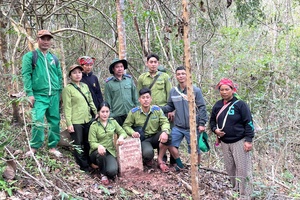
The Party cell of Che Phai 1 village, Chiềng Sinh commune, communicates and mobilizes residents to donate land to build the village cultural house.

Along with the capital from the new-style rural area building program, in recent times, Chiềng Sinh commune has socialized nearly VND 3 billion to build 11 intra-village concrete roads and hundreds of lamp posts on the routes. This has raised the rate of main hamlet and inter-hamlet roads that are hardened, ensuring year-round convenient car travel, to 85/120km, achieving 70%. 35km out of 165km (21.2%) of alleys and lanes have been concreted. This has contributed to Chiềng Sinh commune basically meeting criterion 2 on transport (achieving 2/4 targets).

Implementing the new-style rural area building program, the people of Che Phai 1 village, Chiềng Sinh commune, joined forces and agreed to contribute money and donate land to build a cultural house. Specifically, the people voluntarily contributed VND 1 million per household to buy a piece of land worth VND 150 million. As there was no road to the cultural house, people voluntarily dismantled their kitchens and auxiliary structures, donating land to build the road.

Lò Văn Khiên, a resident of Che Phai 1 village, said: “Through communication from the Party cell and the commune about implementing the ‘State and People working together’ policy for building new-style rural areas, my family voluntarily dismantled our kitchen and auxiliary structures, and also donated over 50m² of land to make the road to the cultural house. This is a place for community activities, organizing cultural, artistic, and sports events for the village, and a place for our children to play. This contributes to improving the spiritual life of the people in the village.”

Residents of Che Phai 1 village, Chiềng Sinh commune, voluntarily contribute money to buy land to build the village cultural house.

After the merger, Chiềng Sinh commune has 28 villages, a total of 3,222 households, with 15,268 people; ethnic minorities account for 97.2%. The commune has focused on accelerating the progress of building new-style rural areas, mobilizing all resources to implement Criterion 2 on transport, Criterion 4 on electricity, Criterion 9 on housing, Criterion 13 on Production Organization and Rural Economic Development, etc.

As a result, the criteria have been basically met and achieved according to the new-style rural area criteria set. The face of the countryside has changed markedly, rural socio-economic infrastructure has developed, and the systems of roads, schools, health stations, and village cultural houses have been invested in, upgraded, and expanded. Many effective production models in rural areas have been formed, increasing income for the people. The current average per capita income of Chiềng Sinh commune is estimated at VND 37.21 million/year. The poverty rate is decreasing every year, political security and social order in rural areas are maintained, and the grassroots political system is increasingly being strengthened.

Lò Văn Pánh, Vice Chairman of the Chiềng Sinh commune People’s Committee, said: “In early September, the commune held a meeting of the Steering Committee for the New-style Rural Area Building Program to evaluate the results of the 2025 implementation. According to the self-assessment, the commune has met and basically met 16.25/19 criteria (of which 12/19 criteria are met; 7/19 criteria are basically met).”

Anh Nguyễn
Comment

You have 500/500 characters left

Please enter 5 or more characters!!!

Recent news

  • 'Thanh Yên creates consensus to deploy key projects

    Thanh Yên creates consensus to deploy key projects

    SOCIAL AFFAIRS -
    ĐBP - Recently, with the close direction of the Party committee and authorities of Thanh Yên commune, the work of dissemination and mobilizing people to implement projects in the area has been deployed synchronously and effectively. Thanks to that, people have increasingly raised their awareness, agreed with the State’s guidelines, actively coordinated, and contributed importantly to the project implementation process.
  • 'When cultural identity becomes “soul” of homestay model

    When cultural identity becomes “soul” of homestay model

    TRAVEL -
    ĐBP - From Thái stilt houses and Hà Nhì earthen-walled houses to decorative details imbued with the traditional culture of the Hmông people... many homestays in Điện Biên are choosing the path of “telling cultural stories” through accommodation spaces.
  • 'School rises from hardship

    School rises from hardship

    SOCIAL AFFAIRS -
    ĐBP - Despite facing numerous difficulties regarding facilities, teaching equipment, and living conditions for boarding students, in recent years, Chiềng Đông Secondary School, Búng Lao commune, Điện Biên province has been assessed as a unit with many positive changes in teaching and learning.
  • 'Crop restructuring drives sustainable agriculture in Điện Biên

    Crop restructuring drives sustainable agriculture in Điện Biên

    ECONOMY -
    ĐBP - Điện Biên province is restructuring its crop mix, identifying the expansion of coffee, macadamia and fruit trees as the backbone of a green, sustainable agricultural development strategy. This orientation is set out in the provincial Party Executive Committee’s Resolution on restructuring the agricultural sector toward concentrated, green, smart and sustainable commodity production for the 2026-2030 period, with a vision to 2035.
  • 'Expanding market for local agricultural products

    Expanding market for local agricultural products

    ECONOMY -
    ĐBP - In Điện Biên province, in the context of agriculture shifting strongly from the mindset of “producing what we have” to “producing what the market needs,” bringing local agricultural products to become specialties and conquering larger markets is opening up a sustainable direction for farmers.
  • 'Unity dance by Đà River

    Unity dance by Đà River

    CULTURE - SPORTS -
    ĐBP - In the early days of 2026, when the morning mist still lingered on the water surface of the Sơn La Hydropower Reservoir, we were present in Mường Lay ward, Điện Biên province.
  • 'Well preparing for “Compassionate Tết” program

    Well preparing for “Compassionate Tết” program

    SOCIAL AFFAIRS -
    ĐBP - The “Compassionate Tết” program for the 2026 Lunar New Year (Tết) – the Year of the Horse is a humanitarian activity of deep significance, aiming to care for and support poor households and individuals in difficult circumstances in Điện Biên province, helping them have the conditions to enjoy spring and welcome Tết.
  • 'Điện Biên builds concentrated raw material areas

    Điện Biên builds concentrated raw material areas

    ECONOMY -
    ĐBP - In highland communes of Điện Biên province, agricultural production was previously mainly small-scale and fragmented by household. This led to difficulties in scaling up and organizing consumption according to the value chain.
  • 'Bringing digital government closer to people in Điện Biên

    Bringing digital government closer to people in Điện Biên

    SOCIAL AFFAIRS -
    ĐBP - From installing the VNeID app to completing administrative procedures on smartphones, the “Digital literacy for all” movement is steadily bringing digital government closer to the people of Điện Biên. Beyond making public services more accessible, the initiative is playing a key role in accelerating administrative reform and building a modern, efficient grassroots administration.
  • 'How Điện Biên needy people escape poverty

    How Điện Biên needy people escape poverty

    ECONOMY -
    ĐBP - Once poor and near-poor households with difficult lives, thanks to timely access to support programs and projects of the Party, the State, and social organizations along with suitable livelihood models, many families in highland communes have gradually stabilized their lives.
  • 'Accompanying taxpayers

    Accompanying taxpayers

    ECONOMY -
    ĐBP - The transition from flat tax to declaration-based tax starting in 2026 is assessed as a step suitable for modernization, transparency, and integration goals, but business households must adapt to a model completely different from long-standing habits.