



It places an urgent requirement on renovating dissemination methods where mass mobilization is considered the key to changing perceptions and behaviors.
According to survey data from the 2024 - 2025 period, the rate of marriage below the legal age in some highland areas remains high at around 33 to 39%. This occurs mainly in ethnic minority areas such as Xa Dung, Pu Nhi, and Phình Giàng communes. The causes stem from limited awareness and backward customs alongside a lack of legal knowledge regarding the Law on Marriage and Family. In some places, law enforcement is not strict and village conventions lack binding sanctions. Many teenagers fall in love early and cohabitate while still at school age, forcing families to accept old customs. Consequently, many children drop out of school and become a burden to their families.
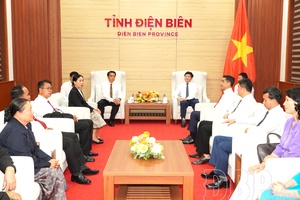
Xa Dung was once a highland commune with high rates of child marriage and consanguineous marriage. For many years, this issue hindered local socio-economic development. Recognizing the complexity, the party committee and authorities identified mass mobilization as the key to changing human behavior. Xa Dung commune coordinated with the provincial Women’s Union to implement Project 8 under the National Target Program.
.jpg)
This project focuses on promoting gender equality and solving urgent issues for women and children. Lầu Thị Sâu, who is the Vice Chairwoman of the Vietnam Fatherland Front and President of the Women’s Union of Xa Dung commune, stated that the organization stays close to the area to manage high-risk groups. The union coordinates with judicial and health stations to promote dissemination to minimize child marriage. On average, the union organizes 25 to 30 dissemination sessions on this topic every year.
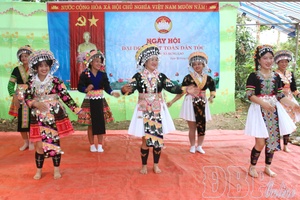
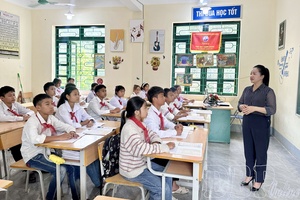
To improve efficiency, the commune built a core dissemination force consisting of village heads, elders, and clan leaders. Mass mobilization is implemented according to the motto of going to every alley and knocking on every door. Officials do not just speak at halls but go to houses and fields to explain specific cases. This approach of being close to the people has brought positive initial results. Hờ Phái Chá, the Secretary of the Háng Trợ village Party Cell, shared that many students self-study and love each other. According to Mông custom, when a boy takes a girl home, the family is forced to hold a marriage ceremony. Faced with this reality, the village authorities coordinated to hold meetings and sign commitments with families. If child marriage occurs, it will be handled according to regulations. The village also coordinates with schools to help students understand the consequences.
In Pu Nhi commune, child marriage still exists despite positive results in reducing consanguineous marriage. The dissemination team continues to find methods suitable for local conditions. Phàng Chừ Só, a member of the Dư O village communication team, said that this is very difficult work that requires persistence. They do not just disseminate with words but go to the fields to work with the people while explaining the law. When people see that their lives are getting better, they will voluntarily comply with the law.
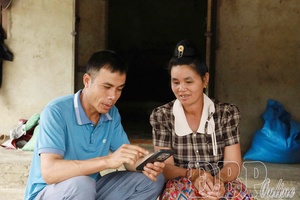
Change has also begun with parents who previously married early. Sùng A Thi from Nậm Ngám village shared that he understands the consequences of child marriage, so he always educates his children to finish high school and learn a trade. Many young people have also proactively chosen to study and build a career before getting married. Lầu Thị Chứ from Tìa Mùng village, who currently works in Hà Nội, stated that marrying early without a profession is very difficult. She is determined to work to take care of herself before thinking about marriage.
Although there are many challenges, reality shows that when mass mobilization is implemented in the right direction, the effectiveness will be high. The synchronized involvement of the political system has gradually changed the awareness of the people. These positive changes protect the rights and health of children while affirming the role of mass mobilization in sustainable development. This work meets the requirements of tasks in the new period.
A Chư
.jpg)
.jpg)
.jpg)
.jpg)
.png)
.jpg)
.jpg)
.jpg)
.jpg)
.jpg)
.jpg)
You have 500/500 characters left
Please enter 5 or more characters!!!