



For parents, buying AA-plated scooters, electric motorbikes or bicycles is convenient for their children’s daily commute. Yet, at an age where they often want to prove themselves, many students fail to strictly follow traffic regulations, leaving accident risks ever-present. In response, schools have placed strong emphasis on teaching students to respect the law and practice safe behavior.
.jpg)
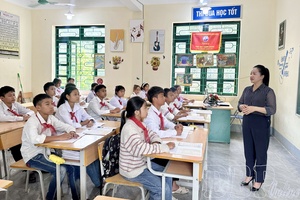
In the 2025- 2026 school year, Mường Ảng High School in Mường Ảng commune (Điện Biên province) has nearly 750 students, of which only 120 are in semi-boarding. To instill safe and responsible road use habits, the school has worked closely with parents and authorities from the beginning of the year, organizing themed activities and requiring students to sign commitments not to violate road traffic laws.
According to Principal Nguyễn Thành Chi of Mường Ảng High School, the school considers traffic safety education a top priority. “At the start of the school year, we asked students and parents to sign commitments to obey traffic laws. This raises awareness and strengthens cooperation between families and the school in educating students. We also regularly organize extracurricular sessions and school-wide assemblies that incorporate traffic safety messages. Thanks to these practical activities, students are becoming more conscious road users, helping create a safe and civilized school environment”, he said.
.jpg)
Alongside academic training, Điện Biên College also views political education, moral development, lifestyle guidance, and particularly traffic law compliance as crucial. This is both a requirement of the education sector and a practical measure to ensure a safe and healthy learning environment.
Teacher Nguyễn Minh Đức from Điện Biên College noted that the school operates three campuses with a large student body. At Campus 1 (formerly Điện Biên Vocational College), there are 1,223 students, including 760 living off-campus. Many of them are just 15-16 years old, freshly out of junior high school and away from home for the first time. With youthful impulsiveness and the urge to assert themselves, some engage in unsafe behaviors such as reckless speeding, noisy engine revving, or riding motorbikes without meeting the legal requirements. These are major causes of traffic violations and accident risks.
To address this, the college has launched a “political orientation week” for the 2025-2026 school year. Through the program, students learn about Party guidelines, government policies, and especially laws related to their rights, duties, and civic responsibilities. The curriculum highlights the 2024 Road Traffic Safety Law, the Cybersecurity Law, and safe use of the Internet and social media, while warning against harmful violent or unhealthy online games. This not only deepens students’ understanding of their rights and obligations but also builds self-protection skills, respect for the law, and responsible behavior in traffic.
.jpg)
“To ensure consistency and effectiveness, we have instructed homeroom teachers to integrate traffic safety into weekly class sessions, organize extracurricular topics, and maintain monthly boarding activities. These sessions give teachers and students a chance to exchange experiences, helping students better understand the consequences of violations and the benefits of compliance. We also try to keep communication relatable, combining theory with real-life examples, and strengthening coordination between schools, parents, and authorities. Only when students recognize their own responsibility to the community and the consequences of misconduct will real change happen”, Đức added.
Beyond the role of law enforcement and family supervision, schools play a vital part in building students’ traffic safety awareness. With strong leadership and teacher commitment, communication and education efforts are becoming more in-depth, helping young people develop healthy, disciplined, and responsible lifestyles while reducing preventable traffic accidents in the future.
Phạm Quang

.jpg)



.jpg)
.jpg)
.jpg)
.png)
.jpg)
.jpg)
.jpg)
.jpg)
.jpg)
.jpg)
You have 500/500 characters left
Please enter 5 or more characters!!!