



Part 3: Towards effective, sustainable management and use
The process of arranging and handling surplus public assets is an inevitable part of streamlining the administrative apparatus. In Điện Biên, implementation is based on a solid legal foundation, including the Law on Management and Use of Public Assets and the Government’s detailed decrees. Regarding the process, before officially merging and operating the new apparatus, the Department of Finance acted as the lead advisor, directing grassroots-levelunits (formerly 10 districts and towns) to review and build arrangement plans. By June 25, 2025, the overall arrangement plan was approved by the provincial People’s Committee in Decision No.1280/QĐ-UBND, creating a unified legal basis for handling land and housing facilities.
After completing the handover and receipt of assets to the new grassroots level, the Department of Finance appraised transfer dossiers and submitted them to the Chairman of the provincial People’s Committee to decide on transferring assets to agencies, organizations, and units belonging to the 2-tier local government model for direct management and use. The top priority principle for arrangement is to allocate surplus headquarters to the new grassroots-level administrative unit where the headquarters is located.
For surplus headquarters and public service facilities after arrangement and allocation, handling prioritizes functional conversion to serve as medical and educational facilities, or for other local public purposes (libraries, parks, cultural and sports institutions). Or assigning them to units with functions of housing and land fund management for preservation and exploitation in accordance with the law. To date, Điện Biên has completed an important stage: Legal handover of all assets to the grassroots level - creating a foundation to move to the arrangement, handling, and exploitation phase.
As of November 18, Điện Biên has achieved notable results in arranging and handling public assets which are land and housing facilities when implementing the 2-tier local government. Data provided by the Department of Finance shows that out of a total of 2,607 headquarters required to be arranged according to the new administrative model, after transfer and handover, 27 facilities remain to be handled. Currently, units are reviewing and completing dossiers for all these facilities.
.jpg)
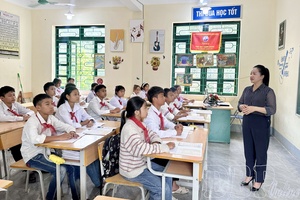
Notably, among the 27 facilities mentioned above, 12 were surplus from before the implementation of the new government model. The initial figure was up to 60 facilities, but through review and rearrangement, it has decreased sharply: 2 facilities were put into use, 46 facilities have been decided for transfer (of which 6 facilities serve as workplaces; 1 as a public service facility; 36 as education - training facilities; 3 facilities arranged according to other plans). This is a testament to the adherence to the province’s direction regarding prioritizing the functional conversion of surplus headquarters to serve community interests, contributing to improving people’s lives and the efficiency of public land use.
“For the remaining 12 surplus facilities that have plans, the Department of Finance has appraised dossiers to submit for the transfer of 4 facilities to the provincial Police Department to arrange commune police headquarters; 1 facility is expected to continue to be transferred to the provincial Police; 2 facilities are submitted for transfer to units under the province; 5 facilities are being reviewed for needs to be allocated to communes and wards,” Bùi Mạnh Chuyển, Deputy Director of the Department of Finance, informed.
The arrangement of surplus assets also involves a number of forest protection management stations under the Department of Agriculture and Environment. Due to changes in forest area and usage needs, forest protection management stations were consolidated; however, the station headquarters are no longer in use and currently have no receiving unit. The Department of Finance has coordinated with units to guide the order, procedures, and dossiers for asset transfer according to regulations, and simultaneously required units to coordinate with communes in the area to continue reviewing usage needs for suitable arrangement, ensuring compliance with regulations.
To manage, protect, and orient the exploitation and use of surplus land and housing facilities, on November 11, 2025, the Department of Finance issued a document regarding the implementation of building plans for rearranging and handling housing and land according to Government regulations. Deputy Director of the Department of Finance Bùi Mạnh Chuyển emphasized: “The Department has provided specific guidance for surplus cases after arrangement and allocation to be implemented according to asset handling forms of legal regulations. In which priority is given to functional conversion into medical and educational facilities, or use for other local public purposes; recovery to assign to organizations with functions of managing and trading local housing for management and exploitation; assignment to local land fund development organizations for management, development, and exploitation according to legal regulations, avoiding waste of resources and public assets...”
The above results and implementation orientations show that Điện Biên is performing the arrangement and handling of public assets in a scientific, transparent, economical, and effective manner. Prioritizing the conversion of surplus headquarters’ usage purposes into public works suitable for people’s livelihood needs is a correct approach, creating sustainable value for the community. Arranging the 2-tier local government is not only restructuring the administrative apparatus but also a great opportunity for Điện Biên to optimize and re-exploit public asset resources. With the roadmap to 2030 according to the Central policy, the province continues to review and perfect the surplus asset handling plan, ensuring every land and housing facility is put into reasonable use, serving socio-economic development, and bringing practical benefits to the people.
Nguyễn Hiền

.jpg)
.jpg)
.jpg)
.jpg)
.png)
.jpg)
.jpg)
.jpg)
.jpg)
.jpg)
.jpg)
You have 500/500 characters left
Please enter 5 or more characters!!!