



On Dec 11, the National Assembly passed the Resolution on the National Target Program for health care, population, and development for the 2026 - 2035 period. In which, the Project on Improving the Capacity of the Grassroots-level Health Network is identified as a key content of the program, playing a key role in effectively implementing population and development goals. The project aims to comprehensively consolidate the grassroots-level health system, especially in deep-lying, remote, and ethnic minority areas, thereby ensuring people have full and fair access to essential population services...
Based on that, the Ministry of Health has coordinated closely with localities to review and synthesize the practical needs of each region and area, serving as a basis for building investment plans in the coming period. Accordingly, the program expects to build over 700 new health stations and repair or upgrade over 1,000 existing health stations nationwide to step-by-step perfect the grassroots-level health network, meeting the increasingly high health care requirements of the people.
.jpg)
For Điện Biên province, the implementation of the project is of utmost importance, because the province has a large area, divided terrain, difficult traffic, and many highland communes and ethnic minority areas with limited ability to access health services. The whole province currently has 45 commune and ward health stations; of which over 96% of health stations already have midwives or pediatric/obsTếtric assistant doctors; nearly 70% of communes and wards meet the national criteria for commune health. This is the “golden time” for the province to continue taking advantage of investment resources, further improving the quality of grassroots-level health in the 2026 - 2035 period.
Looking back at 5 years of implementing the Vietnam Population Strategy for the 2020 - 2025 period, with a vision to 2030 in the province, besides many targets meeting and exceeding the plan, population work still faces many difficulties and challenges. Some important targets have not met the plan such as: The rate of elderly people aged 65 and over, the rate of newborns screened, average life expectancy...
The main causes stem from the province’s socio-economic conditions still facing many difficulties, large area, scattered population, and uneven intellectual levels; the ability to access high-quality health and population services, especially in deep-lying, remote, and ethnic minority areas, is still limited. Besides, investment resources for population work have not met requirements; facilities, equipment, and human resources at some grassroots-level health stations are still lacking and asynchronous. Communication work and behavior change regarding population, reproductive health care, and elderly care have not been truly deep and sustainable.
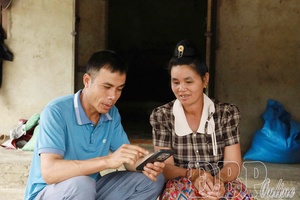
From the perspective of the people, especially the elderly in rural, highland, and border areas, receiving regular health care and monitoring right at the grassroots-level health level is a practical need, helping them feel more secure in life. Lò Thị Mỷ, Thanh Nưa commune, shared: “Recently, the elderly have been propagated and guided by medical staff on regular health care. If the health station continues to be invested with more equipment and medicine, the examination and health monitoring for the elderly will be more convenient, helping us feel secure to live and work suitable to our age.”
From a professional perspective, Lường Thị Thảo from the Population - Communication and Health Education Division under the Mường Ảng Health Center, said that due to the large area and difficult traffic, people in deep-lying and remote areas still face many limitations when accessing population and health care services at the grassroots level health level. Besides barriers regarding customs, habits, and the shy mentality of the people, facilities, equipment, and human resources at some health stations are still lacking, not meeting requirements. If the grassroots-level health level is invested in synchronously, people will have earlier and fuller access to population services, contributing to step-by-step improving population quality in the area.
Practical reality shows that population work at the grassroots level is facing the requirement for methodical, long-term, and more synchronous investment, not only to solve immediate difficulties but also to improve population quality right from the start, creating a foundation for sustainable development.
Sharing on this issue, according to Giàng Thị Dí, Deputy Head of the Population - Communication and Health Education Division under the Nậm Pồ Health Center, strengthening investment for grassroots-level health has a key meaning in improving population quality. When the grassroots-level health system is consolidated, population services such as: Reproductive health care, pre-marital health examination, prenatal and newborn screening will be deployed effectively, helping people, especially those in deep-lying, remote, and ethnic minority areas, access services promptly and with quality.
When the grassroots-level health system is synchronously consolidated, people will have timely and full access to essential population and health care services. Thereby, population quality is step-by-step improved, creating a solid foundation for socio-economic development, ensuring social security and long-term stability. The effective implementation of the Project on Improving the Capacity of the Grassroots-level Health Network within the National Target Program on health care, population, and development for the 2026 - 2035 period has strategic significance, contributing to shaping the sustainable development direction for the locality in the coming years.
Nhật Oanh


.jpg)


.jpg)
.jpg)
.jpg)
.png)
.jpg)
.jpg)
.jpg)
.jpg)
.jpg)
.jpg)
You have 500/500 characters left
Please enter 5 or more characters!!!