



From ensuring the full and timely delivery of support policies for people with meritorious service, poor households and vulnerable groups, to rolling out national target programs linked to livelihood creation and income growth, the province has gradually improved living standards, especially in remote, disadvantaged and border areas.
Special attention has been given to caring for people with meritorious service, poor and nearpoor households and social protection beneficiaries during holidays and festivals, with proactive and timely implementation. Disadvantaged groups, policy families and residents in remote, border and hard-to-reach areas are carefully reviewed to ensure appropriate support, while broad participation from the entire political system, businesses and social organizations is mobilized for visits, gift-giving and essential supplies.
.jpg)
The province is focusing on the effective implementation of national target programs, viewing them as a key lever for sustainable poverty reduction. Program resources are flexibly integrated and prioritized for especially disadvantaged localities, border communes and remote areas. Instead of one-off handouts, many poverty reduction models linked to long term livelihoods have been introduced, helping residents gradually change mindsets and take greater initiative in improving their lives.
During the 2021-2025 period, Điện Biên implemented 953 agricultural production support projects funded under national target programs. Of these, 754 were community-based production projects, mainly providing short cycle crop varieties such as rice, maize, cassava, potatoes, pineapples and purple amomum while 199 projects supported value chain-linked production. Tens of thousands of rural and mountainous households, particularly those from ethnic minority communities, received direct support. As a result, many commodity-oriented production models have taken shape, contributing to sustainable poverty reduction.
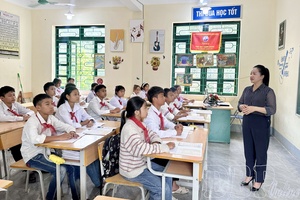
Alongside livelihood support, provincial authorities have prioritized improving people’s access to basic social services, considering this a decisive factor in achieving lasting poverty reduction. Between 2021 and 2025, 100% of workers from poor, near poor and newly escaped poverty households received job matching support, career counseling and labor market information, as well as assistance in finding employment. In addition, 95% of households in especially disadvantaged areas were able to access information on sustainable poverty reduction.
To ensure that support policies truly motivate people to move forward, localities have placed strong emphasis on expanding access to basic social services in tandem with human resource development and job creation. Short term vocational training courses are organized at the grassroots level and aligned with market demand, making them more accessible for poor and ethnic minority workers. Many trainees have secured stable jobs or created their own livelihoods. Over the 2021-2025 period, the province generated new jobs for 51,282 workers and provided vocational training for an average of 8,500 people per year, raising the share of trained workers to 65.1%, thereby helping curb poverty and prevent relapse into poverty.
.jpg)
Efforts to create livelihoods and raise incomes have been synchronized with essential social security policies, in which housing is identified as a critical foundation for people to work with peace of mind and stabilize their lives. The province has implemented various programs to support the construction and repair of homes for poor and near poor households and people with meritorious service to the revolution. Newly built, solid houses not only provide safe and stable shelter but also stand as tangible evidence of the Party’s and the State’s commitment to the people, especially in areas facing persistent hardship.
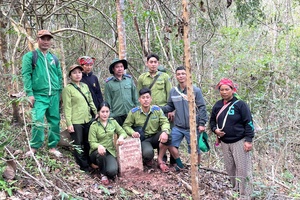
In practice, sustainable poverty reduction is not solely about income, but also about improving overall quality of life and ensuring comprehensive social protection. Accordingly, Điện Biên has integrated poverty reduction goals with new rural development, the preservation of ethnic cultural identities, environmental protection, and the safeguarding of national defense and security in border areas. Thanks to a wide range of coordinated measures, poverty reduction efforts in the province have delivered encouraging results. By 2025, the multidimensional poverty rate had fallen to 17.66%, a yearly average decrease of 4.43%. Notably, the poverty rate among ethnic minority households declined by an average of 5.85% per year, clearly demonstrating the effectiveness of poverty reduction policies and programs linked to livelihood support, production development and improved living standards in disadvantaged communities.
Entering 2026, the province continues to regard social security and poverty eradication as central and decisive tasks. Điện Biên is therefore prioritizing investment in people, education, healthcare, livelihoods and essential infrastructure to enable low income households to improve their prospects and achieve a more stable life.
Thành Đạt

.jpg)



.jpg)
.jpg)
.jpg)
.png)
.jpg)
.jpg)
.jpg)
.jpg)
.jpg)
.jpg)
You have 500/500 characters left
Please enter 5 or more characters!!!