



In a context where the workload at the commune level increased significantly, strengthening the grassroots level by seconding civil servants and public employees was identified as a necessary solution during the transition period. After more than three months of taking up duties in the communes, the seconded officials have become familiar with the area, mastered the work, and coordinated closely with local staff to handle each specific task. Transformations are clearly evident in the organization of work, the process of handling records, and the attitude of service toward the people, contributing to the improved operation of the grassroots-level apparatus.
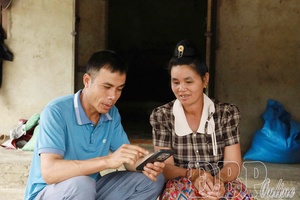
In Si Pa Phìn commune, a highland area still facing many difficulties, Phạm Tư Cường, an employee of the Training and Scientific Research Department at Điện Biên College, was seconded to take charge of the information technology sector. Previously, this work was mainly handled by officials from other specialties as a side job, only reaching basic operations. When issues with connections or software arose, the commune often had to wait for support from higher levels. Upon taking his new duty, Cường reviewed the infrastructure, standardized processes, and advised on a digital transformation plan suitable for the actual conditions of the commune.
.jpg)
The application of ISO standards to administrative activities was implemented synchronously, linked with training and guiding local staff to operate the system step by step. He shared that his goal is not to do the work for others, but to help them understand how to do it so that the work still operates stably later. During the days near the new year, when the volume of records increased, the smooth processing of administrative procedures contributed to reducing pressure on specialized departments and avoided long backlogs.
In Phình Giàng commune, the Public Administration Service Center was always crowded during the year-end days as residents rushed to complete procedures before the holiday break. On the desks, records were arranged by sector, and commune officials enthusiastically explained and guided each case for the people. Phình Giàng commune recently received two seconded officials, Dương Tuấn Vũ from the Department of Finance and Nguyễn Công Duy from Vocational Education Center No.1. If at their old agencies each person was responsible for one specialized field, at the commune, the scope of work expanded, requiring them to handle multiple tasks and coordinate flexibly across sectors. During the final days of the year, work lights remained on late as the volume of records increased.
Sín Thầu commune, after merging from Sín Thầu, Sen Thượng, and Leng Su Sìn, faced a larger management area and a higher workload. The secondment of officials created a clear change in the organization and implementation of tasks. The two officials assigned to the commune are Nguyễn Tiến Đạt from the Digital Platform Department of the Department of Science and Technology and Lường Văn Đông from Project Management Board No.5.
At the commune Economic Office, Lường Văn Đông is in charge of tasks related to construction investment, capital management, legal procedures, and national target programs. Previously, this position was held by a land official as a side job, and since it was not their specialty, the processing of some procedures was slow. Upon arriving at the commune, Đông directly resolved records while guiding local staff to ensure continuity.
.jpg)
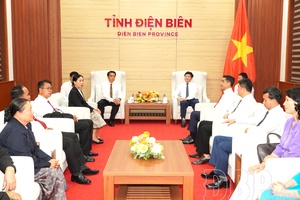
Đặng Thành Huy, Secretary of the Sín Thầu commune Party Committee, stated that assigning the right person to the right specialty has helped the commune promptly handle emerging tasks, especially during the early stages of the two-tier local government model. With seconded officials, many parts of the work are solved faster and more professionally, and local staff also learn new ways of working to maintain later.
In the first year of implementing the two-tier local government, the entire province seconded 52 civil servants and public employees from departments and units to work at communes. The secondment was carried out with clear assignments in specific fields, promoting expertise and attaching specific responsibilities to each task while creating conditions for officials to directly grasp grassroots-level reality. This solution aims to ensure that the commune-level apparatus operates continuously and that administrative discipline is maintained amidst organizational changes.
Practice at the communes shows that the policy of strengthening officials is going in the right direction as expertise is brought to where it is needed, work is organized more professionally, and administrative discipline is upheld during the transition. The apparatus operates smoothly without interrupting tasks directly linked to people’s lives, ensuring that each file is resolved on time and every legitimate need is handled promptly.
From these specific actions, the trust of the people is built and peace of mind spreads, creating a foundation for grassroots-level government to continue operating effectively and stay closer to the people on the path of innovation ahead.
Mai Khôi
.jpg)
.jpg)
.jpg)
.jpg)
.png)
.jpg)
.jpg)
.jpg)
.jpg)
.jpg)
.jpg)
You have 500/500 characters left
Please enter 5 or more characters!!!