



In the province, there are currently 5 units participating in vocational education activities, including: Điện Biên College under the provincial People’s Committee, 4 regional Vocational Education - Continuing Education Centers under the Department of Education and Training, and the Branch of Thái Nguyên University in Điện Biên province based on the merger of College of Pedagogy and College of Medicine.
Regarding scale, occupational structure, and training levels, the units basically meet the needs and quality for socio-economic development of the province and the region. In the 2020 - 2024 period, the whole province enrolled and trained over 45,000 people. Of which, 879 people at college level, 2,958 people at intermediate level, and 41,266 people at primary and under-3-month training levels. In 2025, it is estimated to train about 8,500 workers.
The above results contributed to raising the percentage of trained workers in the province to over 63%. Notably, for key invested occupations, the rate of students having jobs after training reached over 75%; some occupations reached over 90%. For trades trained under 3 months, over 80% of workers after finishing have a new job or continue the old job but know how to apply knowledge and techniques to practical production to improve productivity, quality, and increase income.
.jpg)
Trần Đăng Ninh, Deputy Director of the Department of Education and Training, said that vocational education work has achieved important results contributing to socio-economic development, new rural construction, and poverty reduction of the province. However, investment resources for vocational education in the province are very limited, mainly from capital sources of national target programs. In the 2021 - 2025 period, total funding for the vocational education sector was VND 258,793 million; of which the Central budget allocated VND 252,858 million, and local budget counterpart was VND 5,935 million. Mobilizing socialization resources for investment in vocational education is very difficult due to limited socio-economic conditions and financial resources of the province; people’s awareness of the importance of vocational learning is not high; and not many companies and enterprises operate in the education sector.
Limited resources have somewhat affected the quality of vocational education in the area. A part of the workforce does not fully meet the requirements of employers; graduates still lack soft skills, informatics, foreign languages, sense of organizational discipline, industrial style, and teamwork skills. The system of facilities and vocational teaching equipment of vocational education units has not been invested in synchronously and modernly.
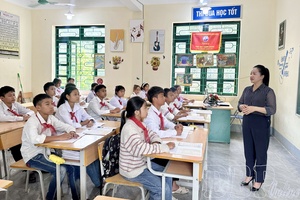
The Vocational Education - Continuing Education Center 1 registered for vocational education activities with occupations: Construction engineering; motorbike repair; installation and repair of domestic electricity and water; livestock techniques, and disease prevention and treatment for buffaloes, cows, pigs, goats, poultry. In 2025, the Center opened 20 vocational training classes for nearly 700 people with implementation funding of billions of VND. All training funding comes from Central and local budgets. The Center has not mobilized other resources for investment in vocational education development.
According to Deputy Director of the Department of Education and Training Trần Đăng Ninh, to mobilize investment resources for vocational education in the area, in the coming time, units need to strengthen socialization and enterprise cooperation; linking schools with enterprises in participating in training and connecting jobs for students. At the same time, encouraging enterprises to support retraining and advanced skill training; attracting experts and high-skilled workers to participate in teaching; and continuing to promote financial autonomy mechanisms for vocational education institutions. Prioritizing investment in high-quality institutions, synchronous infrastructure, and innovation in vocational education. Building a modern, fair learning environment, aiming to improve the quality of workforce training, create jobs, and resolve the shortage of skilled labor locally; ensuring learning opportunities for everyone, especially in ethnic minority areas.
Đức Linh

.jpg)



.jpg)
.jpg)
.jpg)
.png)
.jpg)
.jpg)
.jpg)
.jpg)
.jpg)
.jpg)
You have 500/500 characters left
Please enter 5 or more characters!!!