



Poverty reduction stands out as one of the most significant achievements after five years of implementing the National Target Program on socio-economic development in ethnic minority and mountainous areas. In 2021, the province’s poverty rate stood at 34.9 per cent. By 2024, it had fallen to 21.29 per cent, and is projected to drop further to 17.66 per cent by the end of 2025.
This progress has been driven by a wide range of effective livelihood and production support models.
A notable example is the community-based commercial H’Mông chicken farming project launched in Mường Ảng in October 2024. Nearly 12,000 H’Mông chickens were distributed to more than 250 households. The model has since been maintained and expanded locally thanks to its proven effectiveness, becoming a suitable and sustainable livelihood option that provides stable income for many ethnic minority families.
Lý Giống Khá, Secretary of the Party Cell of Tát Hẹ village, Mường Ảng commune, said that in addition to receiving chicks, animal feed, disinfectants, biological products and vaccines, participating households were also provided with hands-on technical training in raising and developing H’Mông chickens at the household level. Through practical, step-by-step instruction, families have mastered feeding and care techniques at each growth stage, basic hygiene and disease prevention measures, and the treatment of common poultry diseases, ensuring healthy flock development.
.jpg)
Alongside the H’Mông chicken farming project, and based on local conditions, the province has rolled out a range of livelihood models tailored to the natural environment and traditional production practices of ethnic minority communities. These include growing amomum under forest canopies, winter melon cultivation, medicinal plant production, and breeding cattle and buffalo.
According to provincial figures, during the 2021-2025 period, more than 320 poverty reduction and production support projects and models have been implemented for poor, near-poor and newly out-of-poverty households in ethnic minority areas. Many of these models have been replicated after demonstrating strong results, helping people shift their production mindset from subsistence farming to market-oriented production.
In parallel with livelihood development, vocational training and job creation have been identified as long term priorities for improving living standards in ethnic minority areas. On average, the province provides vocational training for more than 9,000 workers each year and helps over 10,000 people secure employment, most of whom come from poor and near-poor households. Many workers find stable jobs at enterprises both inside and outside the province after completing training, while others work overseas under labour contracts, gradually gaining access to modern work practices and higher incomes. As a result, average per capita income reached VND 21.84 million in 2021 and is estimated to rise to VND 54 million by 2025.
Under the National Target Program on socio-economic development in ethnic minority and mountainous areas, the province has placed strong emphasis on improving basic living conditions, particularly housing. During the 2021-2025 period, thousands of houses for poor and near-poor households have been built or repaired using funding from government programmes, policies and social contributions. Notably, through nationwide campaigns launched by the Prime Minister, the Central Committee of the Vietnam Fatherland Front and central ministries and agencies, Điện Biên province has supported housing construction for more than 22,000 poor households. These efforts have enabled families to focus on production, ensure their children’s education and strengthen their motivation to improve their lives.
Lò Văn Ngơi of Na Hý village, Thanh Nưa commune, shared with excitement that at the end of December 2025, his family moved into a solid and well-built “great solidarity house,” funded by support from various authorities and agencies, with villagers contributing labour during construction. With stable housing, his family no longer worries about storms and harsh weather and can focus on developing their livelihoods and raising their children, gradually improving their quality of life.
.jpg)
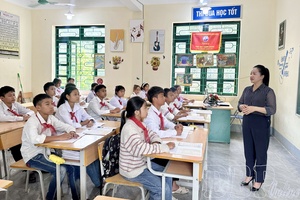
Rising living standards in ethnic minority communities are also reflected in improved access to basic social services. Currently, 98 per cent of ethnic minority people are covered by health insurance, and 100 per cent of poor and near-poor households receive health insurance support. In education, the province has prioritised investment in school facilities in ethnic minority areas and fully implemented student support policies in line with regulations. To date, more than 87 per cent of ethnic minority children attend school at the appropriate age, and universal education programmes continue to be maintained.
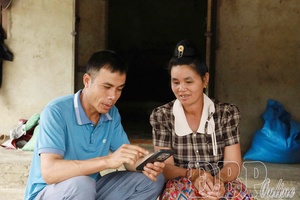
Socio-economic infrastructure in ethnic minority areas has been increasingly developed in a coordinated and comprehensive manner. All communes now have paved roads connecting to their centres, facilitating trade and production. The proportion of ethnic minority people with access to hygienic domestic water has reached 94 per cent. Grassroots information systems have also been strengthened, enabling residents to access policies, guidance and production-related information in a timely manner.
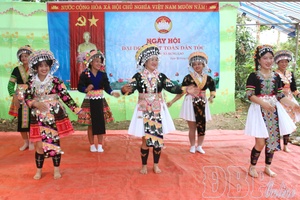
The landscape of Điện Biên today is changing day by day. From solid houses rising in highland villages to steadily improving livelihoods, these transformations reflect the effective and coordinated implementation of national and provincial socio-economic development policies, in which the National Target Programs play a pivotal role in improving living standards and promoting sustainable development in ethnic minority and mountainous areas.
During the 2021-2025 period, total funding allocated from the central and local budgets for the implementation of the National Target Program on socio-economic development in ethnic minority and mountainous areas in the province exceeded VND 4.539 trillion. Of this, the central budget accounted for VND 4.1703 trillion, while the local budget contributed VND 368.7 billion. These resources have helped upgrade infrastructure, boost production, improve quality of life and narrow the development gap between ethnic minority areas and other regions.
Quang Long
.jpg)


.jpg)
.jpg)
.jpg)
.png)
.jpg)
.jpg)
.jpg)
.jpg)
.jpg)
.jpg)
You have 500/500 characters left
Please enter 5 or more characters!!!