



It served as a vivid picture reflecting the characteristic cultural life and community spirit of the Hmong in the Northwest region. In the past, Gầu Tào was primarily organized within specific lineages or families, but through the shifts of time and the continuous development of society, the festival became less frequent, and the number of people who knew how to perform the rituals dwindled.
.jpg)
In recent years, with the attention of local authorities, the festival was restored and expanded in scale, becoming an indispensable cultural space during the early days of the new year for the Hmong community. Hồ A Páo, Vice Chairman of the Nà Bủng commune People’s Committee, noted that over 95% of the local population belonged to the Hmong ethnic group.
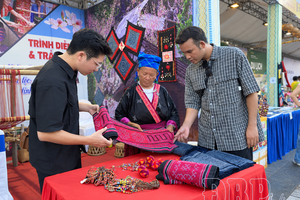
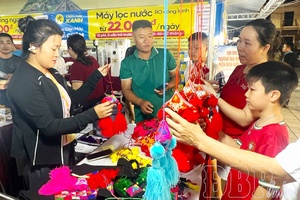
For them, Gầu Tào held a special significance in their cultural and spiritual lives. To preserve and promote these fine customs, the commune’s Party Committee and authorities organized the festival annually, creating a space for spring travel and providing artisans with a venue to practice, pass down, and promote traditional values amidst modern life, thereby spreading ethnic culture to a wide range of residents and tourists.
.jpg)
The Gầu Tào festival was divided into two distinct parts: the ritual and the festivities. In the Hmong language, “Gầu Tào” translated to “playing outdoors” or a “hilltop festival.” Consequently, the chosen location was typically an open, flat, and spacious hillside, based on the belief that catching the sunlight would bring fortune and luck to those in attendance. During the ritual part, all activities took place beneath the Nêu tree, a bamboo pole erected at the highest, central position so that everyone could easily find the gathering. Spiritually, the tree acted as a bridge, a connection between heaven and earth, and between the shaman and the deities.
The offerings were made to inform the ancestors of their descendants’ gratitude and to invite the gods to celebrate with the village. People prayed for peace, health, prosperity, and bountiful harvests, while childless families also used the occasion to pray for children. Mùa A Thống, a shaman from Púng Pá Kha village in Nà Bủng commune, shared that the festival was a sacred thread connecting the cultural flow of the Hmong across many generations. He expressed his joy at having a space to practice and promote these traditional traits, hoping that the festival would help the younger generation understand and love their own culture.
.jpg)
Giàng A Khai from Nậm Tắt 2 village participated in preparing the Nêu tree and the ritual for the first time that year. Witnessing the full ceremony and hearing the shaman’s prayers allowed him to feel the sacredness and the responsibility of his generation in preserving and passing down these cultural beauties.
In the rhythm of modern life, maintaining the Gầu Tào festival in Nà Bủng represented a bright spot in the preservation of folk rituals. It confirmed that traditional culture was an important internal factor contributing to local socio-economic development. With the joint efforts of the local government and the support of the people, the Gầu Tào festival in Nà Bủng was expected to be continuously preserved and promoted for years to come.
Trần Nhâm - Thành Đạt
.jpg)
.jpg)
.jpg)
.jpg)
.jpg)
.jpg)
.jpg)
.jpg)
.jpg)
.jpg)
You have 500/500 characters left
Please enter 5 or more characters!!!