



In Na Son commune, every spring, the villages resonate with the sounds of drums, gongs, and the khèn (panpipe) calling for the festival. Both young and old dress in traditional attire, practicing cultural performances and folk games, creating a joyful and bustling atmosphere.
.jpg)
Quàng Văn Phong, Chairman of the Na Son Commune People’s Committee, stated: The 2026 Spring Festival was organized by the commune with many activities deeply imbued with local cultural identity, such as: bánh dày (sticky rice cake) pounding competitions, tung còn (shuttlecock throwing), stick pushing, tug-of-war; cultural exchanges; and traditional folk song and dance performances. Notably, the traditional bullfighting event served as a major highlight, attracting a large number of residents and tourists to watch and cheer.
During the two days of the 2026 Bính Ngọ Spring Festival, Na Son welcomed more than 40,000 visitors. This confirms the community’s interest in traditional cultural activities and reflects the widespread impact and lasting value of customs and habits preserved and passed down through generations.
.jpg)
Linked to the beauty of the region’s signature flower, the Hoa Ban Festival, held every March, has become a familiar cultural rendezvous for locals and tourists alike. In a space vibrant with colors, graceful xòe dances, smooth lyrics, and the sounds of the tính tẩu (lute) and khèn create a cultural tapestry rich in identity.
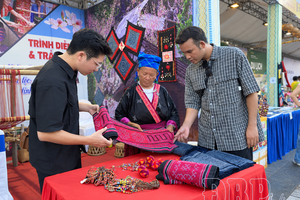
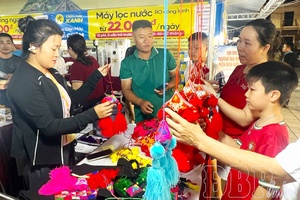
Trần Hải Hà, Acting Director of the Department of Culture, Sports, and Tourism, said: This year, the Hoa Ban Festival will be held from March 6 to 12, coinciding with the peak blooming season. The festival framework includes various unique cultural activities: performing folk songs and dances, introducing traditional costumes; recreating community cultural spaces; organizing folk games and mass sporting activities; and displaying and promoting characteristic cultural and tourism products.
.jpg)
Alongside the diverse range of cultural, sporting, and tourism activities that bear the historical imprint of the heroic land of Điện Biên, the 2026 Hoa Ban Festival also features activities where visitors can experience the daily lives of Điện Biên soldiers from the past. This is considered a special highlight, connecting the glorious past with the present and helping visitors better understand the hardships faced by previous generations in the struggle for national liberation.
With 19 ethnic groups living together, Điện Biên province has focused on conserving and promoting the value of traditional festivals over the years. Many festivals have been restored, such as: Gầu Tào Festival (Mông people in Nà Bủng commune), Tra hạt (Seed Sowing) Festival (Khơ Mú people in Búng Lao commune), Thành Bản Phủ Festival (Thanh An commune), Xên bản and Xên mường ceremonies (Thái people in the Điện Biên basin).
.jpg)
In addition to restoring traditional rituals, customs that are no longer appropriate are reviewed and adjusted toward a more civilized and economical approach. Many localities integrate cultural displays, such as traditional costumes, folk songs, ethnic musical instruments, and cuisine, into cultural, sports, and tourism festivals or the Great National Solidarity Day. Through this, community living spaces are recreated, enabling people to directly participate in practicing, preserving, and spreading their ethnic cultural identity.
Artisan Quàng Văn Cá (Tọ Cuông village, Búng Lao commune) shared: At the end of 2025, the 120 households in the village were elated when the Mạ Muôn Mạ Mệ (New Rice Ceremony) of the Khơ Mú people was formally restored by the Commune People’s Committee according to traditional rites. This is an occasion for the community to look back on a year of production, express gratitude to ancestors, and pray for favorable crops and a prosperous life.
.jpg)
Preserving cultural beauty through traditional festivals is a long-term task that requires the cooperation of the entire political system and the people. For festivals to be maintained sustainably, the people must be the central subjects, voluntarily participating, actively practicing rituals, and taking pride in their ethnic traditions. When the community engages with a sense of responsibility and cultural faith, festivals truly gain vitality and promote their inherent values.
Quang Long
.jpg)
.jpg)
.jpg)
.jpg)
.jpg)
.jpg)
.jpg)
.jpg)
.jpg)
.jpg)
You have 500/500 characters left
Please enter 5 or more characters!!!