



A review of the responses to voter petitions submitted before and after the 24th session of the 15th Điện Biên provincial People’s Council shows that many pressing public concerns have been resolved, legitimate requests have been addressed promptly, and public confidence in local government has been further strengthened.
According to provincial authorities, the Điện Biên provincial People’s Committee received 26 voter petitions before and after the council’s 24th session. Immediately after receiving them, the committee assigned relevant departments and local authorities to conduct field inspections, review each case, and propose appropriate solutions or official responses in accordance with regulations.
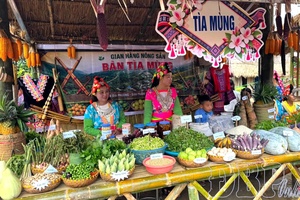
One issue that attracted significant public attention was the completion of essential infrastructure in the Tìa Mùng resettlement area in Tìa Dình commune. Following the natural disasters of 2025, around 70 households were relocated to safer areas. However, the resettlement site initially lacked electricity and clean water, making it difficult for residents to rebuild their lives.
.jpg)
In response to voters’ concerns, the provincial People’s Committee instructed regional Project Management Unit No. 2, the project’s investor, to accelerate construction by mobilizing additional workers and equipment. By March 26, 2026, electricity, water supply systems, and other essential infrastructure had been completed and handed over for public use.
Mùa Thị Tro, a resident of Tìa Mùng Village, said: “The landslide caused by heavy rain in 2025 completely destroyed my family’s house. Thanks to the support of the Party, the State, and local authorities, we have been relocated to a new resettlement area. Life here is much better, and we now feel secure enough to rebuild our livelihoods.”
In addition to livelihood issues, authorities have also focused on resolving voter concerns related to urban planning and public investment.
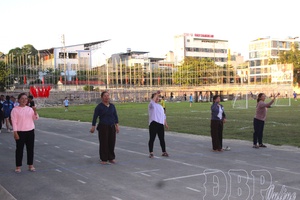
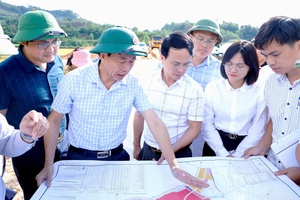
One notable example came from voters in Điện Biên Phủ ward, who raised questions about the long-delayed project to build the Điện Biên provincial Sports Center. The project has undergone several planning revisions over the years, and residents requested greater transparency regarding its implementation schedule, planning orientation, land acquisition process, compensation policies, and resettlement support.
Responding to these concerns, the provincial People’s Committee confirmed that the project remains on schedule under the investment policy approved by the provincial People’s Council through Resolution No. 18/NQ-HDND dated June 29, 2021.
Construction officially began in December 2023, and work is currently underway on precast structural components and site preparation, with more than 15 percent of the contracted work completed. Land acquisition has also accelerated, while compensation and support plans have been publicly disclosed, consulted upon, and implemented in accordance with legal regulations.
According to Nguyễn Quang Hưng, Member of the provincial Party Standing Committee and Secretary of the Party Committee of Điện Biên Phủ ward, the ward has mobilized the entire political system to support land clearance for the project.
Land measurement, property inventories, land-origin verification, and public information campaigns have been carried out on a regular basis to build public consensus. Difficulties and concerns raised by residents are reviewed and addressed promptly whenever they fall within the ward’s authority, while issues beyond its jurisdiction are reported to higher authorities for consideration.
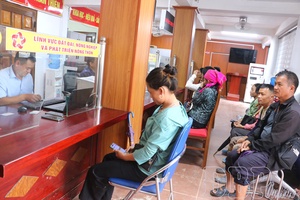
According to the provincial People’s Committee, all petitions forwarded by the Standing Committee of the provincial People’s Council have been received, assigned to responsible agencies, and responded to in accordance with legal procedures. Many issues arising from people’s daily lives have been resolved in a timely manner, helping meet voters’ legitimate expectations.
However, authorities also acknowledged that several challenges remain. Of the 26 petitions, 11 are still being processed, accounting for approximately 42 percent of the total. Some long-standing issues have yet to be fully resolved due to constraints involving legal mechanisms, policy frameworks, investment funding, or procedures related to land acquisition, compensation, and resettlement. Limited local financial resources have also made it difficult to address petitions requiring substantial investment.
In the coming period, the provincial People’s Committee will continue working to resolve outstanding petitions while addressing policy and resource-related obstacles in order to improve the effectiveness of the petition-handling process.
The committee also called on the provincial People’s Council, its specialized committees, and council members to strengthen public communication by clearly explaining issues that have already been resolved, as well as those that cannot yet be implemented due to existing conditions. Such efforts are expected to foster greater public consensus, reinforce trust in local government, improve the effectiveness of public administration, and further promote grassroots democracy.
Phương Dung

.jpg)
.jpg)
.jpg)
.jpg)
.jpg)
.jpg)
.jpg)
.jpg)
.jpg)
.jpg)
.jpg)
You have 500/500 characters left
Please enter 5 or more characters!!!