



Multiple roles, multiple tasks
During the final days of May, when the rabies vaccination campaign for livestock entered its peak period, Lò Văn Phong, an agricultural extension officer at the Nà Tấu commune General Service Center, had almost no days off. Given the vast territory and many villages located far from the center, the workload scaled up drastically. To complete the plan, he and the specialized force visited two to three villages every day to vaccinate livestock herds. Lò Văn Phong shared that besides his agricultural extension expertise, whenever the center organizes communication drives, hangs banners and slogans, or hosts cultural and sports activities, he participates in all of them. He noted that the workload is heavy and the pressure is immense, but the team always upholds a high sense of responsibility, especially during the initial operation phase when there are many new or unexpected tasks.
.jpg)
At the Pu Nhi commune General Service Center, although the managed area has a smaller natural acreage, the work pressure remains substantial. The center currently has five public employees in charge of 25 villages, many of which are located dozens of kilometers away from the center with difficult traffic conditions, particularly during the rainy season. Whenever a task is deployed, the unit mobilizes its entire workforce to reinforce the grassroots, ensuring the progress and efficiency of the work.
Lò Thị Lan Anh, Deputy Director of the Pu Nhi commune General Service Center, stated that immediately after going into operation, the center quickly stabilized its organizational apparatus and synchronously deployed multiple tasks across the fields of culture, sports, information and dissemination, agricultural extension, and production support for residents. She added that because the territory is large and the workload is immense, the center’s officers regularly stick close to the grassroots to grasp the actual needs of the people to provide appropriate production technical guidance and dissemination. Since the majority of the population consists of ethnic minority groups, the dissemination content must be tailored to help improve the efficiency of information reception at the grassroots level.
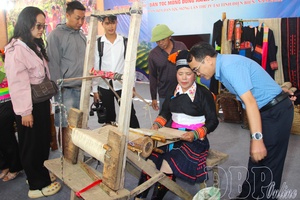
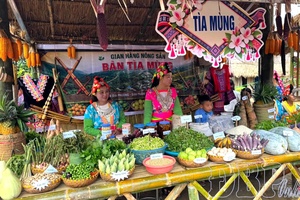
In reality, despite being newly established and operating with a thin workforce, the commune-level General Service Centers have rapidly stabilized their organizations and proactively stuck to the grassroots to execute their tasks. Frequently being present at villages and hamlets helps the team of officers promptly grasp the practical needs of the people, thereby developing and organizing appropriate activities that match reality. Consequently, many cultural, sports, information dissemination, and production support programs over the past period have been deployed methodically, attracting a large number of residents and contributing to raising spiritual life and strengthening community cohesion.
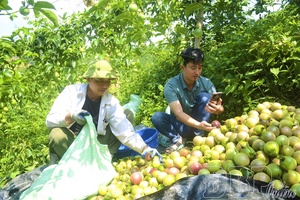
In addition, the commune-level General Service Center holds an important role in supporting production and developing the agricultural economy. In Thanh Yên commune, many new production models have been implemented effectively thanks to the regular monitoring and guidance of the specialized team of officers.
Lò Thị Hồng Vân, an agricultural extension officer at the Thanh Yên commune General Service Center, shared that when African swine fever appeared in the area, specialized officers frequently went to the grassroots to review and compile statistics on the number of infected animals, determine the extent of damage, and advise on appropriate handling solutions. Concurrently, they directly guided residents on disposing of infected pigs according to regulations, while disseminating to raise awareness of disease prevention and control and minimize the risk of spread in the community. She noted that despite the large workload and the need to perform multiple tasks simultaneously, the center’s team of officers always proactively arranges their time and coordinates to support one another, ensuring that specialized operations and other tasks are executed promptly without disruption.
Streamlining focal points, increasing efficiency
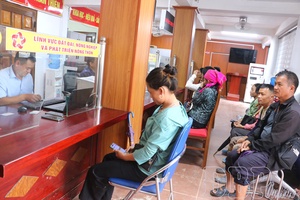
The establishment of the commune-level General Service Center is a crucial step in arranging and streamlining the system of public non-business units under the two-level local government model. The centers are tasked with executing multiple duties across fields ranging from agricultural extension, forestry extension, and disease prevention to culture, sports, and information and communications.
.jpg)
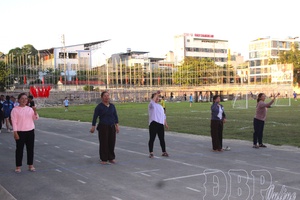
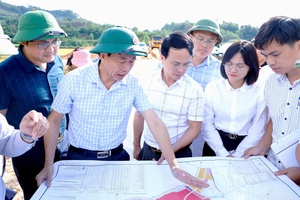
Expected to reduce focal points, overcome overlaps in functions and duties, and bring public services closer to the people, the commune-level General Service Center model sets higher requirements for the team of officers during their official duties. In Thanh Yên commune, from the beginning of 2026 to present, the unit has coordinated to organize numerous activities such as environmental sanitation, arts and culture, and sports, contributing to raising spiritual life and building a civilized lifestyle in residential areas.
Nguyễn Thị Liễu, Deputy Director of the Thanh Yên commune General Service Center, noted that the establishment of the center has created conditions for cultural, sports, and dissemination activities to be organized more methodically and regularly. The center has become a focal point to coordinate with mass organizations and villages in deploying local movements. She added that activities are no longer scattered but are organized synchronously, tied to the actual needs of the people, and yielding clearer efficiency.
While many initial efficiencies have been recorded, reality shows that the commune-level General Service Center model also poses quite a few challenges, first of which is the pressure on human resources. Many centers have a limited number of public employees, while the workload is heavy and spans across multiple fields, forcing each officer to hold concurrent positions for multiple tasks, from specialized expertise to supporting activities.
Phạm Quang Thành, Director of the Na Son commune General Service Center, stated that the new model requires the team of officers to proactively enhance their capacity and adapt to multi-disciplinary job requirements. Aside from their trained expertise, many officers have to self-study and cultivate new skills, such as video editing and production, to serve dissemination work. He emphasized that the flexibility and proactivity of each officer serve as key factors to effectively execute the work.
Currently, many centers have to utilize the headquarters of the commune People’s Committee or health stations to operate. The lack of working equipment has affected operational efficiency. However, precisely in that context, the sense of responsibility and proactivity of the team of officers help the unit operate smoothly and efficiently.
The fact that communes proactively arrange workplaces, assign clear duties, and require officers to stick close to the grassroots level has contributed to helping the General Service Center maintain stable operations during the initial phase. For the model to maximize its long-term efficiency, it is necessary to continue perfecting mechanisms, supplementing human resources and equipment, and upgrading the capacity of the team of officers, contributing to building an administration that is close to the people and for people.
Hà Linh

.jpg)
.jpg)
.jpg)
.jpg)
.jpg)
.jpg)
.jpg)
.jpg)
.jpg)
.jpg)
You have 500/500 characters left
Please enter 5 or more characters!!!