



In the context of increasing workload, diverse nature, and proximity to the people, increasing authority for the commune level is identified as an important solution to improve state management effectiveness, while serving the people faster, more conveniently, and more transparently.
On May 31, 2025, the Politburo issued Conclusion No.160, transferring 1,060 tasks and authorities to the commune level. Subsequently, the Law on Organization of Local Government, passed by the National Assembly on June 16, 2025, supplemented and adjusted many contents related to decentralization and delegation of power. Specifically, Article 22 stipulates increasing the number of tasks and powers of the Commune People’s Committee from 3 to 10 contents; Article 23 expands the tasks and powers of the Chairman of the Commune People’s Committee from 3 to 17 contents. These amendments create an important legal corridor, helping the commune level be more proactive in management and administration, while clearly defining the responsibility of the head in performing public duties.
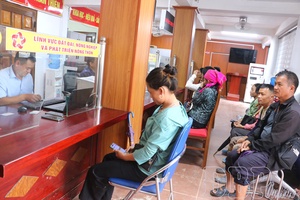
In the context where administrative reform, digital transformation, and apparatus streamlining are being deployed synchronously, empowering the commune level more strongly is seen as a key step to improve the quality of service to the people. The commune level is the place that directly receives and processes most procedures arising in daily life. When clearly decentralized and fully authorized, the commune level has the conditions to resolve work faster and closer to reality; people benefit from convenient public services, shortening waiting time and reducing travel costs. Increasing authority for the commune level is not only increasing responsibility but also affirming the goal of taking the people as the center and taking service quality as the measure of the public authority’s efficiency.
In Mường Chà commune, the deployment of the 2-tier government model shows many positive changes. Nguyễn Hữu Đại, Chairman of the commune People’s Committee, stated: “When tasks and authorities are more decentralized to the commune level, the process of resolving dossiers and procedures for people is more favorable, ensuring speed and smoothness. Officials are more proactive in work, and people reduce waiting time.”
.jpg)
After the arrangement of administrative units, the party committee and authorities of Mường Chà commune conducted a review and rearrangement of the contingent of officials, civil servants, and public employees in a direction suitable for the new task requirements. Personnel are assigned according to each professional field, with strengthened training and fostering to improve professional qualifications. Notably, the commune arranged 2 specialized civil servants in charge of digital transformation and information technology application; 100% of officials and civil servants have applied informatics certificates. With proactiveness in human resources and techniques, from July 1, 2025 to present, the commune has received and resolved 691 administrative procedures, of which 666 dossiers were implemented online. This rate reflects a clear change in the local application of information technology.
In Mường Ảng commune, the effectiveness of decentralization is clearly shown through the quality of dossier processing in the fields of authentication, confirmation of land origin, social security procedures, and many tasks arising at the grassroots level.
Đỗ Thị Thủy, Deputy Director of the Public Administration Service Center of Mường Ảng commune, said: “Being clearly decentralized helps commune officials be more proactive and responsible. People coming to the commune have many procedures resolved immediately, without having to wait or travel far. The workload increases but the process is smoother.”
Statistics show that from July 1 to present, Mường Ảng commune has received and resolved 1,385 administrative procedure dossiers, of which 983 were online and 402 were in-person. Notably, 971 dossiers were returned ahead of schedule, with no overdue dossiers. The commune also resolved 2,201 non-administrative procedure dossiers, including curriculum vitae confirmation, ethnicity confirmation, and confirmation of papers serving people’s daily needs. These figures clearly reflect the effectiveness of decentralization: Faster procedures, improved service quality, and higher citizen satisfaction.
The reality after the arrangement of administrative units and the deployment of the 2-tier government model shows that the commune level is becoming the most direct and frequent “touchpoint” with people in the province. Most requirements related to civil status, land, policy regimes, social security, agriculture, construction order management... arise at the grassroots level. When authority is assigned appropriately, the commune level handles work closer to reality, more timely, and significantly reduces the situation of passing the buck or overlapping.
From July 1, 2025 to present, the People’s Committees of communes and wards in the province have received and resolved 47,894 administrative procedure dossiers, of which 44,146 were online and 3,747 were in-person. There were 45,317 dossiers resolved on time and ahead of schedule; 151 overdue dossiers; and 462 dossiers being resolved within the time limit. These figures show the great efforts of the grassroots-level government and reflect the effectiveness of increasing authority for the commune level in serving the people.
In the context that Điện Biên continues to streamline the apparatus and improve the validity and effectiveness of local government operations, increasing authority for the commune level is an inevitable requirement. This is not only an organizational adjustment but also a long-term orientation to bring the government closest to the people, resolve work where it arises, reduce social costs, and improve people’s trust in public agencies. For a mountainous and scattered area like Điện Biên, empowering the commune level more strongly has special significance: Helping people in highland, remote, and isolated areas access public services favorably and quickly; while promoting the autonomy and proactiveness of the grassroots level in local management and development.
Minh Thư
.jpg)

.jpg)
.jpg)
.jpg)
.jpg)
.jpg)
.jpg)
.jpg)
.jpg)
.jpg)
You have 500/500 characters left
Please enter 5 or more characters!!!