



Evidence from the past eight months across various localities in Điện Biên province demonstrates that this new apparatus is beginning to operate seamlessly, resulting in positive developments regarding document processing speed, the integration of technology, and overall citizen satisfaction.
The 2025 survey regarding citizen satisfaction with state administrative services indicated an average provincial satisfaction rate of 81.34%. Among the 45 communes and wards included in the study, seven units achieved scores surpassing 90%. These figures serve as an objective benchmark for grassroots service quality and provide a foundation for each locality to evaluate their performance and identify specific strengths and weaknesses for continued refinement and operational efficiency.
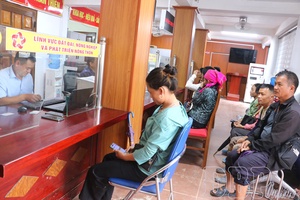
As one of the regions maintaining a stable level of service, the Sáng Nhè commune Public Administrative Service Center stabilized its operations immediately following the Lunar New Year holiday to focus on citizen requests. During a four-day period from February 23 to 26, the center handled over 200 interactions from various organizations and individuals seeking administrative procedures or document certifications. During this same window, the unit received 62 online submissions and successfully resolved 56 of them while the remaining six are currently being processed, maintaining a 100% rate for on-time or early resolution. Notably, the record digitization rate reached 100% and online payment adoption reached 95.5% for the 22 records requiring fees or charges.
.jpg)
Phạm Ngọc Điện, Chairman of the Sáng Nhè commune People’s Committee, stated that the local civil servants and staff have dedicated their full capacity to implementing this model. As workloads and pressures increased, the official team had to become more proactive in guiding and supporting citizens to complete their records accurately from the start to minimize the need for multiple return trips.
In Núa Ngam commune, the 2025 satisfaction index for the People’s Committee’s service reached only 73.97%, yet the locality saw a remarkable turnaround by the January 2026 assessment period where it was ranked as excellent with 95.67 points. This improvement reflects a significant effort in tightening administrative discipline, enhancing official responsibility, and promoting the resolution of procedures within the digital environment. Cao Văn Toàn, Vice Chairman of the Núa Ngam commune People’s Committee, noted that while the initial volume of tasks transferred from the district level caused some confusion and pressure, the staff has since adapted to the workload. The local Party Committee and People’s Committee have focused on encouraging staff to improve their work quality by transforming their attitudes and service capacities at every stage of the process.
Real-time evaluation results for January 2026 regarding the quality of service for citizens and businesses show that Điện Biên is making rapid progress. The province earned a score of 95.37 out of 100, ranking first among the 34 evaluated provinces and cities. Within this framework, indicators for transparency and satisfaction levels both achieved the maximum score of 18 out of 18, while processing progress reached 19.77 out of 20 and online services scored 20 out of 22. Record digitization earned 19.6 out of 22 points, and at the communal level, 43 out of 45 units were classified as excellent while the remaining two were rated as good.
Despite these achievements, an analysis of the component indices suggests that improving service quality at the communal level still faces certain bottlenecks that require further resolution. In response, the provincial People’s Committee recently issued Official Dispatch No.1012/UBND-PVHCC regarding the continued enhancement of service quality for citizens and businesses in administrative procedures and digital public services.
The province now requires communes and wards to further tighten administrative discipline and ensure that record resolution remains on time or ahead of schedule. There is a renewed focus on strengthening guidance and support for citizens and businesses from the initial reception phase and substantively implementing the “Green Lane” mechanism for administrative processing. Furthermore, authorities are expected to increase promotion and support for the use of online public services, online payments, and record digitization to create a genuine improvement in the experience of citizens accessing public administrative services.
Hà Linh


.jpg)

.jpg)
.jpg)

.jpg)
.jpg)
.jpg)
.jpg)


.jpg)
.jpg)
.jpg)
You have 500/500 characters left
Please enter 5 or more characters!!!