
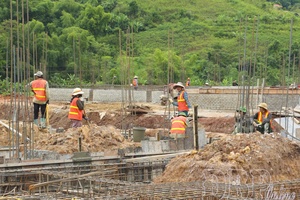
In the early days of June, across the gentle hill slopes of villages throughout Điện Biên province, rows of planting holes stretch along mountainsides like regular strokes painted on the red soil. Reaching the stage where hillsides are ready to receive seedlings today is the result of months of tireless labor. Ever since early April, when the province launched the movement to cultivate new coffee and macadamia trees, the entire political system from the provincial down to the grassroots level swung into action simultaneously. Armed forces, self-defense militia, cadres, teachers, and a vast number of citizens joined hands to dig planting holes. Across various localities during peak days, the sound of earth-boring machines, hoes, and shovels echoed from early morning until late afternoon.
According to statistics from the provincial Department of Agriculture and Environment, the province mobilized 38,624 worker turns to dig planting holes, drawing broad participation from cadres, civil servants, public employees, teachers, armed forces soldiers, self-defense militia, and local citizens. Thanks to this drastic involvement, the province has completed over 33.14 million holes for macadamia and coffee trees, reaching more than 153% of the target.
Mường Lạn stands as one of the earliest localities in the province to fulfill its plan. Right from the campaign’s launch, the commune identified local forces as the core, while mobilizing support from the self-defense militia and armed forces to dig holes. Working and technical teams were established to closely follow the grassroots, offering guidance, conducting inspections, and executing acceptance checks right during implementation. To cultivate an emulous spirit, Mường Lạn commune launched several movements to reward excellent hole-digging individuals and households, alongside motivating villages to complete their tasks early with guaranteed quality.
Nguyễn Thế Trung, Chairman of the Mường Lạn commune People’s Committee, stated: “To date, nearly 182,000 planting holes for coffee and macadamia are ready to receive seedlings. The commune is carrying out the final preparation steps to enter the planting season, striving to finish on schedule to guarantee the best growth and development conditions for the seedlings.”
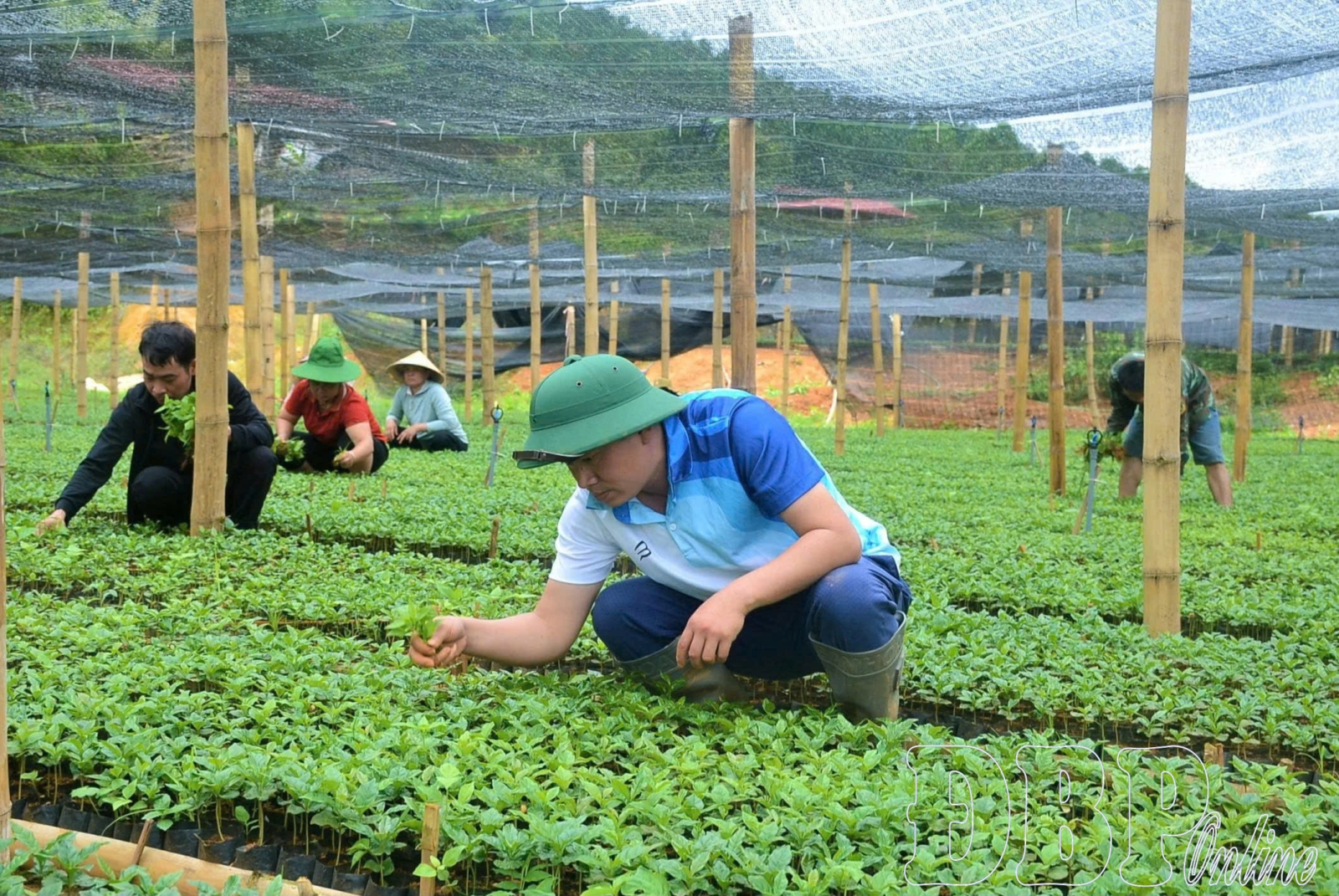
Alongside hole digging, seedling preparation is treated as a pivotal task. Up to now, the province has prepared nearly 35 million seedlings for this year’s new cultivation season. Many localities have proactively set up on-site nurseries, selecting certified elite mother trees for dissemination to secure seed quality right from the start.
In 2026, Mường Mùn commune aims to plant 1,200 ha of new coffee. To achieve this, since the beginning of the year, the commune established working groups to visit each village to disseminate and mobilize residents to register for production area conversion. Once the registered area matched the plan, the commune urgently built nurseries. Seven nurseries were constructed across seven villages, securing an adequate supply of seedlings to cover the entire new cultivation area. Nguyễn Mạnh Hùng, Chairman of the Mường Mùn commune People’s Committee, noted that through a methodical and proactive approach spanning from dissemination to seedling preparation, Mường Mùn commune is determined to fulfill 100% of the 2026 coffee development plan, striving to reach and exceed the full-term target within the first year of executing the resolution.
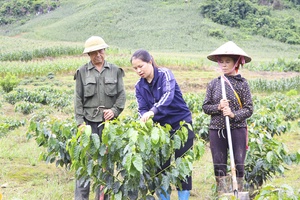
In early June, early-season rains became more frequent in Điện Biên. The downpours soften the soil and increase humidity, creating the most favorable conditions for seedlings to take root and thrive. From early dawn, groups of local residents in Tìa Dình commune carry seedlings in baskets up to their fields. The fresh green plant bags are neatly arranged next to pre-dug planting holes. In 2026, Tìa Dình was assigned to plant 100 ha of new coffee and 100 ha of macadamia. However, following dissemination campaigns and field surveys, the acreage registered by residents for coffee cultivation reached over 631 ha. After reviewing the land fund and actual conditions, the commune decided to deploy 150 ha of coffee and 100 ha of macadamia. Since May 25, the commune has launched an emulation movement for planting and caring for coffee trees across the area, assigning professional cadres to closely monitor each village to offer technical guidance.
Bùi Xuân Thức, Chairman of the commune People’s Committee stated that the commune has planted 55 ha of coffee and nearly 0.2 ha of macadamia, and the locality is accelerating the pace to finish 100% of the plan before August.
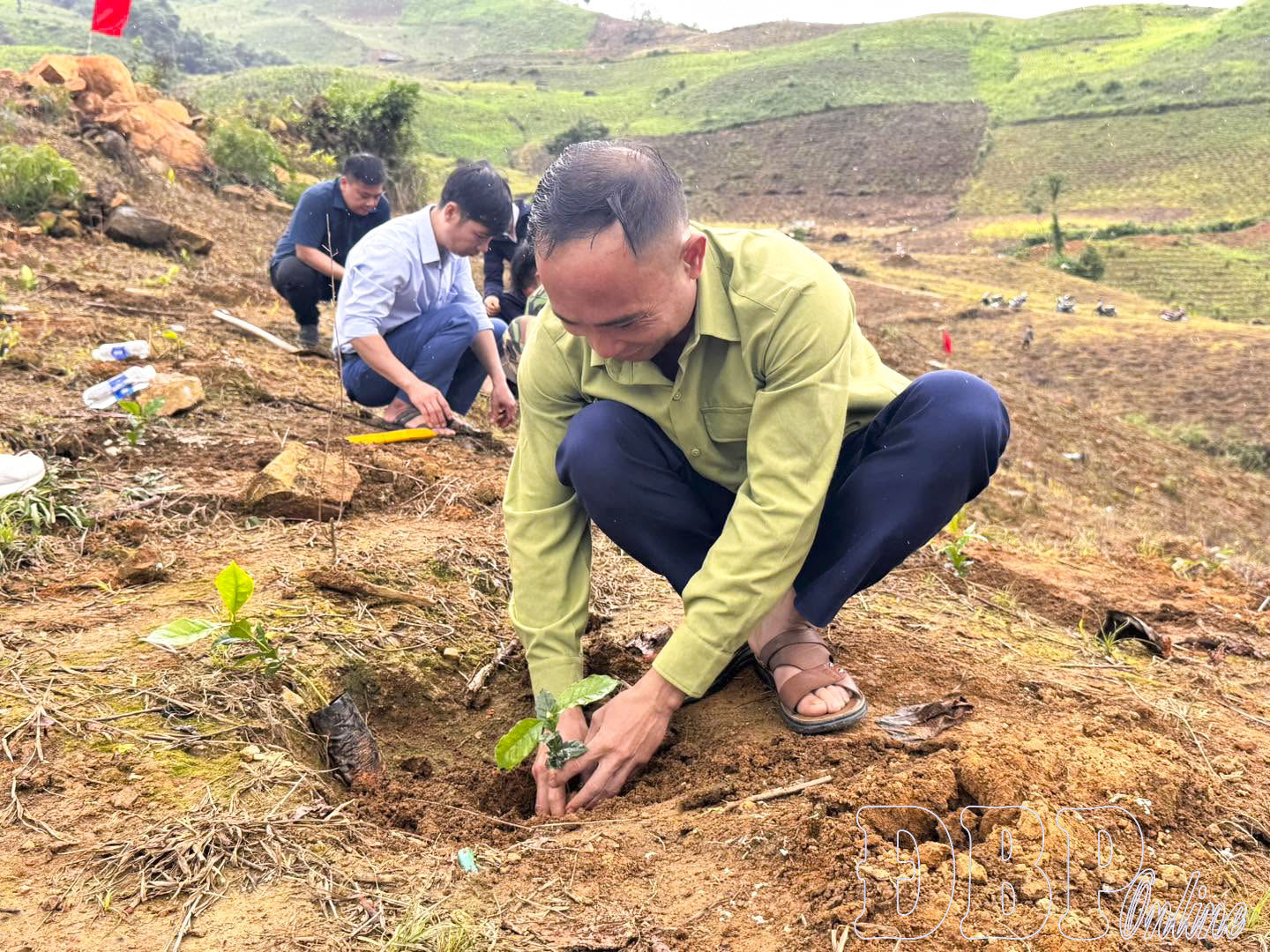
The seasonal planting atmosphere is also buzzing in Na Son. Since the beginning of June, residents have started sowing coffee crops, planting nearly 60 ha of new coffee across the commune so far. On a gentle hill in Group 2 of Na Son commune, Sùng Thị Cở and her family members are busy planting the first coffee trees of the new season. Already possessing 2 ha of harvested coffee that yields a high income, Sùng Thị Cở places strong trust in the economic returns of this crop, which prompted her to expand her coffee cultivation by another 4 ha this year.
Gently placing each seedling bag into the soil hole, Sùng Thị Cở shared: “Coffee yields much higher economic efficiency than many other crops. This year I continue to expand my coffee acreage. Currently, my family has begun planting and will strive to complete the entire 4 ha within July.”
In various other localities such as Sam Mứn, Mường Nhà, Búng Lao, Tủa Chùa, Thanh An, and Thanh Nưa, the initial acreages of macadamia are also undergoing new planting. Up to this point, the entire province has cultivated over 200 ha of coffee and more than 21 ha of macadamia.
Lê Xuân Cảnh, Director of the Department of Agriculture and Environment, stated that the department has advised the Provincial People’s Committee to build a critical path schedule to implement Plan No.1850/KH-UBND on cultivating new coffee and macadamia trees. According to the plan, fertilizer gathering must be completed before June 20, basal fertilization and hole filling finished before June 25, and new planting wrapped up before July 30. Everything is being meticulously prepared so that seedlings are planted at the proper seasonal timing, ensuring the best growth and development conditions.
Each seedling placed in the ground today will require several years before yielding its first harvest. However, what party committees, authorities, and the people of Điện Biên expect is not just future harvests, but a profound transformation across their homeland hillsides. Điện Biên is entering the rainy season. Amidst the vast expanse of mountains and hills, millions of seedlings are growing alongside the faith in concentrated commodity production zones, sustainable livelihoods, and a more prosperous life for the people.
Phạm Trung






You have 500/500 characters left
Please enter 5 or more characters!!!