Ripe pineapple season on Phình Giàng hillsides

ĐBP - These days, across the highland hillsides of Phình Giàng commune, the bustling atmosphere of harvesting pineapples spreads throughout the villages. Amidst the continuous rolling hills and ridges, lush green pineapple fields are dotted with the brilliant golden hue of ripe pineapples, each fruit plump and heavy...

Unlike many specialized pineapple cultivation areas in the lowlands, Phình Giàng pineapples are grown on high hillsides and steep slopes, which used to be upland rice and cassava fields. Currently, the total pineapple area in Phình Giàng has reached over 60 ha, predominantly consisting of the sweet pineapple variety.
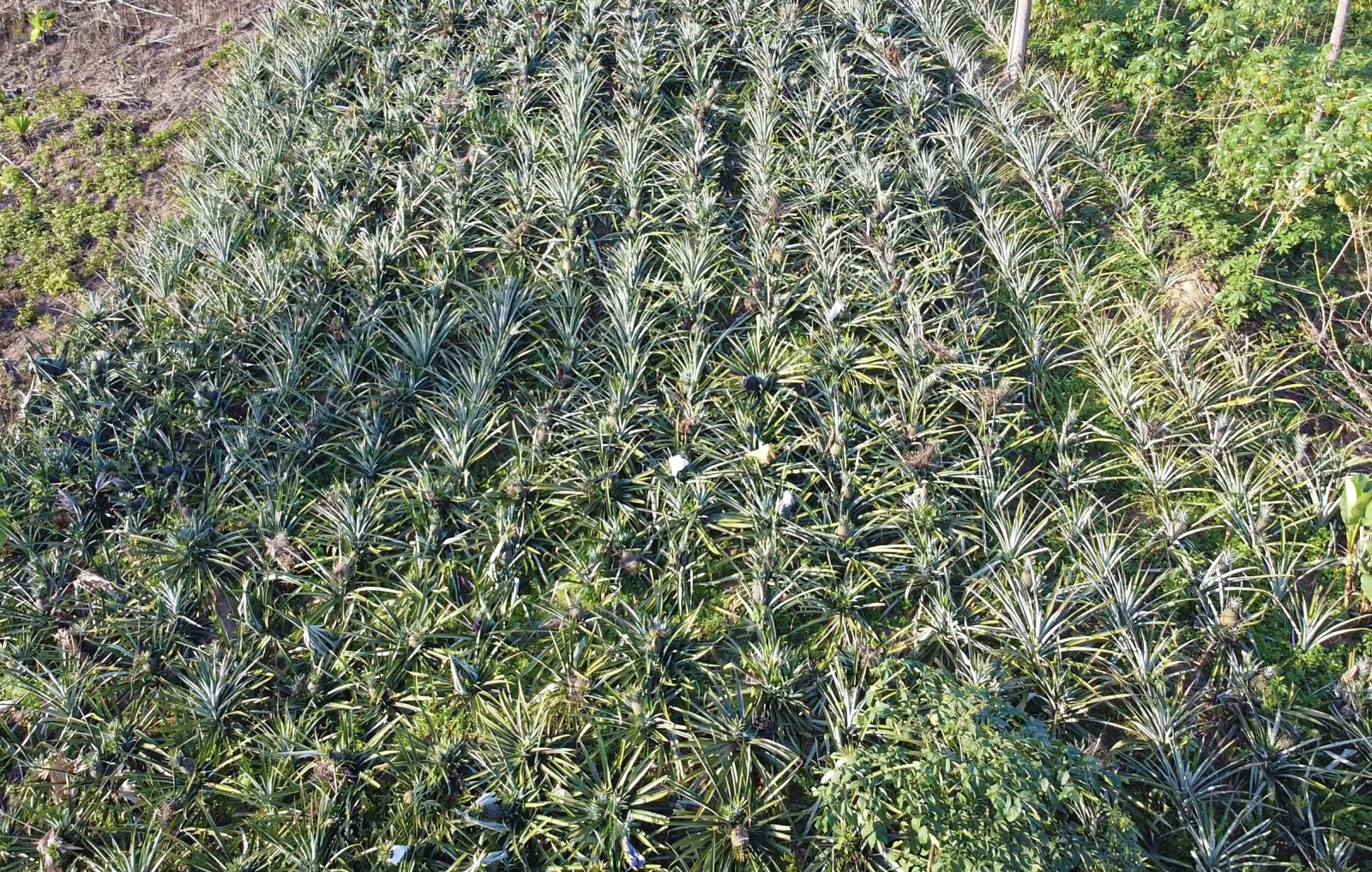
The entire Phình Giàng commune has more than 60 ha of sweet pineapples.

Previously, the pineapple plants were brought by locals from Pu Lau village, Mường Nhà commune, to grow around their houses to serve family needs. Each household had from a few roots to a few dozen roots, and whenever they had guests, they would pick a few fruits as gifts.

Over the past two years, realizing that the pineapple plant suits the natural conditions, yields high productivity, and attracts an increasing number of traders for purchase, residents began expanding the cultivation area, focusing primarily on three villages: Nà Nếnh A, B, and C. To date, pineapple has become a crop that generates a significant income source, contributing to poverty reduction for many households here.
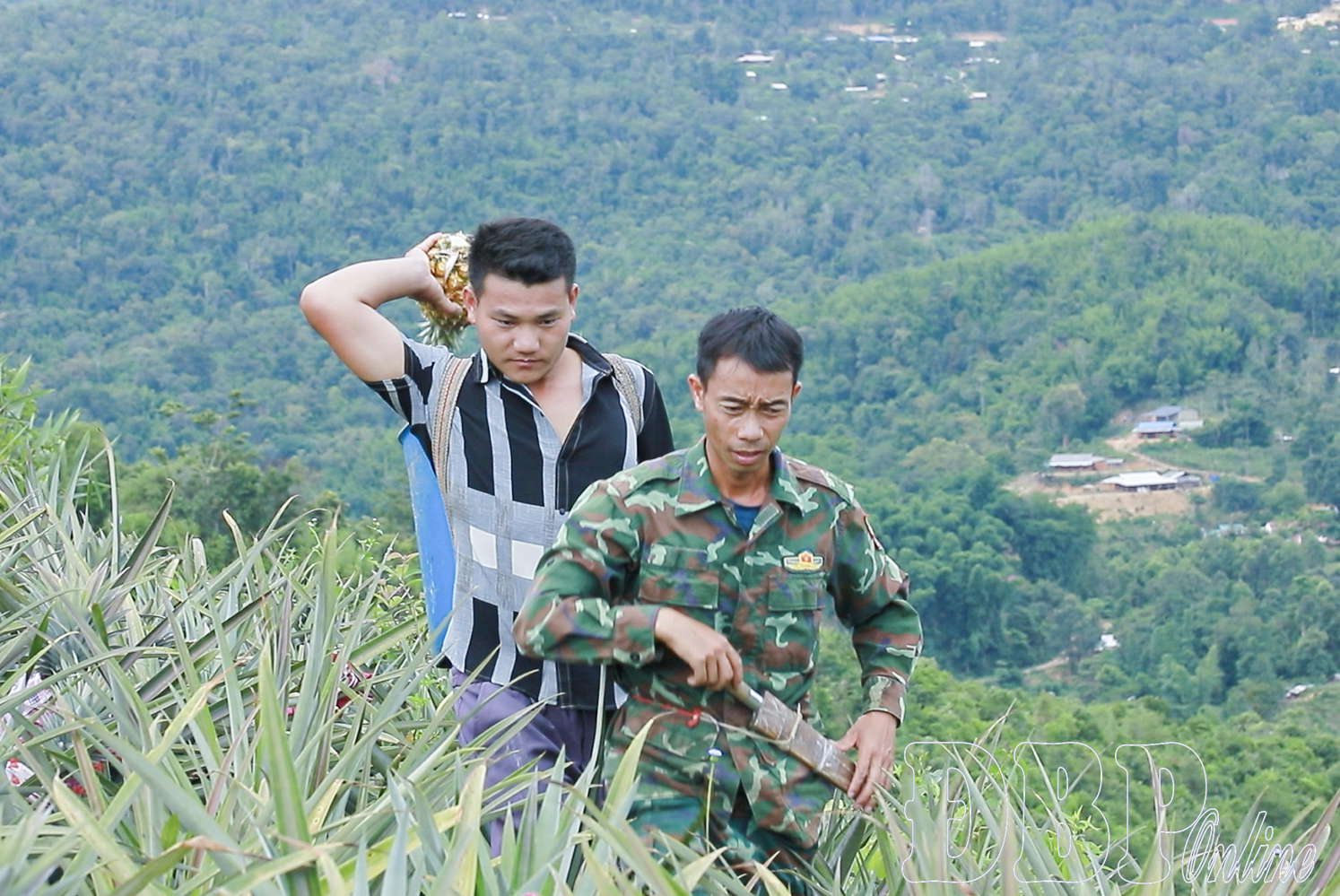
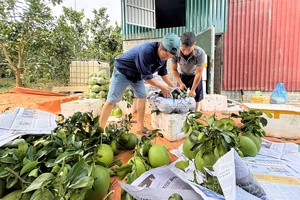
Residents of Nà Nếnh A village harvest pineapples.

On the pineapple field of Sùng Vũ Trụ in Nà Nếnh A village, the entire family has been busy harvesting pineapples since early morning. Golden ripe pineapples are cut and stacked into piles, awaiting transport from the field down to the road. The pineapples are sorted by size and neatly packed, waiting for traders to pick them up within the day. Currently, Trụ’s family owns about 6,000m² of pineapples.

“Last year was our first harvest, and my family earned around VND 30 million,” Sùng Vũ Trụ shared. “This year, the plants grew well, the fruits are large and uniform, so the yield has also increased. At present, the family has harvested about two-thirds of the area, earning around VND 40 million. If the weather remains favorable, our income by the end of the season will be considerably higher than last year.”
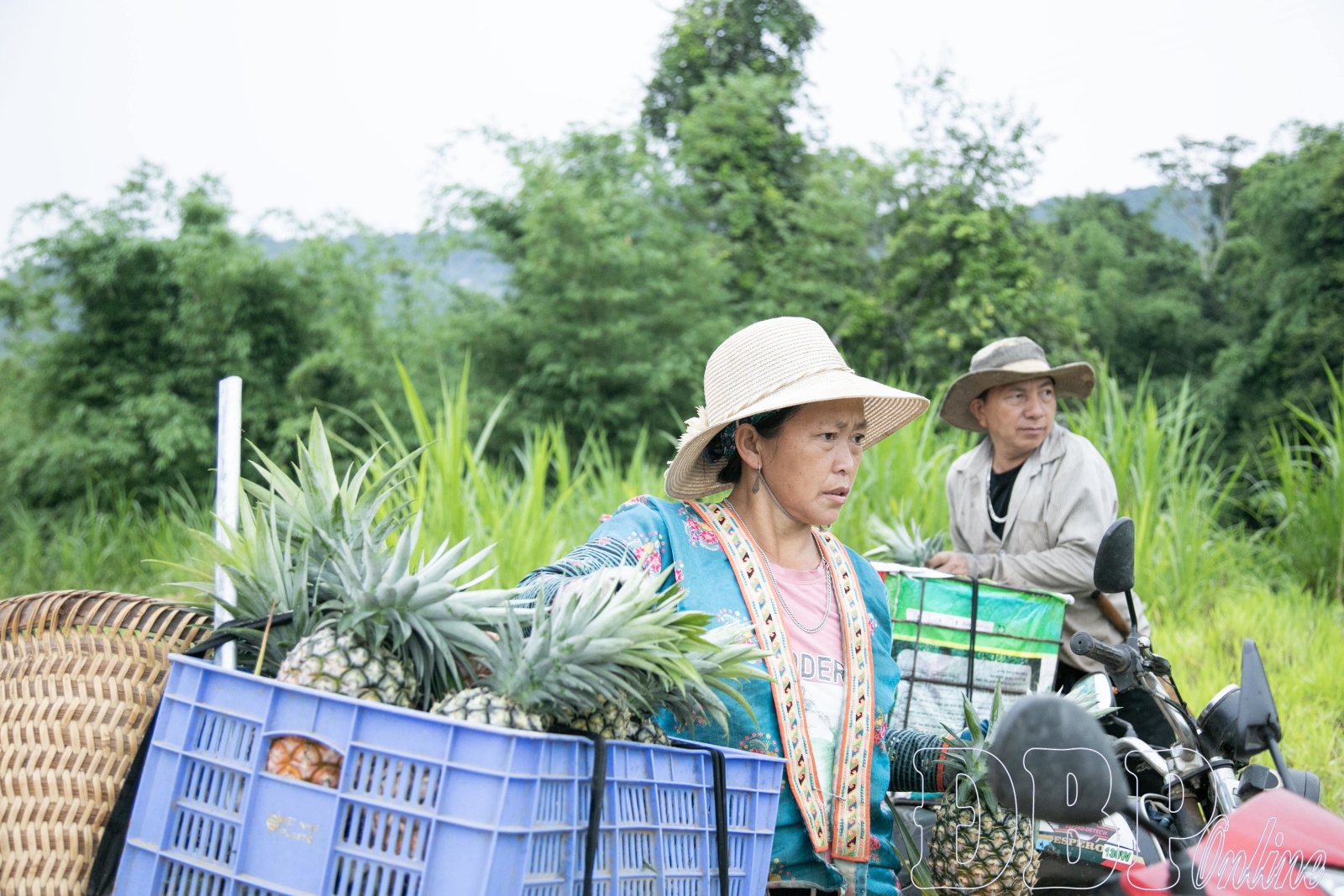
Loading and stacking pineapples while waiting for traders to purchase.

In Phình Giàng, pineapple fields are mainly converted by farmers to replace old, low-efficiency crops. The climate here features many sunny days and lower rainfall compared to neighboring areas. Consequently, the sweet pineapples here have a rich, deep sweetness, high sugar content, fragrance, and abundant juice. Each pineapple typically weighs from 1.5kg to 4kg, and thanks to its high quality, it is highly favored by traders.

The pineapple harvest season lasts from June to August every year. Depending on different fruit sizes, the price of pineapples fluctuates from around VND 4,000/kg to VND 10,000/kg. For many households, this is one of the important income sources helping stabilize their lives and step-by-step rise out of poverty.
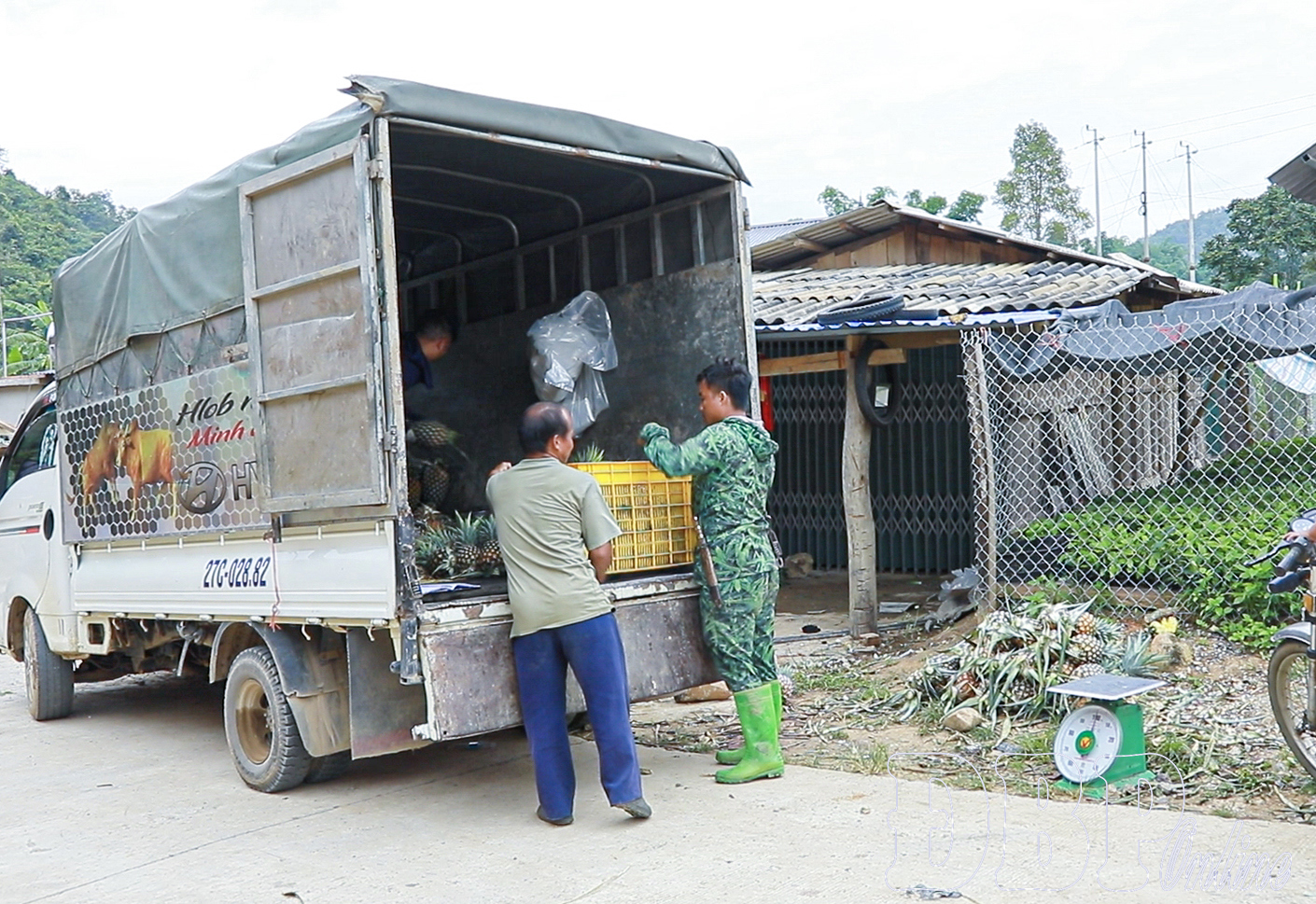
Traders purchase pineapples near the farmers’ fields.

Mùa Vàng Nếnh, from Nà Nếnh C village, Phình Giàng commune, shared his story. He has a leg disability that makes traveling difficult, and his family consists of five members, who were classified as a poor household before 2025. Now his family has shifted to growing pineapples on about 6,000m². In 2025, the family earned around VND 60 million from pineapples. Currently, their economy is less difficult, allowing them to repair their house - something the family had never thought of in previous years. This year, the price of pineapples varies at different times, sometimes selling for VND 9,000 to VND 10,000/kg, and sometimes dropping to VND 7,000 to VND 8,000/kg, but it remains much higher than cultivating corn and cassava.

Currently, in Nà Nếnh C village, the pineapple area stands at over 30 ha. For the locals, pineapple is gradually becoming the main crop, driving household economic development. Mùa A Cau, Head of Nà Nếnh C village, shared that when this season arrives, the entire village enters the pineapple harvest. Across all roads leading into the production areas, motorbikes continuously stream in and out, transporting pineapples to gathering points for traders to purchase. This year, every household enjoyed a bumper crop. Although prices have dropped slightly compared to last year, the villagers remain cheerful because pineapples bring higher economic value than other crops.
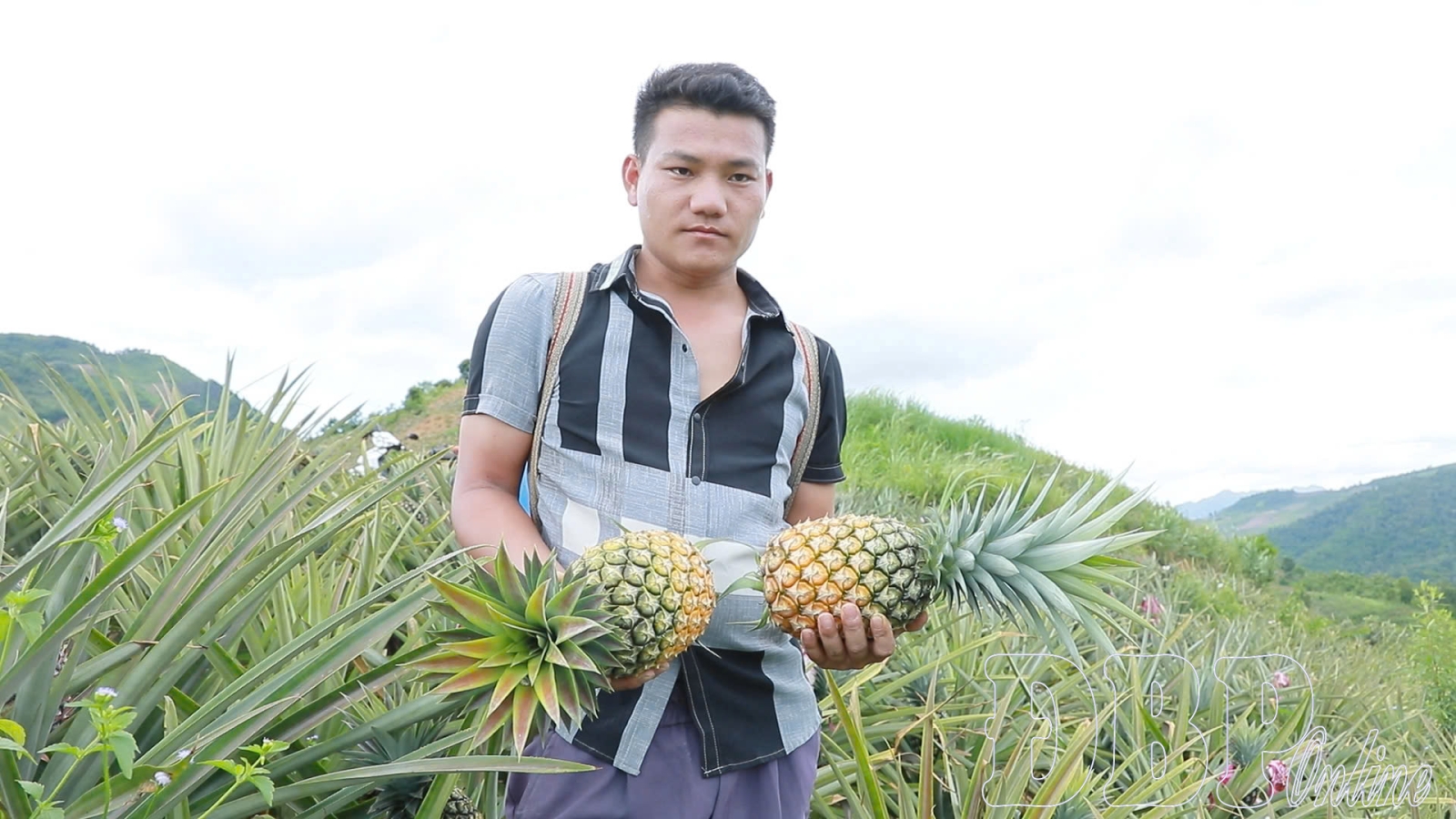
Phình Giàng pineapples are large and filled with sweet honey.

The efficiency of pineapples is clearly reflected in the lives of the villagers. Nà Nếnh C village has 87 households with more than 400 residents, and almost every household grows them, ranging from a minimum of 2,000m² to a maximum of 6,000m². Thanks to the income from pineapples, in 2025 alone, six households in the village transitioned from poor to near-poor status, and two poor and near-poor households completely escaped poverty.

In the late afternoon, as the sun gradually disappears behind the mountain ranges, silhouettes of people visiting their fields can still be seen across the hillsides. They inspect the pineapple areas to be harvested the following morning to catch the traders’ early transport trucks. The pineapple season will eventually draw to a close, but the sweetness of the honey pineapples and the faith in a more prosperous life remain on the hillsides of Phình Giàng.

Trần Nhâm
Comment

You have 500/500 characters left

Please enter 5 or more characters!!!

Recent news

  • 'Enhancing official capacity to meet task requirements

    Enhancing official capacity to meet task requirements

    NEWS - POLITICS -
    ĐBP - Amid increasingly demanding task requirements, Điện Biên province focuses on innovating training and fostering work, improving professional qualifications, operational expertise, and political resolve for its contingent of cadres, civil servants, and public employees. Thereby, it step by step builds a contingent of officials with integrity, capacity, and responsibility, meeting task requirements in the new situation and contributing to enhancing the efficacy and efficiency of the political system.
  • 'Mường Ảng green-skinned pomelo targets sustainable markets

    Mường Ảng green-skinned pomelo targets sustainable markets

    ECONOMY -
    ĐBP - With about 70 ha planted with green-skinned pomelo and an estimated output of 400 tonnes per year, the area of Mường Ảng, Nà Tấu, Búng Lao, and Mường Lạn communes has step by step tapped economic efficiency from green-skinned pomelo. However, for stable development, improving quality, building brands, and expanding consumption markets remain issues requiring attention.
  • 'Hoong Lếch builds a new life

    Hoong Lếch builds a new life

    SOCIAL AFFAIRS -
    ĐBP - Hoong Lếch village, Thanh Nưa commune, was merged from Hoong Lếch Cang and Hoong Lếch Cuông villages. As one of the long-standing settlements of the Thái ethnic people in the Mường Thanh valley, the residents of Hoong Lếch actively preserve and promote the unique traditional cultural values of their ethnic group.
  • 'Điện Biên races to accelerate public investment

    Điện Biên races to accelerate public investment

    ECONOMY -
    ĐBP - Public investment disbursement is a key driver of economic growth, infrastructure development and the expansion of development opportunities. With the year drawing to a close and substantial funds still to be disbursed, Điện Biên province is stepping up efforts to address bottlenecks and accelerate project implementation. Provincial authorities have called on departments, local governments and project owners to take decisive action, with the goal of disbursing 100% of the allocated capital.
  • 'Điện Biên promotes cooperation with India

    Điện Biên promotes cooperation with India

    NEWS - POLITICS -
    ĐBP - On November 23, Deputy Secretary of the Điện Biên provincial Party Committee and Chairman of the provincial People’s Committee Lê Văn Lương held a courtesy reception for Tshering Wangchuk Sherpa, Ambassador Extraordinary and Plenipotentiary of the Republic of India to Việt Nam, and the working delegation of the Indian Embassy on their visit to Điện Biên province.
  • 'Passing down traditional crafts

    Passing down traditional crafts

    CULTURE - SPORTS -
    ĐBP - Through many generations, some traditional crafts in the province are still cherished, preserved, and passed down by ethnic communities. Each handcrafted product embodies the skillfulness, experience, and folk knowledge distilled through time. Amid the pace of modern life, with dedication and responsibility, artisans, village elders, and respected individuals continue to diligently teach their crafts to younger generations so that traditional cultural values continue to be carried forward, opening further avenues for local tourism development.
  • 'Điện Biên’s elderly leading by example

    Điện Biên’s elderly leading by example

    SOCIAL AFFAIRS -
    ĐBP - Drawing on their experience, credibility and strong sense of responsibility, older people across Điện Biên province have actively participated in local emulation movements and taken the lead in various aspects of community life. Through practical, meaningful contributions, they have become role models for younger generations and fellow residents to follow.
  • 'Footsteps in search of fallen comrades

    Footsteps in search of fallen comrades

    NEWS - POLITICS -
    ĐBP - Winter has arrived in Điện Biên. Amidst the undulating mountains and forests, soldiers participating in the 500-Day-and-Night Campaign quietly climb slopes and trek through forests, tracing battlefield vestiges and local people’s stories to find fallen comrades.
  • 'Cultural vitality from the community

    Cultural vitality from the community

    CULTURE - SPORTS -
    ĐBP - Điện Biên is home to 19 ethnic groups. Each ethnic group possesses distinct cultural traits, creating a colorful tapestry. Among the distinctive cultural values preserved, local people play a central role, directly preserving, transmitting, and promoting cultural identities, while enjoying practical benefits from the community’s traditional values.