



In this context, all levels of government, functional sectors, and local authorities have extended timely damage compensation to the people, helping households alleviate difficulties, stabilize daily life, and progressively restore production.
From the beginning of the year to date, African swine fever has surfaced in three villages across Nậm Kè commune, including Phiêng Vai, Huổi Thanh 1, and Pá Mỳ. Confronting the disease outbreak, local authorities implemented inspection, verification, and culling measures for infected pigs, conducted disinfection and decontamination of husbandry areas, and carried out communication and guidance to help farmers proactively prevent epidemics and curb transmission risks.
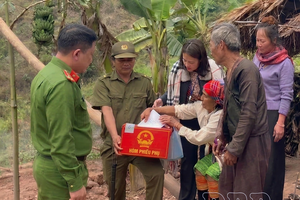
Alongside zoning and suppressing the outbreaks, Nậm Kè commune promptly delivered compensation funds to affected residents. In the 2025 compensation disbursement round, the commune provided support to 184 affected livestock-raising households, covering a total of 1,088 culled pigs with an aggregate relief budget exceeding VND 1.4 billion.
Lành Văn Thủy, Deputy Director of the Nậm Kè commune General Services Center, stated that based on filed records, headcounts, and culled swine weight, the unit conducted verification in strict adherence to regulations. Consequently, compensation disbursements to livestock farmers were distributed to the rightful beneficiaries in an objective and transparent manner to share burdens and reduce financial losses for communities impacted by the disease.
.jpg)
For livestock households, relief funds following epidemic-induced losses may not offset total damages, yet they serve as practical encouragement, equipping farmers with greater means to stabilize life and rehabilitate herds.
Holding nearly VND 10 million in support funds, Giàng A Sùng from Huổi Hốc village, Nậm Kè commune, shared that with his infected herd culled, this financial support provided by the State alleviates household hardships and offers additional capital to repair pens and prepare for restocking.
To support residents and ease burdens wrought by animal disease, the People’s Committee of Thanh An commune recently held the second round of compensation disbursements for households whose pigs were culled due to African swine fever between April 1 and June 30. Under regulations, eligible households received compensation set at VND 40,000 per kilogram for culled swine.
Through field assessments, Thanh An commune verified 422 culled pigs totaling over 27 tons in weight. Total compensation expenditure surpassed VND 1 billion, drawn from the commune’s contingency budget reserve. Alongside fund disbursements, the locality instructed specialized agencies to intensify outreach and guidance, reminding farmers to adhere strictly to disease prevention protocols, disinfect barns, and restock herds only when epidemic-free conditions are fully certified.
Since early this year, African swine fever has broken out across 33 communes and wards, necessitating the culling of nearly 12,030 infected pigs with an aggregate weight exceeding 615 tons. Alongside African swine fever, the province recorded avian influenza across four communes and wards, resulting in the destruction of over 17,050 poultry birds. Localities also culled over 500 kilograms of cattle and buffaloes suffering from foot-and-mouth disease and lumpy skin disease.
Confronting these losses, in addition to epidemic containment and suppression measures, allocating resources to assist local residents has been prioritized by the province and districts. Over the first seven months of 2026, total expenditures dedicated to remediating animal disease losses across the province reached over VND 27.750 billion, of which support funds disbursed to affected animal owners exceeded VND 25.340 billion.
According to Chu Thị Thanh Xuân, Deputy Director of the Department of Agriculture and Environment, extending damage compensation to livestock raisers was conducted in compliance with statutory frameworks, targeting correct beneficiaries and ensuring promptness. This provides farmers with conditions to overcome distress and resume husbandry activities following outbreaks. Along with relief resources, localities must intensify surveillance, early detection, and prompt containment whenever outbreaks arise to minimize potential damages.
Nevertheless, several localities have been slow in disbursing 2025 animal disease compensation payments to residents. Drawing from this operational reality, local authorities must exercise greater initiative in screening, preparing documentation, verifying damages, and allocating funds, preventing situations where residents endure prolonged waits for relief.
Timely attention and assistance from units and localities have helped livestock raisers mitigate hardships, securing additional resources to recover from damages and steadily normalize production. Parallel to this, farmers are taking active initiative to coordinate and observe disease containment measures to limit losses, protect domestic animal herds, and lay a stable foundation for animal husbandry to develop.
Quang Hưng
.jpg)
.jpg)
.jpg)
.jpg)
.jpg)


.jpg)
.jpg)
You have 500/500 characters left
Please enter 5 or more characters!!!