



Part 2: The informational bridge to voters
Living among the people and understanding their dialects and customs, they translate election information from the national language into ethnic tongues, ensuring residents understand and exercise their rights. From conversations held in native mother tongues, the thoughts and aspirations of the people are heard and conveyed to Party committees, administrations, and elected bodies.
Special interpreters
Born and rooted in Cà Là Pá 1 village, Sín Thầu commune, Hạ A Dua, Secretary of the Village Party Cell, is not only the head of the Hmông community but also the dependable pillar for 83 households and over 450 residents here. Cà Là Pá 1 consists primarily of free migrants from other provinces who settled here for fixed residence and farming. Many residents are illiterate and do not speak the national language, making access to information - especially election affairs - arduous. Thoroughly understanding the local terrain and customs while maintaining close ties with each household, Dua became a direct bridge transmitting election information in a language easily understood by the people, helping voters grasp their rights and obligations before casting their ballots.
Dua noted that the greatest difficulty stems from the fact that many residents do not speak the national language and cannot read or write. Consequently, he had to review each household, visiting each home individually for tailored outreach. “Because villagers are illiterate, I have to explain every item and give specific instructions in our ethnic language. At times, I catch villagers on their hillside swiddens; on other occasions, I visit each home in the evening to disseminate and guide. Doing so is strenuous, but as long as villagers understand, know their rights and obligations, and go to vote in full, I feel deeply fulfilled,” Dua shared.
.png)
In the border commune of Mường Nhé, home to nearly 25,000 residents predominantly comprising the Hmông ethnic group, a segment of the population does not speak the national language. To overcome language barriers, Mường Nhé commune brings into play the role of Party cell secretaries and village heads. They act as “bridge-builders,” translating election information from the national language into ethnic tongues down to each household and residential cluster, while clarifying unclear points for villagers. Thanks to this, election information reaches residents even in the most disadvantaged pockets.
This approach is vividly demonstrated across individual villages. Sùng A Giàng, Head of Co Lót village (formerly Huổi Ban village), Mường Nhé commune, shared: “The village has nearly 200 households, the vast majority of whom speak the Hmông language. Being Hmông myself, I explain the significance of the election to fellow villagers so they actively participate. Through direct outreach in our mother tongue, villagers listen and understand immediately without facing difficulties or bottlenecks.”
The case of Lù Thị Dung, in Co Lót village, is typical. At the age of 80, having spent her entire life on rice and maize swiddens, she is illiterate and cannot speak the national language. When village cadres hiked up to her production swiddens and used the Hmông language to explain the significance of the ballot and guide her on how to select representatives, Dung understood and felt completely reassured. Lù Thị Dung shared through the village head’s translation that she previously feared going to vote because she could neither read nor write; however, after receiving explanations in her native dialect, she gained a clearer understanding of her rights and actively participated in the election.
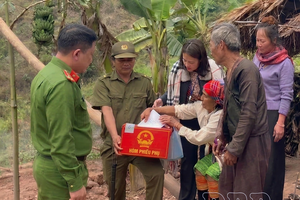
Beyond helping voters comprehend the meaning, rights, and responsibilities involved in the election, on-site support is sustained directly at polling stations. At voting stations with dense ethnic minority populations, the province deploys cadres, Party cell secretaries, and village heads proficient in local dialects to directly instruct illiterate voters and those who do not speak the national language through each voting step. From receiving ballots and identifying candidate names correctly to marking ballots, every operation is explained specifically, ensuring voters adhere strictly to statutory regulations.
According to Bùi Xuân Thức, Chairman of the Tìa Dình commune People’s Committee, the commune has 18 polling areas. To provide optimal conditions for voters, the commune assigned cadres, Party cell secretaries, and village heads to polling stations to directly guide and clarify matters for voters. “Illiterate voters or those with limited command of the national language are guided step by step, ensuring no one encounters obstacles due to language barriers. Thanks to this, all 3,962 voters across the entire commune cast their ballots, achieving 100% voter turnout,” Thức noted.
From dissemination and explanation to hands-on guidance at polling stations, these “bridge-builders” have ensured that written scripts and the national language do not constitute barriers to voters’ electoral rights. Serving as a conduit to voters through native mother-tongue dialogues, the people’s thoughts and aspirations are heard, recorded, and relayed to Party committees, administrations, and elected bodies.
Conveying voters’ aspirations
Beyond disseminating guidelines and policies, Party cell secretaries and village heads also listen to villagers share hardships in daily life, recording and reflecting them to competent authorities. This assists local government levels and elected bodies in grasping practical life more accurately, promptly adjusting and supplementing policies tailored to the distinct characteristics of each region and ethnic group. Consequently, voices from hamlet and village voters reach the parliamentary floor and return to the people in the form of tangible outcomes.
Nà Hý village, Thanh Nưa commune has 193 households, including residents who do not speak the national language. During election outreach and voter contact, Village Head Lò Văn Dũng listened to and recorded numerous legitimate opinions from villagers, reflecting them to higher levels, sectors, and local authorities. One prominent petition concerned completing and commissioning the village domestic clean water project soon. The project commenced in 2022 but was delayed in operation due to handover and management bottlenecks, significantly affecting local daily life.
According to Lò Văn Dũng, serving as a village head demands staying close to the people, listening attentively to grasp their thoughts and aspirations. When villagers speak in their ethnic tongue, one must convey it fully in the national language to all levels. Thus, despite language and literacy limitations, legitimate petitions from villagers successfully reach Party committees and administrations. “Whatever villagers desire, whatever difficulties they encounter, one must grasp and reflect to the right place for consideration and resolution. Only then do citizens feel their opinions are respected and place their trust in the system,” Dũng said.
Similarly, in Nà Bủng commune, voters’ opinions and petitions are heard, translated, synthesized, and submitted to functional agencies by Party cell secretaries and village heads. Issues falling under commune jurisdiction are reviewed and resolved promptly; matters exceeding communal authority are recorded and forwarded to higher functional bodies for continued handling. Settlement outcomes are communicated back to residents, while unresolved petitions are tracked and urged persistently.
During election outreach, Thào A Chảo, Secretary of the Nặm Tắt 1 village Party Cell (now Nặm Tắt village) and Deputy to the Nà Bủng commune People’s Council for the 2021-2026 tenure, directly undertook that “bridge-building” role. Through conversations in the Hmông language, he received petitions from voters not fluent in the national language regarding investments in concreted roads leading to production zones and expanding the national power grid for domestic use and agricultural production.
Chảo shared: “Nặm Tắt village does not yet have access to the national electricity grid; this is a legitimate aspiration that villagers have entrusted multiple times. In my dual role as Party cell secretary and commune People’s Council deputy, I received, compiled, and presented villagers’ petitions at commune People’s Council meetings for deputies to deliberate. I hope petitions from our village receive attention from various levels and sectors, progressively untangling hardships and fulfilling the practical needs of the people.”
From concrete grassroots petitions, the bridging role of secretaries and village heads is clearly affirmed: bringing guidelines and policies to the people while elevating the people’s voice to competent authorities. Giàng Thị Hoa, former Vice Chairwoman of the 15th provincial People’s Council (2021-2026 tenure), emphasized the “two-way bridge” role of the contingent of secretaries and village heads in election work. According to her, they convey information to the people in appropriate languages and approaches, while simultaneously listening to, compiling, and transmitting voters’ thoughts and aspirations to Party committees, administrations, and elected bodies. Through this, citizens comprehend and fully exercise their right to mastery, contributing to the election’s overall success.
From these bridges connecting hamlets and villages with the government, the lasting impression is not only the petitions conveyed, but the deep-seated trust of the people when exercising their right to mastery. Understanding rights, understanding choices, and entrusting aspirations into the ballot serve as the next step for every voter’s voice to be fully expressed. And behind each of those ballots lies an entrusted faith.
Văn Tâm
.jpg)
.jpg)
.jpg)
.jpg)


.jpg)
.jpg)
.jpg)
.jpg)
You have 500/500 characters left
Please enter 5 or more characters!!!