



With the close attention and direction of all levels of government and the spirit of unity and joint effort from the people, by the end of August, all housing programs in the commune were completed, helping people stabilize their lives and focus on economic development.
.jpg)
In 2025, Nậm Kè commune had 1 household eligible as a person with meritorious service to the revolution and relatives of martyrs who received support for housing repairs. Under the housing support project of the National Target Program for sustainable poverty reduction for poor and near-poor households, the commune had a total of 47 households supported (32 new builds, 15 repairs). 96 households were approved for support (72 new builds and 24 repairs) under the project to eliminate temporary and dilapidated houses for poor and near-poor households in the commune.
During the implementation of these programs, the commune government faced many difficulties. The support levels between programs were not uniform, causing some households to make comparisons and hesitate to start construction. For example, the National Target Program for sustainable poverty reduction for poor and near-poor households supported VND 50 million /household, while the project to eliminate temporary and dilapidated houses for poor and near-poor households supported VND 60 million. This disparity led to a comparative mindset, slowing down implementation.
.jpg)
On the other hand, some households approved for housing support were working far from home and not present locally, causing construction to be interrupted. The authorities had to increase communication and mobilize these residents to return. Another difficulty was transporting materials, which was hindered by mountainous terrain and heavy rain. Trucks could not reach the sites, so often officials and residents had to transport materials by motorbike, or even carry every bag of cement and sand on their backs to the construction site.
To overcome these difficulties, the Nậm Kè commune People’s Committee proactively implemented many synchronous and decisive solutions. The commune established a Steering Committee and a Task Force, and issued Decision No.24-QĐ/ĐU on July 16, 2025, clearly assigning responsibility to each member for directing and monitoring the progress of housing support implementation.
.jpg)
Public meetings were held openly and transparently, ensuring the selection of beneficiaries met the criteria of being poor or near-poor with temporary, degraded housing. The commune government guided people in completing applications and procedures, while also mobilizing mass organizations and the community to support with labor days and materials during construction. The task forces regularly went to the grassroots, directly assessed the situation, promptly resolved difficulties, and urged construction progress. After construction was finished, the commune conducted inspections, acceptance tests, and disbursed support payments correctly, transparently, and to the right beneficiaries. It also compiled reports and finalized payments according to regulations. Thanks to this synchronous and methodical implementation, Nậm Kè commune significantly shortened the construction time, helping people quickly get stable housing and focus on production.
By August 31, 2025, all households in Nậm Kè commune had completed the new construction or repair of their houses as planned. This included 1 household supported for repairs under the program for people with meritorious service (100% complete); 47 households supported by the National Target Program for sustainable poverty reduction (100% complete); and 96 households supported by the temporary house elimination program (100% complete).
.jpg)
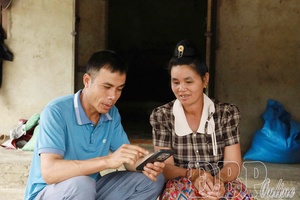
With the construction and repairs completed, by September 15, the Nậm Kè commune People’s Committee had inspected, accepted, and disbursed support to the households, ensuring it was on schedule and for the correct beneficiaries. Having a new, solid, and sturdy house has significantly improved living conditions, helping poor and near-poor households in Nậm Kè gradually stabilize their lives, focus on production, and rise out of poverty. This result reflects the care of the Party, the State, and local authorities, strengthening trust and reinforcing the great national unity bloc. In his new house, the joy was clear on the face of Thào A Tính, one of the households in Nậm Kè supported with housing funds. Tính shared emotionally: “Before, the house was dilapidated; it was miserable during wind and rain. Now with a new, spacious house, my wife and I can focus on our livelihood and on our children’s education.”
The program to eliminate temporary and dilapidated houses for poor and near-poor households holds profound political, social, and humanitarian significance, and has received a strong response from ministries, sectors, organizations, businesses, and philanthropists. Identifying this as a key political task, the commune mobilized the entire political system, upholding a high sense of responsibility and determination to complete it on schedule. Thanks to a flexible, synchronous approach and close coordination between the government, unions, and the people, the programs were completed on schedule. By the end of August 2025, all eligible households had their homes newly built or repaired, achieving 100% of the target.
.jpg)
Nguyễn Tiến Thành, Chairman of the Nậm Kè commune People’s Committee, said: “As soon as we received direction from superiors, Nậm Kè commune implemented many programs in parallel, simultaneously eliminating temporary houses, implementing the sustainable poverty reduction program, and supporting people with meritorious service. This created synchronization, avoided overlap, and saved time and resources. The implementation of this policy... has brought practical results, creating a clear transformation in the local socio-economic life.”
By receiving housing support, many poor and near-poor households now have solid, safe homes, no longer worrying when the flood season comes, and can focus on production, gradually escaping poverty. The families all expressed their excitement and trust in the Party’s leadership and the State’s humane policies. This has helped tighten the great national unity bloc, strengthened the people’s trust in the government, and widely spread the spirit of “mutual love and affection” in the community.
Although many difficulties remain, with the determination of the party committee, the government, and the spirit of unity of the people, Nậm Kè commune is gradually realizing the goal of “leaving no one behind,” helping everyone have a stable home and confidently rise up in life.
Phạm Quang
.jpg)
.jpg)
.jpg)
.jpg)
.png)
.jpg)
.jpg)
.jpg)
.jpg)
.jpg)
.jpg)
You have 500/500 characters left
Please enter 5 or more characters!!!