



Surrounded by fresh air and a cool climate that persists throughout the year, the community diligently preserves its unique cultural values, ranging from traditional crafts and attire to culinary delights and daily customs. This village is a place where time seems to slow down, allowing the heritage of the past to breathe within the present.
.jpg)
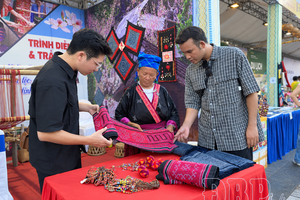
The home of Lò Sử Hóa at the edge of the village often buzzes with laughter as women gather to craft traditional embroidered shoes for their families to wear during the New Year. At 48 years old, with over two decades of experience, Lò Sử Hóa views this work as much more than a daily chore; it is a vital way to keep her cultural identity alive. Each pair takes nearly a month to complete, requiring the artisan to visualize complex patterns mentally and cut them directly from paper to create molds, a skill known as “flower cutting” that only about six people in the village have truly mastered.
.jpg)
The uniqueness of these shoes lies in their entirely manual construction and natural materials. The soles are crafted from dried bamboo sheaths that are pressed flat and cut to the shape of the foot. Multiple layers of fabric are then sewn and bound together using a special glue cooked from wild “mù dỉ” tubers, ensuring the shoes are both incredibly durable and soft. Even the laces are hand-spun from forest bark. This meticulous craftsmanship led to the recognition of Xạ Phang embroidered shoe-making as a National Intangible Cultural Heritage in 2021, cementing its status as a masterpiece of ethnic art.
Springtime in Huổi Lèng also brings the comforting fragrance of traditional dishes prepared by mothers and grandmothers. Among the local favorites are red bean tea and meat-stuffed tofu, which are affectionately referred to by the community as “love tea” and “love tofu.” A centerpiece of ancestral offerings and guest hospitality is the flower rice cake, known in the Xạ Phang language as mi hóa. Ngải Phình Séng, a local resident, explains that while the ingredients of malt, popped rice, sesame, and peanuts sound simple, the preparation is surprisingly elaborate.
.jpg)
The malt is derived from sprouted corn and paddy, providing a distinct, refined sweetness. The popped rice itself must be made from sticky rice that is steamed, dried to a specific degree, and then roasted until it blossoms. These complex steps ensure that every bite of mi hóa carries the authentic taste of the highlands. Beyond the kitchen, the village remains vibrant with houses adorned in ancient couplets and festive activities that foster community bonds. With its cool climate and serene landscape, Huổi Lèng possesses significant potential for community-based tourism, offering visitors the chance to sleep in stilt houses, grind corn, and learn the delicate art of shoe embroidery.
Thu Hằng
.jpg)
.jpg)
.jpg)
.jpg)
.jpg)
.jpg)
.jpg)
.jpg)
.jpg)
.jpg)
You have 500/500 characters left
Please enter 5 or more characters!!!