



On Điện Biên’s tourism map, Sín Thầu stands out as one of the most promising destinations for community-based tourism. Its greatest advantage lies in its location: the only commune in the province situated at the Vietnam-Laos-China tri-border junction, home to landmark marker No. 0 - the point where the three countries meet.
.jpg)
In recent years, the A Pa Chải border gate and flagpole have emerged as new symbols of Vietnam’s westernmost point, drawing travelers fascinated by remote border landscapes. Alongside this strategic location, Sín Thầu boasts pristine natural resources, including a nature reserve, layered mountain ranges, waterfalls, and streams - key assets for developing eco-tourism and trekking. The local Party Committee has set a clear goal of effectively harnessing these advantages and gradually turning tourism into a sustainable livelihood for residents.
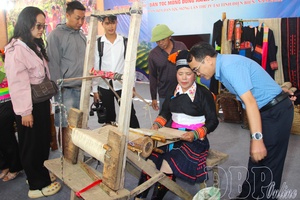
Perhaps the most valuable asset for Sín Thầu’s tourism development is its rich traditional cultural space. Following the merger of Sín Thầu, Sen Thượng, and Leng Su Sìn communes, the area now spans more than 51,000 hectares, with 21 villages and a population of over 6,000. This expansion has created a broader and more diverse cultural landscape. While Sín Thầu was once considered a “core area” of the Hà Nhì people, it is now home to multiple ethnic groups, including Mông, Thái, and Kinh. This diversity opens up opportunities for a more vibrant and multi-cultural community tourism model. Still, the Hà Nhì way of life, with its earthen-walled houses, traditional festivals, dances, colorful attire, and distinctive cuisine, remains largely intact.
.jpg)
In recent years, several households in villages such as A Pa Chải, Tả Kố Khừ, and Tá Miếu have renovated their homes to host visitors, offering homestay services alongside experiential activities like visiting the A Pa Chải flagpole, conquering marker No. 0, and exploring traditional festivals. More importantly, local mindsets are shifting. Moving beyond subsistence farming, many families are proactively seeking opportunities in tourism.
In A Pa Chải village, Chu Khai Phù has transformed his family’s traditional earthen house into a homestay. What began with simple bedding and rustic local meals for visitors has gradually grown as more tourists arrive. “We used to rely solely on farming, with unstable income. Now, with community tourism, we earn more while also introducing our culture to visitors,” he said.
Local authorities have played a crucial role in this transition, promoting policies, raising awareness, and supporting residents with tourism skills training to gradually build initial models. Đặng Thành Huy, Secretary of the Party Committee and Chairman of the People’s Council of Sín Thầu commune, noted: “We see tourism, especially community-based tourism, as a key pathway to unlock local potential. We are encouraging residents to change their mindset and participate in tourism, while preserving ethnic cultural identity and protecting the natural environment. Alongside infrastructure development and leveraging key attractions like marker No. 0 and the A Pa Chải flagpole, we aim to expand homestays and community tourism sites to create sustainable livelihoods and improve living standards.”
.jpg)
In Sín Thầu, respected community members are becoming key figures in preserving traditions, passing on cultural values, and inspiring others to engage in tourism. Lỳ Xuyến Phù from A Pa Chải village shared: “We encourage villagers to maintain their customs and cultural identity as a foundation for tourism. People are also attending training sessions and learning from one another. Those with experience are willing to guide others on hosting guests and providing services, so together we can build a friendly, culturally rich community tourism destination.”
Despite promising signs, community-based tourism in Sín Thầu is still in its early stages and faces challenges, including limited infrastructure, underdeveloped services, and the need for improved tourism skills among residents. However, as local mindsets evolve and cultural identity is properly preserved and promoted, combined with unique advantages and clear policy direction, this far western region of Vietnam is poised for a breakthrough. On this journey, each resident of Sín Thầu becomes a storyteller, a “local guide” sharing the story of their village through everyday life and cultural values passed down through generations.
Lý Quỳnh
.jpg)
.jpg)
.jpg)
.jpg)
.jpg)


.jpg)

.jpg)
.jpg)
You have 500/500 characters left
Please enter 5 or more characters!!!