Empowering community-based tourism

ĐBP - Điện Biên possesses great potential to develop community-based tourism, with the expectation of creating new livelihoods for local people. However, for a long time, most models have operated independently, lacking connectivity and failing to fully exploit existing advantages. To overcome this reality, the province has deployed multiple synchronized solutions to “empower” this type of tourism to develop sustainably and professionally.

Born and raised amidst the cultural space of the White Thái ethnic group in Mường Lay ward, Lù Thị Toản early on recognized the potential of her people’s traditional cultural values. In 2021, after attending community-based tourism training classes organized by the Provincial Women’s Union, she boldly built a homestay model at her family home. Due to a lack of experience and management skills, she faced numerous difficulties during the early days of her startup. However, with proactive learning, seeking partners, and step-by-step improving services, the model gradually stabilized. The turning point came when she participated in Project 939 “Supporting women in startups during the 2017 - 2025 period,” through which she was equipped with further management knowledge, business skills, and market connection opportunities.

From her family’s initial model, Lù Thị Toản mobilized multiple households in the village to join in providing accommodation, cuisine, cultural performances, and lake-surface beauty experience services. On that basis, Quan Chiêng Community-Based Tourism Cooperative was established, contributing to linking households and improving service quality. Up to now, the cooperative has 33 participating households, forming a relatively complete tourism service supply chain and creating jobs for many local workers. Each year, the cooperative welcomes thousands of tourist arrivals, and the average income of participating households reaches VND 50 million or higher.

From the story of Quan Chiêng Community-Based Tourism Cooperative, it is evident that when supported in the right direction, local residents can completely become the main subjects in tourism development. This is also the path being deployed by many localities across the province. Currently, the entire province has 14 villages capable of serving tourists, with over 40 operating homestay models. These villages have all established art troupes, culinary service teams, and experience guidance groups; many villages have even set up a Community-Based Tourism Development Board. Activities at community-based tourism sites are increasingly organized methodically and professionally, well meeting the demands of tourists.

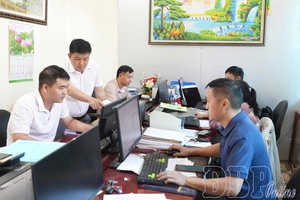
A working delegation from the provincial People’s Council inspects and supervises the community-based tourism development model in Sín Thầu commune.

To create a foundation for community-based tourism development, the province has recently intensified surveys and assessments of the current status at tourism sites. The reviewed aspects include transport infrastructure, environmental landscapes, the quality of accommodation, cuisine, and cultural experience services, as well as the ability to connect tourism routes. On that basis, functional agencies continue to perfect mechanisms and policies to support tourism product development.

One of the vital orientations is selecting several representative villages of ethnic groups such as the Thái, Mông, and Hà Nhì to build into unique destinations, linking cultural preservation with tourism development. This approach helps concentrate resources, create highlights, and enhance the competitiveness of community-based tourism products. In addition, functional agencies also closely review cultural preservation attached to tourism, tour and route connectivity, and the practical needs of each locality to finalize the draft Resolution regulating supporting policies for tourism product development in Điện Biên province.

Along with supporting policies, the province also pays attention to infrastructure investment. A prime example is the construction support project for facilities at the Tù Lu - Tìa Ló community-based tourism village (comprising Tìa Ló A and Tìa Ló B villages, Pu Nhi commune) with a total budget of over VND 7 billion. The project includes multiple items such as an exhibition house, a tourism information center, walking paths, a lighting system, public restrooms, and waste collection and treatment facilities. Putting this synchronized infrastructure into use helps supplement vital physical facilities, driving community-based tourism linked with the national target program on new-style rural area building.

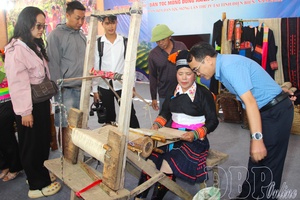
Residents of the U Va community-based tourism village, Thanh Yên commune, renovate the landscape and welcoming spaces.

Besides support from the State budget, enhancing community capacity also receives special attention. At the end of last May, representatives from several community-based tourism villages in the province were invited to participate in the 2026 Community-Based Tourism Network Connection Workshop with the theme “Creating a Sustainable Community-Based Tourism Ecosystem” in Ngọc Chiến commune (Sơn La province). Here, delegates exchanged experiences, accessed numerous effective models, and sought solutions to develop community-based tourism in a sustainable, people-centered direction.

Vì Thứ Trưởng, Chief of U Va village, Thanh Yên commune, stated: “The workshop brought many practical experiences in organizing tourism activities, destination management, and product development linkages. This is useful knowledge for the U Va village community to apply to local practical conditions.”

Initial successful models demonstrate that community-based tourism can only develop sustainably when local people are truly the core subjects, while receiving companionship from the government, experts, and supporting organizations. The combination of cultural preservation, livelihood development, and infrastructure investment will also generate new momentum for community-based tourism in Điện Biên province. This serves as the foundation for the province to realize the goal of having at least 7 recognized community-based tourism sites by 2030, with one site meeting ASEAN community-based tourism standards, alongside promoting tourism products linked with OCOP on digital platforms.

Consequently, this will contribute to turning community-based tourism into a sustainable spearhead economic sector of the land of the Ban flower.

Hà Linh
Comment

You have 500/500 characters left

Please enter 5 or more characters!!!

Recent news

  • 'Empowering community-based tourism

    Empowering community-based tourism

    TRAVEL -
    ĐBP - Điện Biên possesses great potential to develop community-based tourism, with the expectation of creating new livelihoods for local people. However, for a long time, most models have operated independently, lacking connectivity and failing to fully exploit existing advantages. To overcome this reality, the province has deployed multiple synchronized solutions to “empower” this type of tourism to develop sustainably and professionally.
  • 'Inheriting and promoting signature culture-tourism “brand”

    Inheriting and promoting signature culture-tourism “brand”

    CULTURE - SPORTS -
    ĐBP - Following the official operation of the two-level local government model, alongside stabilizing their organizational apparatus, many communes and wards across the province have rapidly focused on maintaining and promoting traditional cultural values and signature tourism products. The proactivity of these localities has made an important contribution to preserving cultural identity as well as continuing to assert the culture-tourism “brand”, creating a driving force to promote sustainable development in the new phase.
  • 'New rhythm of life by Mã River

    New rhythm of life by Mã River

    SOCIAL AFFAIRS -
    ĐBP - On a June morning, gentle golden sunlight blankets the mountain slopes along the Mã River. The river still flows quietly amidst the mountains and forests, reflecting villages that are innovating day by day. Nearly a year after the historic flood, the scars of natural disaster in Mường Luân are gradually fading, making way for the green of fields, orchards, and spacious houses.
  • 'Roads awaken potential

    Roads awaken potential

    ECONOMY -
    ĐBP - Identifying transportation as a lever to promote socio-economic development, over the past years, Mường Ảng commune has concentrated resources on investing in transport infrastructure to effectively leverage existing potentials and advantages.
  • 'Concerns over habit of using weedkillers in Pú Nhung

    Concerns over habit of using weedkillers in Pú Nhung

    SOCIAL AFFAIRS -
    ĐBP - Recently, the use of weedkillers in agricultural production has become a habit for many residents in Pú Nhung commune due to its quickness, saving effort, and labor costs. However, behind this immediate convenience are significant consequences for the environment, human health, and the quality of cultivated soil.
  • 'Forming habit of saving electricity

    Forming habit of saving electricity

    ECONOMY -
    ĐBP - Unplugging electrical appliances after use, regularly inspecting and replacing substandard devices to limit power loss... have become a habit for many households. Small changes in daily activities are contributing to shaping a thrifty lifestyle and more efficient electricity consumption.
  • 'A season of dedication and sharing

    A season of dedication and sharing

    SOCIAL AFFAIRS -
    ĐBP - From remote highland villages still facing many hardships, to rice fields entering harvest season, and rural roads blooming with colorful flowers, wherever people are in need, the blue shirts of volunteers are present. In the summer of 2026, the youth of Điện Biên continue to write beautiful stories through practical and meaningful actions. Every structure built, every family assisted, and every road cleaned carries the enthusiasm, responsibility, and spirit of sharing that young people devote to their community.
  • 'Peace by banks of Đà River

    Peace by banks of Đà River

    TRAVEL -
    ĐBP - Amidst the majestic mountainous scenery, the Dao ethnic villages in Tủa Thàng commune nestle by the peaceful Đà River.
  • 'Điện Biên youths active in “Exam Season Support” campaign

    Điện Biên youths active in “Exam Season Support” campaign

    SOCIAL AFFAIRS -
    ĐBP - The 2026 High School Graduation Exam has entered its final testing day, closing the 12-year academic journey of the candidates. Throughout the exam period, at various exam locations across Điện Biên province, the blue color of volunteer youths’s shirts has constantly accompanied the candidates with many practical support activities, fueling them with motivation to confidently complete this important exam.
  • 'Changing mindsets: Mông communities move away from child marriage

    Changing mindsets: Mông communities move away from child marriage

    SOCIAL AFFAIRS -
    ĐBP - Child marriage was once a persistent issue in many Mông villages across Điện Biên province. However, thanks to the concerted efforts of the entire political system and the pioneering role of grassroots Party members, public awareness is gradually changing, helping to eliminate outdated marriage customs.
  • 'Protecting children with concrete actions

    Protecting children with concrete actions

    SOCIAL AFFAIRS -
    ĐBP - Free health check-ups, life skills training, accident, injury, and drowning prevention, alongside creating healthy and safe playgrounds for children... These practical activities are being widely deployed by all levels, sectors, and localities across Điện Biên province. Through concrete actions, Điện Biên is step-by-step building a safe and healthy environment for children to be cared for, protected, and comprehensively developed.
  • 'Unleashing innovation and creativity through labor excellence

    Unleashing innovation and creativity through labor excellence

    ECONOMY -
    ĐBP - In recent years, the emulation movement “Good labor, creative labor” has spread widely among officials, trade union members, and workers across Điện Biên province. Drawing from their day-to-day work, many innovative initiatives and practical solutions have been developed and applied, contributing to higher labor productivity and improved business performance. Today, the movement continues to affirm its important role in promoting innovation and creativity, making significant contributions to the effectiveness of government agencies, institutions, and enterprises.