



With its beautiful natural landscapes and rich cultural identity, Mường Lay has emerged as a leading example of community tourism development. Many households have proactively renovated their homes to build homestays and expanded experiential services tied to daily life. Beyond accommodation and dining, locals organize engaging activities such as boating on the reservoir, fishing, traditional cooking, and tours of historical sites and craft villages.
.jpg)
Lù Văn Ánh, Vice Chairman of the Mường Lay ward People’s Committee, stated that the ward currently has over 30 households participating in community tourism with a capacity for nearly 500 guests, primarily located along the hydropower reservoir. The locality focuses on infrastructure investment and urban decoration while coordinating training for residents in tourism skills, guest reception, and product promotion.
.jpg)
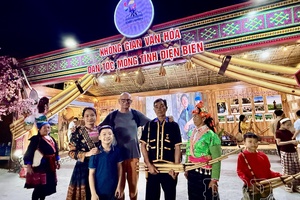
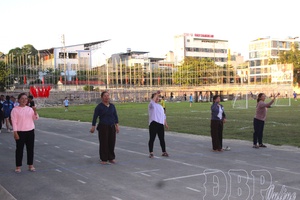
Developing community tourism is closely linked to preserving traditional cultural values. Recently, the performance titled “Solidarity Dance by the Đà River” within the framework of the 11th Mường Lay Swallow-tail Boat Race Festival in 2026 set a Vietnamese record. This massive performance involved approximately 10,000 people over a distance of more than 6.5km. The dance was built upon traditional cultural values to demonstrate the spirit of solidarity and harmony among various ethnic groups, creating a unique tourism product that enhances the attractiveness of the northwest region.
.jpg)
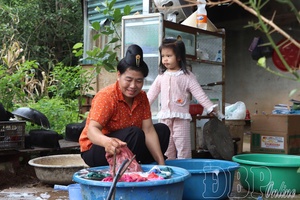
Located at the gateway to the province’s urban center, Phiêng Lơi village in Điện Biên Phủ ward marked a significant turning point on December 1, 2025, when its community tourism space officially began operations. Although it is a new model, it has already seen positive signals with an average of 20 to 50 visitors per day. Many groups choose to experience the daily life of the Thai people and stay in local homestays, which creates livelihoods and increases income for the villagers. Lường Văn Muôn, Head of Phiêng Lơi village, shared that the local government accompanied the people from the very beginning by surveying house structures and landscapes to ensure they retain traditional architecture while meeting modern hygiene and comfort standards for guests.
.jpg)
Despite the cultural diversity and scenic advantages, community tourism in the mountainous and ethnic minority areas of Điện Biên has not yet reached its full potential. Infrastructure remains inconsistent, and products lack sufficient diversity and professional service skills. Currently, the province has only 14 villages qualified to receive tourists with over 40 active homestays.
.jpg)
To address these challenges, Nguyễn Thị Thanh Chuyên, Deputy Director of the Department of Culture, Sports, and Tourism, noted that a symposium on sustainable development was held in late 2025 to share experiences and propose solutions for human resource training and investment connections.
.jpg)
On December 31, 2025, the provincial Party Committee issued a Resolution on tourism development for the 2026 - 2030 period with a vision to 2035. This resolution sets important goals, including having at least seven recognized community tourism sites and one site meeting ASEAN community tourism standards by 2030.
Furthermore, the province aims for 50% of recognized sites to have OCOP products promoted on digital platforms. To achieve these objectives, authorities will focus on propaganda, improving policies, and enhancing infrastructure while promoting digital transformation and innovation in tourism management.
Quang Long
.jpg)
.jpg)
.jpg)
.jpg)
.jpg)


.jpg)

.jpg)
.jpg)
You have 500/500 characters left
Please enter 5 or more characters!!!