



This “green” direction does not just provide a livelihood for the local people; it breathes new life into traditional values that might otherwise fade into history. In recent years, the province has recognized that sustainable development is an inevitable trend. Rather than pursuing mass, exploitative tourism, local authorities are focusing on linking travel activities with environmental protection, cultural conservation, and community economic growth. Models such as community-based tourism, homestays, and agricultural tourism are step-by-step asserting their roles as the “soft pillars” of the province’s strategic growth.
.jpg)
Within this broader picture, the community tourism village of Phiêng Lơi in Điện Biên Phủ ward serves as a brilliant highlight. Phiêng Lơi retains the pristine beauty of an ancient Thái ethnic village, where 100% of the residents still live in traditional stilt houses. Viewed from a distance, the village looks like a traditional ink-wash painting, with stilt houses nestled beside clear blue waters against a backdrop of silent, rolling mountains. This scenery offers visitors the sensation of stepping into a different world, one that is slower, quieter, and deeply peaceful. According to village elders, the name “Phiêng” refers to a flat land, while “Lơi” carries the villagers’ long-standing aspirations for a full and peaceful life. The village follows the ancient Thái philosophy of “mountains behind, water in front,” creating a perfect harmony between humans and the natural world.
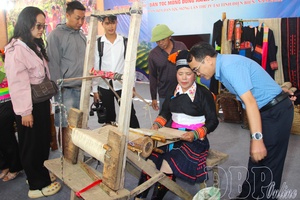
While many other places are seeing their traditions slip away, Phiêng Lơi diligently guards its heritage. Residents still wear traditional costumes and maintain their folk songs, dances, festivals, and the intricate craft of brocade weaving. Visitors can try their hand at weaving on traditional looms, listening to the rhythmic click-clack that defines the simple labor of the villagers. To date, the village has invested in two clean, spacious cultural houses for performances and exchanges. Traditional handicrafts have also been revived through the Hạn Khuống festival, providing a solid foundation for unique cultural tourism products. Currently, Phiêng Lơi boasts two food service businesses and two regular art troupes, with several households now fully qualified to offer professional homestay services.
.jpg)
This green tourism movement is spreading rapidly to other areas such as Mường Lay, Tủa Chùa, and Mường Ảng, where visitors can immerse themselves in the daily lives of the Thái, Mông, Khơ Mú, and Dao peoples. Many families have boldly renovated their homes into homestays while strictly maintaining traditional architecture. Cầm Văn Trường, owner of a homestay in Mường Phăng commune, shared that this model has provided his family with a stable income and a renewed sense of responsibility toward preserving their landscape and culture. Furthermore, agricultural tourism is opening new horizons. On the Mường Thanh fields, the Mường Chà pineapple hills, or the Mường Ảng coffee gardens, tourists can participate directly in harvesting and processing products, which enhances the value of local agriculture.
The statistics reflect the success of this strategy, with the 2021-2025 period seeing Điện Biên welcome over 5.4 million visitors, a 183% increase compared to the previous five years. Total tourism revenue reached over VND 9,400 billion, marking a nearly 200% increase.
Trần Hải Hà, Acting Director of the Department of Culture, Sports and Tourism, emphasized that green tourism is the inevitable path forward. The department encourages localities to link development with environmental and cultural protection to make Điện Biên an attractive, friendly, and sustainable destination. Developing green tourism is not just about economic gain; it is a profound responsibility to protect and pass on natural and cultural heritage to future generations.
Mai Phương
.jpg)
.jpg)
.jpg)
.jpg)
.jpg)
.jpg)

.jpg)
.jpg)
You have 500/500 characters left
Please enter 5 or more characters!!!