



Moving beyond small scale production, many enterprises and cooperatives are boldly investing in technology, improving processes, and building brands, shifting step by step from “doing more” to “doing better.”
The private sector plays a key role in job creation, value generation, and overall economic growth. The province currently has nearly 1,500 enterprises and tens of thousands of household businesses, contributing about 35% of GRDP and providing jobs for roughly 65% of the local workforce. This is a vital force driving innovation, improving labor productivity, and strengthening local competitiveness.
.jpg)
However, most businesses remain small in scale, with limited resources and relatively low technological capacity. As markets expand and competition intensifies, failing to adapt and standardize processes could lead to falling behind. Against this backdrop, the implementation of the 2021-2030 program to support businesses in improving productivity and product quality is not merely assistance. It serves as a critical “boost” for transformation.
Rather than spreading support thinly, the province has adopted a targeted approach, focusing on key bottlenecks such as technology, management, markets, and human resources. Priority has been given to enhancing productivity through science and technology applications. A wide range of initiatives have been rolled out, from technology transfer and production model development to support for advanced machinery and equipment. These efforts go beyond simply providing equipment; they drive fundamental changes in production processes. From reliance on manual labor with low productivity and inconsistent output, production facilities are gradually moving toward mechanization and automation, improving quality while reducing costs.
In 2024, using local industrial promotion funds, Minh Duy Mường Ảng Cooperative received VND 150 million to invest in coffee processing machinery. Phạm Mạnh Hùng, the cooperative’s representative, said the support has transformed its production methods. Previously, many processing stages were manual, labor-intensive, and inconsistent in quality. With modern equipment in place, products are now processed more uniformly, retain their distinctive flavor, and significantly reduce both costs and production time. “This is not just material support, but a driving force for innovation, helping us gradually enhance competitiveness and expand markets,” he noted.
Between 2022 and 2025, nearly VND 4 billion from national and local industrial promotion funds was allocated to support 16 enterprises and cooperatives in investing in machinery and production lines, enabling technological upgrades, higher productivity, improved quality, and increased product value. At the same time, additional funding has been directed toward applying scientific and technological advances in agriculture and rural industry. Models such as sturgeon farming, commercial buffalo meat production, orchid cultivation, and fruit farming have been developed along modern, value chain-oriented lines, contributing to higher productivity and added value.
A notable example is the science and technology application project to develop biosecure farming models for ML-VCN crossbred chickens and HA commercial egg-laying chickens, implemented by Hương Phú Điện Biên Co., Ltd., with total funding exceeding VND 3.25 billion. The project has helped standardize farming processes, control disease, and improve both productivity and product quality, opening up a sustainable direction for commercial livestock production. It has since been successfully replicated in multiple localities.
Another key highlight is support for businesses in accessing product traceability systems. In coordination with the National Barcode Center, the province has assisted many enterprises and cooperatives in building and operating traceability systems on the NBC-Trace platform - a comprehensive solution that enhances product transparency. This marks a shift in production mindset, from fragmented to transparent, from spontaneous to controlled. With each product having a “digital profile,” consumer trust is strengthened, while opportunities to access modern distribution systems are expanded. As a result, Điện Biên’s specialty products are increasingly positioned in the market through quality and branding.
.jpg)
At the same time, efforts to develop intellectual property assets have been intensified, focusing on building brands for key agricultural products to enhance value and competitiveness. This has gradually shifted production thinking from small scale operations to value chain linkages. The province has secured collective trademark protection for seven signature local specialties, including Tìa Dình wax gourd, Na Son red peanuts, Phì Nhừ taro, Na Sang pineapple, Pa Ham arrowroot vermicelli, Mường Ảng green-skinned pomelo, and Tủa Chùa purple taro. To date, 205 industrial property applications (including 196 trademarks, four utility solutions, and five inventions) have been filed with the Intellectual Property Office of Vietnam, with 111 protection certificates granted.
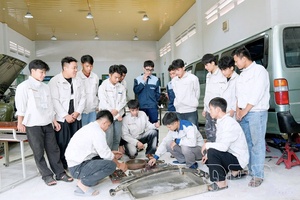
Recognizing human resources as a core driver of transformation, since 2021 the province has allocated an average of VND 3-4 billion annually for consulting, training, and capacity-building programs to enhance business management. Additional efforts include trade promotion, market expansion, OCOP product development, brand building, traceability systems, technological innovation, digital transformation, and the application of scientific advances in production. Many enterprises and cooperatives have proactively invested in green technologies, upgraded production lines, adopted quality standards, and developed product brands.
Despite these gains, challenges remain. Infrastructure in transport, logistics, and information technology is still limited; most businesses are small with constrained resources; and the adoption of technology and digital transformation remains uneven. This calls for deeper, more sustained support policies in the coming period, not only initial assistance but long term accompaniment to help businesses maintain and scale effective models. More importantly, businesses themselves must be at the center of innovation. Only by proactively strengthening governance, investing in technology, and building sustainable strategies can they fully leverage support policies.
Supporting businesses in improving productivity and product quality is not just a short term solution but a long term strategy for restructuring the local economy toward sustainability. As bottlenecks in technology, management, and markets are gradually removed, the private sector will grow not only in scale but also in strength. In this journey, the role of the state is to facilitate and accompany, while businesses must remain at the heart of innovation. Only through this synergy can Điện Biên build a competitive business community and bring local products to broader markets, affirming their position.
Quốc Huy
.jpg)
.jpg)

.jpg)
.jpg)
.jpg)

.jpg)
.jpg)

.jpg)
You have 500/500 characters left
Please enter 5 or more characters!!!