



Surveying and mapping planting sites in Pu Nhi commune are laying initial foundations for a data-driven management approach that defines exact locations, land areas, and specific crops across raw material zones.
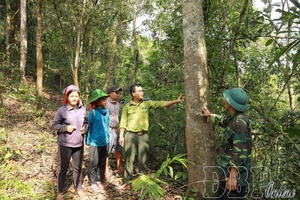
Pu Nhi commune was assigned targets to establish and manage planting area codes across 6ha in 2026 and 12ha in 2027, striving to achieve 37ha for coffee and macadamia acreage. The commune organized training on using Open Foris Ground software for village heads, local youth union members, staff from the Department of Economics, the General Services Center, local forest rangers, and consulting units. Following training, field data collection was rolled out directly on the ground. To date, the commune has surveyed and mapped sites across five villages: Nậm Ngám, Dê Chơ, Phù Lồng, Tìa Ló, and Pu Nhi. Preliminary locations and surface areas of several planting plots have been determined, generating datasets to construct a raw material zone database.
.jpg)
Expansive territory, rugged terrain, and scattered production pockets make field operations demanding. Deployment coincided with the rainy season, hindering travel and mapping tasks. Consequently, the entire acreage requiring updates could not be finalized in a single sweep. The planting area database is being constructed and supplemented step by step.
Nguyễn Quốc Tiến, Head of the Department of Economics of Pu Nhi commune, stated that the locality continues coordinating with consulting partners and grassroots teams to review and survey remaining acreage. Updating datasets on Open Foris Ground, auditing entries, and adding post-survey information serve to progressively complete the planting area database, supporting administrative oversight, origin traceability, and compliance with EUDR-related criteria.
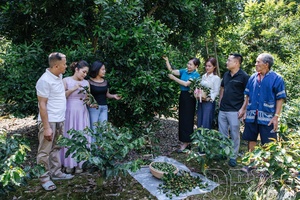
To date, the entire province has been granted 16 domestic planting area codes spanning nearly 80ha across fruit trees, tea, coffee, macadamia, and rice. While this footprint remains modest relative to the province’s overall agricultural acreage, coded zones are driving tangible changes in how production is organized. Statutory conditions are strictly upheld, while production logging, pest management, standardized agrochemical use, and product traceability receive heightened focus.
As these standards evolve into daily routines, farmers are becoming more mindful of how their commodities are produced and verified. Management agencies secure additional datasets to track cultivation tracts, issue disease warnings, and forecast yields. Cooperatives and commercial enterprises acquire concrete benchmarks to organize raw material basins and manage supply pipelines.
.jpg)
A planting code holds genuine value only when backed by stable raw material supply bases, farmer compliance with standardized protocols, active cooperative and corporate partnerships, and guaranteed market off-takers. Điện Biên possesses abundant biological resources, varied ecological conditions, and rich indigenous knowledge, creating a foundation to develop signature agricultural commodities. Arabica coffee is recognized as having immense potential to establish specialty branding. Roughly 70% of provincial tea acreage features high-quality varieties, which are progressively adopting mechanization in husbandry and harvesting. Fruit trees - including mango, banana, orange, pomelo, plum, and pear - alongside macadamia are unlocking fresh development paths for numerous provincial localities.
Nevertheless, as consumer markets demand higher transparency regarding origin and cultivation processes, natural comparative advantages must be translated into verifiable, standard-compliant assets. High-quality coffee crops that lack traceable origins or regulated production processes will struggle to penetrate demanding markets. Conversely, when planting zones are clearly demarcated, data regularly updated, and production chains monitored, commodities gain strong foundations to build brand identity and integrate deeper into value chains.
At the forum “Sustainable Agricultural Development Associated with Green Transition and Upgrading Value Chains of Key Products in Điện Biên” held in mid-July, leaders of the provincial People’s Committee underscored that requirements concerning traceability, planting area codes, environmental criteria, and emission-reduction commitments offer opportunities while presenting challenges for the local agricultural sector.
These hurdles become pronounced given Điện Biên’s fragmented, small-scale farming practices and complex topography. Forming sufficiently large raw material basins to satisfy market criteria requires that planting area codes accompany comprehensive land reviews, zoning for centralized production, operational restructuring, and value-chain alliances uniting farmers, cooperatives, and agribusinesses.
.jpg)
This orientation is defined in the provincial Plan on Database Construction, Issuance, and Management of Planting Area Codes and Packing Facility Codes for the 2026 - 2030 period. Accordingly, the province will construct databases covering approximately 50,000ha of key crops, advantageous crops, concentrated production clusters, and zones seeking certification. The province targets granting 1,500 new planting area codes, including around 30 codes designated for export, aligned with raw material zones, preliminary processing facilities, and integrated production-consumption chains.
The Government’s Resolution No.36/2026/NQ-CP dated July 31, 2026, stipulates the simplification of administrative procedures regarding planting area codes and packing facility codes, moving toward digitization, decentralization, and shifting from pre-audits to post-audits. Under new regulations, organizations and individuals declare data in online environments and assume legal accountability for submitted information; application dossiers are submitted via the National Public Service Portal to commune People’s Committees where planting zones or packaging facilities reside.
For Điện Biên, expanding planting area codes is not merely about increasing designated parcels, but involves standardizing raw material zones, tying production to traceability, and linking with mainstream markets. When every planting code is managed substantively, the intrinsic advantages of local produce will translate into economic value directly from cultivation grounds.
Bình Nguyên
.jpg)
.jpg)
.jpg)

.jpg)
.jpg)
.jpg)
.jpg)
.jpg)
You have 500/500 characters left
Please enter 5 or more characters!!!