



Prolonged drought, flash floods, sweeping floods, severe cold, and damaging cold have damaged large crop areas, affecting productivity and agricultural product quality. Faced with this situation, the provincial Agriculture sector has proactively implemented many solutions from agricultural restructuring and adjusting the seasonal calendar framework to focusing on applying science and technology in production to build sustainable agriculture, flexibly adapting to increasingly complex climate change developments.
In 2025, Điện Biên province had to suffer many natural disaster spells with severe types such as: Drought, severe cold, damaging cold, thunderstorms, lightning, hail, heavy rain, floods, flash floods, and landslides. Just in 3 months (July - September), heavy rains causing flash floods and landslides on a large scale caused 1,509.25ha of rice, crops, and aquatic products to be damaged; 4,144 cattle and poultry died, seriously affecting local agricultural production. The increasing frequency of extreme weather phenomena along with increasingly heavy damage levels clearly showed the negative impacts of climate change on agricultural production. Faced with that challenge, the provincial Agriculture sector proactively built and deployed many adaptive solutions to limit risks, minimize damage, and maintain a stable, sustainable production pace for the people.
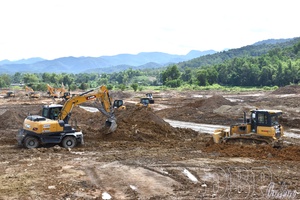
Restructuring and transforming crop structure is identified as one of the key, strategic solutions of the Điện Biên agriculture sector in the effort to adapt to climate change. Recently, localities proactively supported and encouraged farmers to convert flexibly, choosing crops suitable for the climate conditions of each region. In the 2021 - 2025 period, the whole province converted 8,304.75ha of rice land to other crops, of which: 147.14ha of 2-crop rice land; 599.3ha of 1-crop rice land; and 5,296.97ha of upland rice land. In 2025 alone, the total area of crop structure conversion on rice land was 448.96ha; the converted areas were mostly on upland rice land, accounting for 81.75% of the total implemented area.
.jpg)
According to the assessment of the Department of Agriculture and Environment, transforming crop structure on rice land helps adapt to climate change, bringing economic efficiency, and creating stable income sources for farmers. According to the assessment, depending on the converted crop type, the economic value can be 3 - 5 times higher than one-crop rice or upland rice. Currently, people’s awareness of crop conversion has seen positive changes, contributing to raising income and improving lives. Besides, localities are also step-by-step forming concentrated production zones, specialized in vegetables, annual crops, fruit trees, coffee, macadamia... creating a solid foundation for the agricultural sector restructuring process towards greater sustainability and efficiency.
Climate change has had negative impacts causing many upland soil areas in Mường Nhà commune to become degraded. People cultivating corn and upland rice became increasingly inefficient. Faced with that situation, since 2018, Mường Nhà commune has mobilized people to convert crops on upland fields to planting honey pineapples - a plant suitable for the local climate and soil. To date, Mường Nhà has formed a planting area of 230ha of honey pineapples, yielding over 5,000 tons per year, becoming a stable income source, bringing high economic value to the people.
In the 2026 - 2030 period, Mường Nhà commune continues to expand the honey pineapple raw material area towards applying science - technology, linking production with consumption. The commune sets a target to raise the honey pineapple area to 500ha by 2030; in 2026 alone, planting 80ha newly.
Đặng Văn Tuấn, Chairman of the People’s Committee of Mường Nhà commune, said: “This goal is associated with the requirement of developing large-scale raw material areas, forming close linkage chains between people - cooperatives - enterprises, thereby ensuring stable output, preserving the ecological environment, and raising income for people. Reality shows that linkage models initially bring clear efficiency, people get access to new techniques, reduce production costs, and feel assured about the consumption market. Especially, the conversion from traditional crops to honey pineapples has helped significantly reduce risks in the face of increasingly unpredictable impacts of climate change.”
Parallel with production restructuring, the Điện Biên Agriculture sector promotes the application of technology and scientific - technical progress to reduce emissions and improve the resilience of crops and livestock against climate change. By the end of 2025, the whole province had nearly 31,000ha of crops applying IPM/IPHM processes, of which: 9,298.8ha of wet rice; 1,500ha of upland rice; 5,000ha of corn; 4,700ha of fruit trees; 4,300ha of industrial crops; and 6,200ha of forestry trees. Along with that, specialized departments and branches also frequently prioritize capital sources to implement projects applying science to production to adapt to climate change.
In December 2022, the Department of Science and Technology implemented a project applying technical progress in breeding, new planting, and intensive farming of V2 orange and green-skin pomelo varieties towards high-quality commodity production. After nearly 36 months, the project successfully built a nursery of 5,000 trees/year; a model of newly planting 3ha of green-skin pomelo; a model of intensive farming of 1.5ha of V2 oranges yielding 60 - 80kg/tree and 10ha of pomelo yielding 80 - 100kg/tree. Along with that, the project also organized training and technical transfer for 10 technicians and 200 turns of farmers, contributing to improving farming levels, aiming for high-quality and sustainable commodity orange and pomelo production.
Nguyễn Thị Lan Hương, Director of Cara Farm Vietnam Co., Ltd, said: “The project helps farmers access advanced farming processes, shifting from traditional production to technology application, improving productivity - quality, and reducing risks due to climate change. Currently, the project results are being replicated in many fruit tree areas in the province.”
Parallel with key solutions, Điện Biên province proactively deploys many measures for prevention and response to natural disasters such as severe cold, damaging cold, pipe floods, flash floods, and drought; simultaneously building contingency plans, adjusting production plans suitable for weather developments. The province also promotes agricultural development towards green, clean, and modern directions, increasing the value of agricultural products, aiming for sustainable production, effectively adapting to climate change.
Phạm Trung
.jpg)
.jpg)

.jpg)
.jpg)
.jpg)
.jpg)
.jpg)
.jpg)
.jpg)
You have 500/500 characters left
Please enter 5 or more characters!!!