


Điện Biên: Preferential credit loans drive poverty reduction

ĐBP - Low-interest loans from the Vietnam Bank for Social Policies (VBSP) have become a powerful tool in the fight against poverty across Điện Biên province. Through various policy-based credit programs, thousands of poor and near-poor households, along with other vulnerable groups, have gained access to capital to launch production, create jobs, and improve their income.

Since gaining access to these preferential loans, many families in the remote district of Mường Nhé have found a pathway to sustainable poverty reduction. The story of Vừ Bả Dế’s family is a prime example of how social policy credit can create real, lasting change.

Once a poor household with many children, Dế’s family in Huổi Đanh village, Mường Toong commune, lived off subsistence farming and struggled to make ends meet. In 2017, he was approved by the local savings and loan group to borrow VND 50 million through VBSP’s program for poor households. He used the loan to buy a breeding buffalo and took the initiative to attend livestock care training courses. Within three years, the buffalo gave birth to three calves, which he later sold for nearly VND 60 million. Thanks to that income, his family officially escaped poverty in 2022.
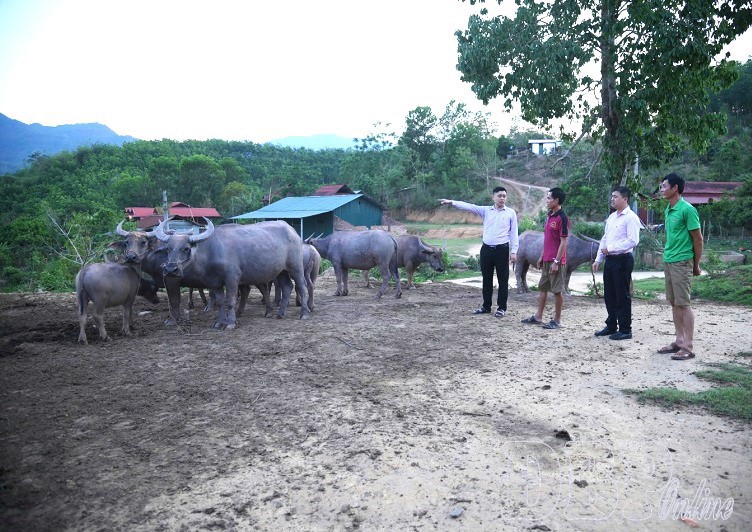
Preferential credit has enabled Dế’s family and many others in Huổi Đanh village to raise buffaloes and cattle successfully.

Determined to further improve his livelihood, in 2024, Dế borrowed an additional VND 100 million under the near-poor household program and VND 200 million under the job creation program to expand his livestock model. Today, his family owns over 10 buffaloes and cows, along with a well-built barn, grazing fields, and a dedicated area for growing elephant grass to feed the animals.

“I’m truly grateful to have access to these loans from VBSP to develop our family’s economy”, he shared. “Now, we have a stable income, a better home, and a much-improved quality of life. I hope more organizations will support others in our village to boldly access these funds and escape poverty.”

Khoàng Thị Nghiêm, a Women’s Union member in Vằng Xôn village, Nậm Khăn commune (Nậm Pồ district), also turned her life around with a preferential loan. After years of struggling to make ends meet, in 2025, she bravely borrowed VND 100 million under the program for production and business in disadvantaged areas. With skilled hands and support from the local women’s union, she started a traditional embroidery business. Her model not only provides steady income for her family but also creates jobs for other local women, becoming a trusted economic initiative for the community’s Women’s Union.
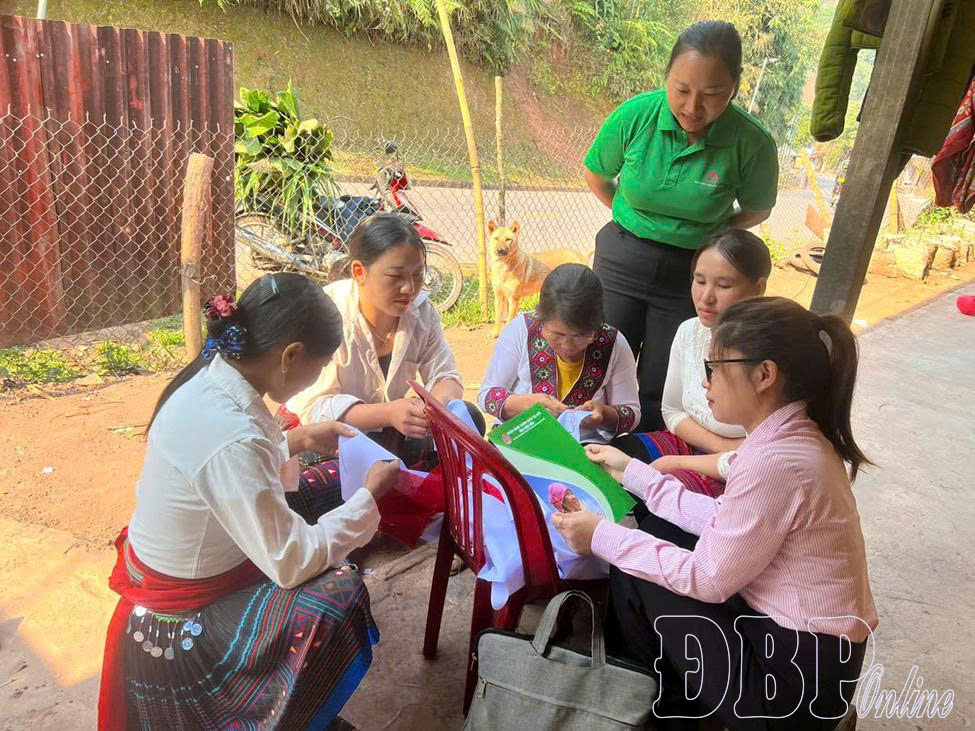
The Nậm Khăn Women’s Union actively coordinates with the local VBSP branch to deliver preferential loans to members.

In Phìn Hồ village, Phìn Hồ commune (Nậm Pồ district), Cháng A Vênh’s family once faced constant financial hardship with no capital to invest in production. After joining local community activities and being introduced by the Youth Union, Vênh secured a VND 50 million loan from the program supporting poor households. He used the money to purchase three breeding buffaloes and invest in poultry farming. As the family’s financial situation improved, in 2024 he borrowed another VND 100 million to expand his farm. His family has since risen to become one of the more well-off households in the village.

“Thanks to the preferential loan, our lives have changed significantly”, shared Vênh. “My children can attend school regularly, and I’ve gained the motivation to work harder without worrying about food or basic needs anymore.”

Families like those of Dế, Nghiêm, and Vênh exemplify how preferential loans have empowered poor and near-poor households to develop sustainable livelihoods and break free from poverty. Across Điện Biên, many households have made effective use of these funds to gradually improve their living conditions. The VBSP has proven itself a vital link connecting government credit policy to those in need.

As of May 31, the total outstanding balance of social credit programs at VBSP Điện Biên reached VND 5,272.359 billion, an increase of VND 260.775 billion compared to the end of 2024. Notably, loans for poor households alone accounted for VND 1,738.551 billion, the largest share of total lending, supporting 30,098 clients. This underscores the bank’s strong focus on the most vulnerable groups.
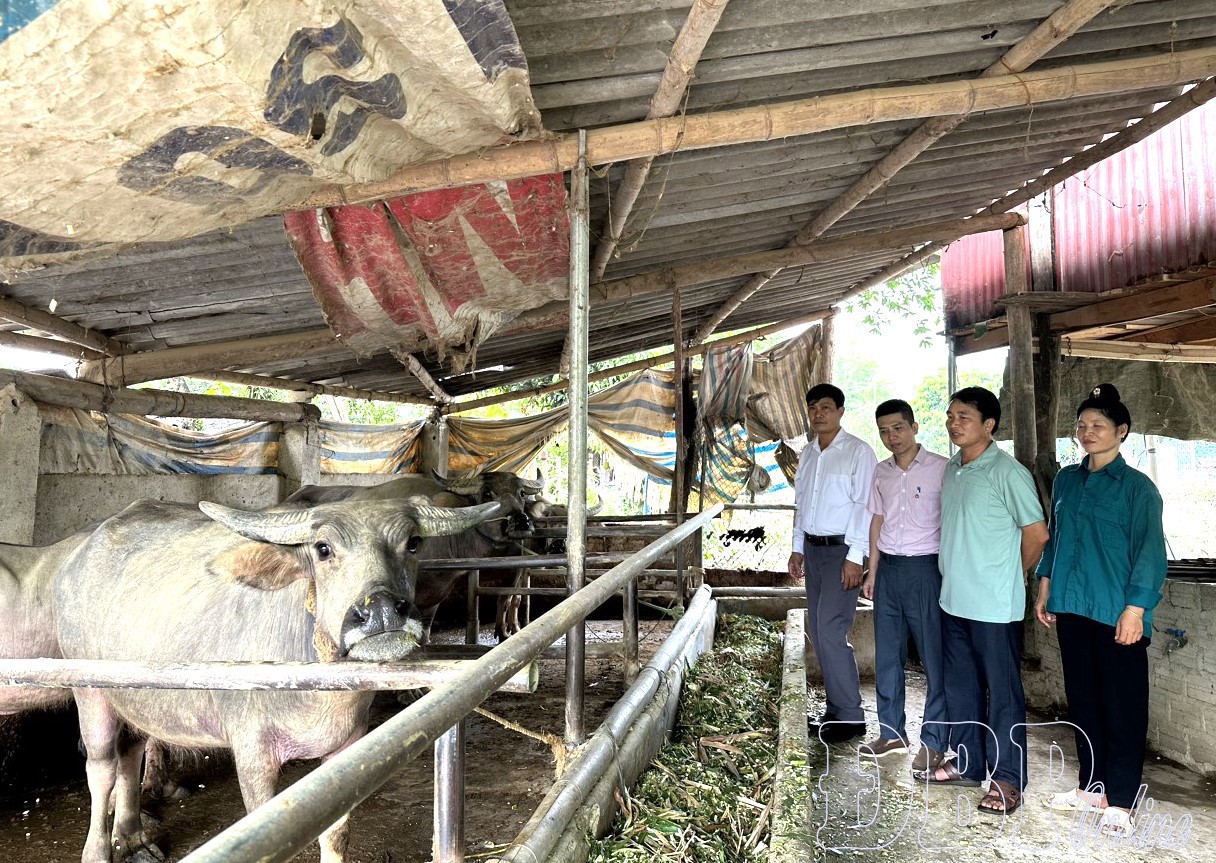
In Hua Thanh commune (Điện Biên district), residents use VBSP loans to develop livestock farming.

VBSP also disbursed VND 763.779 billion in loans to near-poor households (an increase of VND 60.528 billion) and VND 370.496 billion to households newly lifted out of poverty. These programs play a crucial role in helping families rise above the poverty threshold, stabilize their lives, and build stronger household economies.

In addition, VBSP continues to prioritize practical programs such as job creation loans (VND 640.856 billion in outstanding debt), business support in disadvantaged areas (VND 944.384 billion), clean water and rural sanitation loans, and housing support for poor families. Since the beginning of the year, the bank has served over 12,783 borrowers, a testament to the high demand and strong public trust in the government’s preferential credit policies.

These achievements highlight the essential role of VBSP Điện Biên in supporting poor, near-poor, newly non-poor households, and other disadvantaged groups. Moving forward, the bank aims to accelerate disbursement, simplify loan procedures, and improve credit quality to contribute to sustainable poverty reduction and rural development in this mountainous province.

Quang Hưng
Comment

You have 500/500 characters left

Please enter 5 or more characters!!!

Recent news

  • 'Helping OCOP producers break into bigger markets

    Helping OCOP producers break into bigger markets

    ECONOMY -
    ĐBP - Markets are expanding, but expectations for products are becoming more demanding. Alongside quality, consumers and distributors are paying closer attention to product origins, production processes, packaging, labeling and the ability to maintain a stable supply.
  • 'Accelerating progress of production development support

    Accelerating progress of production development support

    ECONOMY -
    ĐBP - From the operational capital of national target programs, Điện Biên province is deploying hundreds of production development support projects, contributing to expanding flagship crop zones and generating livelihoods for poor and near-poor households.
  • 'Listening to residents, building consensus in Si Pa Phìn

    Listening to residents, building consensus in Si Pa Phìn

    NEWS - POLITICS -
    ĐBP - From everyday concerns to local policies and initiatives, residents of Si Pa Phìn commune are increasingly able to contribute their opinions, express their aspirations and monitor implementation. By proactively listening, making information public and working together to address legitimate public concerns in a timely manner, local authorities are making grassroots democracy more meaningful and fostering consensus on local development.
  • 'Transmitting heritage through community classes

    Transmitting heritage through community classes

    CULTURE - SPORTS -
    ĐBP - The preservation of cultural heritage in Điện Biên is being carried forward through community classes and daily transmission activities in hamlets and villages. Driven by the dedication of artisans and culture bearers, alongside the proactive spirit of learners, traditional folk songs and dances are transmitted, contributing to safeguarding ethnic identity and ensuring the vitality of heritage within community life.
  • 'Preserving beauty of ethnic minority costumes in Na Sang

    Preserving beauty of ethnic minority costumes in Na Sang

    CULTURE - SPORTS -
    ĐBP - Along with their languages and scripts, the traditional costumes of ethnic minority groups reflect customs, traditions and aesthetic values, while preserving knowledge and skills passed down through generations. In Na Sang commune, efforts to maintain embroidery and tailoring traditions, together with classes teaching traditional pattern-making techniques, are helping preserve the cultural identity of local ethnic communities.
  • 'Nà Hỳ restructures crops

    Nà Hỳ restructures crops

    ECONOMY -
    ĐBP - From swiddens cultivating corn, rice, and cassava on steep land, the people of Nà Hỳ commune are gradually shifting to planting coffee, macadamia, and several perennial industrial crops of high economic value.
  • 'Innovating leadership methods, generating growth momentum

    Innovating leadership methods, generating growth momentum

    ECONOMY -
    ĐBP - Executing the 11.02% growth target for 2026, in the closing months of the year, alongside efficiently exploiting resources, Điện Biên province is focusing on innovating leadership, directing, and administrative methods toward clear objectives, specific solutions, distinct responsibilities, and resolute execution.
  • 'Transparent procurement prices, protecting coffee growers

    Transparent procurement prices, protecting coffee growers

    ECONOMY -
    ĐBP - Faced with the reality that fresh coffee procurement involves multiple focal points and prices between trading spots can fluctuate, local administrations have coordinated with enterprises to maintain daily price transparency, helping farmers proactively choose where to sell and curbing price-squeezing.
  • 'Removing barriers, narrowing gender gap

    Removing barriers, narrowing gender gap

    SOCIAL AFFAIRS -
    ĐBP - Through practical approaches, the Women’s Unions at all levels in the province have recently stepped up communication on gender equality, supporting women in developing livelihoods, creating jobs, and enhancing their capacities.
  • 'Sowing seeds of green agriculture

    Sowing seeds of green agriculture

    ECONOMY -
    ĐBP - Possessing a vast agricultural and forestry land fund alongside diverse, distinctive microclimates, Điện Biên holds substantial headroom to develop green agriculture. From expanding Arabica coffee, macadamia, and fruit tree zones to organic, VietGAP, and high-tech application models, a new direction is steadily taking shape: advancing agriculture not merely by scale, but placing sharper emphasis on quality, value, and sustainability.