



With its unique terrain of high mountains, rich forest ecosystems, and diverse soil and water resources, Điện Biên possesses both significant advantages and numerous challenges. Recognizing that uncontrolled resource exploitation would lead to environmental degradation and long-term social consequences, the province has identified green development as its guiding principle. This direction is deeply integrated with socio-economic goals, national defense, and the improvement of the people’s livelihood.
.jpg)
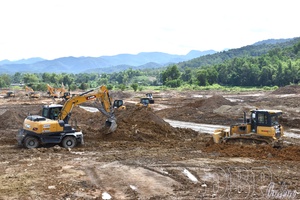
Instead of pursuing urban expansion at any cost, the province prioritizes sustainable growth that respects the natural landscape and preserves local cultural identity. New residential areas are gradually oriented toward green-clean-beautiful criteria, which emphasize increasing greenery and water surfaces while limiting widespread “concretization.” Furthermore, infrastructure for drainage and waste treatment is being designed to be environmentally friendly, contributing to a better quality of life in both urban and rural areas. The provincial Department of Construction has been directed to ensure that environmental assessments and climate resilience are integrated right from the detailed planning stage at a ratio of 1/500 and throughout every project’s implementation.
The province is recognized as a region with immense potential for renewable energy. For the 2025-2030 period, the approved capacity includes 904MW of solar power, 1,079MW of wind power, 114MW of biomass power, and 3MW of waste-to-energy. To capitalize on this, the province is focusing on a transparent investment environment and simplified administrative procedures to attract private social resources into these sustainable energy projects.
Transportation is also undergoing a significant transformation to reduce emissions. An action plan has been issued to encourage the transition from fossil fuels to electricity and green energy. To date, the province has approximately 576 electric cars and 4,115 electric motorbikes. In the taxi sector, three out of eight units have adopted electric vehicles, with one enterprise notably converting its entire fleet of 192 vehicles to electricity, significantly contributing to the reduction of greenhouse gas emissions.
.jpg)
In the agricultural sector, many localities are promoting farming models that reduce the use of chemical fertilizers and pesticides in favor of biological products. A prominent example is the smart rice farming model deployed on 86 hectares starting from the 2024-2025 winter-spring crop. This initiative, carried out in collaboration with NetZero Carbon Vietnam and BSB Nanotech, is estimated to reduce approximately 172 tons of carbon emissions.
Tourism serves as another vital piece of the province’s green puzzle. Điện Biên is steering toward green tourism that links heritage preservation with environmental protection. Nà Sự village in Mường Chà commune was selected for a pilot OCOP tourism model and is the first village to receive support for comprehensive digital transformation in community-based tourism. This model focuses on traditional stilt-house stays, ethnic cuisine, and agricultural experiences while minimizing plastic waste and utilizing traditional materials. According to Nguyễn Hữu Đại, Chairman of the Mường Chà commune People’s Committee, this shift has not only changed how residents approach tourism but has also provided sustainable livelihoods while spreading a green, identity-rich image to visitors.
Although the road to green development remains challenging due to limited resources and the impacts of climate change, the models currently being implemented in Điện Biên prove to be the right direction for a mountainous border province. By taking steady steps, Điện Biên is contributing to the goal of a Vietnam that develops rapidly, sustainably, and in harmony with nature.
Thành Đạt
.jpg)
.jpg)

.jpg)
.jpg)
.jpg)
.jpg)
.jpg)
.jpg)
.jpg)
You have 500/500 characters left
Please enter 5 or more characters!!!