



Farmers are overjoyed; all the hard work and toil of months of care and cultivation are now being worthily rewarded. Each heavy coffee bean on the branch seems to hold all the hope and faith for a fuller, more prosperous life in this difficult highland region.
The bustling sound of the coffee harvest echoes across all the hillsides. Amidst the vast hills of fruit-laden coffee trees, tanned hands nimbly pick the ripe clusters, and everyone’s eyes shine with happiness.
The sun-tanned face of Vừ A Dơ, from Chế Á village, is radiant with joy on harvest day. Nimbly picking the ripe coffee clusters, he says cheerfully: “This year, the coffee harvest is good! My family has 4ha, estimated to yield nearly 20 tons of fresh cherries. We started picking in September and have now finished the second round. Last year, the highest price was only about VND 20,000/kg, but this year it sometimes reached VND 30,000/kg, the highest in many years. Everyone is overjoyed, because all the effort of cultivating and caring for the whole year has been worthily rewarded.”
Sông Ia village currently has over 90ha of coffee ready for harvest. On the hillsides and fields, the coffee is heavy with fruit, painting the region red. The sound of laughter is bustling, the atmosphere of harvesting is hurried, and the joy of a good harvest and good prices is visible on every farmer’s face, promising a prosperous season.
Vàng A Chá, Chief of Sông Ia village, said: “In recent years, coffee has become the main crop for people in our village. Thanks to proper care techniques and favorable weather, this year’s yield is higher than last year. In particular, the purchase price is higher, so people are very excited. Thanks to the coffee tree, many households have escaped poverty, built permanent houses, and bought machinery for production. Our village is more prosperous now, and our lives are clearly improving.”

A good coffee harvest at a good price not only brings significant income to the growers but also creates thousands of seasonal jobs with a decent income. To keep up with the harvest, many households have to hire extra labor. For example, the family of Vàng A Mua in Sông Ia village, with 2ha of coffee ripening all at once, has to hire more than 10 seasonal workers for each picking round, at a rate of VND 4,000 - 5,000/kg. With this attractive income, many workers from neighboring communes like Sáng Nhè, Sín Chải, and Tủa Chùa have come to the key coffee region to work.
Ly Sáy Chu from Sín Chải commune shared: “Anyone who works fast can pick over 100kg a day. At the current pay rate, I can earn a decent amount each season, helping to cover living expenses and care for my family.”
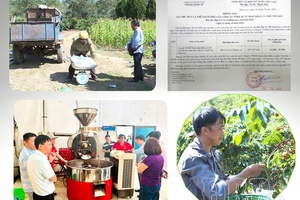
The Pha Đin Coffee Cooperative in Chế Á village is a cooperative specializing in growing and linking the large-scale purchase of high-quality coffee in Quài Tở commune. The cooperative currently has over 60ha of coffee.
Sùng A Dia, Director of the cooperative, said: “To meet processing needs and enhance product value, we have invested in upgrading the capacity of our preliminary processing line, adding modern husking and drying machines to ensure the coffee beans meet quality standards. We guide people to produce according to organic processes, controlling quality from planting and care to harvesting. Only in this way can our local coffee product go far and have a firm standing in the market.”
The coffee tree has taken root and been associated with the Quài Tở land for over ten years, becoming the key crop helping people here rise from poverty and achieve sustainable prosperity. Thanks to the suitable altitude, cool year-round climate, and fertile soil, Quài Tở coffee has a distinctive, rich, and nutty flavor that is favored by the market. While in previous years, unstable coffee prices worried farmers, this year, both yield and selling price have increased sharply, bringing new faith and morale to the farmers. According to statistics, Quài Tở commune currently has 1,635.18ha of coffee, of which 640.21ha are newly planted, concentrated mainly in villages such as: Chế Á, Hua Sa A, Hua Sa B, Háng Tàu, and Sông Ia.
Currently, Quài Tở coffee is sought after by many businesses inside and outside the province for purchasing and processing, expanding its consumption network, and gradually affirming its brand and value in the market.
Nhữ Duy Đông, Chairman of the Quài Tở commune People’s Committee, said: “In recent years, the coffee tree has truly become a sustainable economic development direction for the locality. Many households have boldly invested in expanding their area, applying science and technology to planting, care, and harvesting, helping to improve productivity and product quality. To promote this potential, the commune continues to encourage people to grow and care for coffee using organic methods, linked with brand building and geographical indications. At the same time, we coordinate with businesses and cooperatives to organize production linkages and guarantee consumption, aiming to build a concentrated, stable raw material zone. The goal is to make Quài Tở coffee a key product with a solid brand, improving income and living standards for people.”
The brilliant red coffee fields stretching over the hillsides not only bring a stable source of income to people but also add faith and motivation for them to remain committed to this key crop. From today’s ripe red coffee cherries, a Quài Tở coffee brand rich in identity is gradually affirming its position in the market, opening a sustainable path for the agriculture of Quài Tở in particular, and the Điện Biên highlands in general, contributing to promoting economic development and improving people’s lives.
Sầm Phúc






You have 500/500 characters left
Please enter 5 or more characters!!!