



Among them, science and technology and digital transformation emerged as key areas receiving numerous investment proposals and partnership commitments, opening up expectations for breakthroughs and creating new growth drivers for the mountainous border province of Điện Biên.
From technology to the low-altitude economy
One of the topics receiving significant attention at the conference was the orientation toward developing the low-altitude economy and applying unmanned aerial vehicles (UAVs) in production, logistics and agriculture. Nguyễn Văn Khoa, Chief Executive Officer of FPT, remarked that while Điện Biên entered history in 1954 through human determination and collective strength, today the province stands before the opportunity to open “a second sky” - a new economic space of the 21st century, where UAVs, artificial intelligence and data will transform production methods, logistics and economic development in mountainous regions.
According to FPT’s analysis, around 70% of Điện Biên’s cultivated land consists of steep hillsides that are difficult to mechanize using traditional methods, while high labor and transportation costs reduce agricultural efficiency. However, these challenges also create considerable opportunities for drone applications in agricultural production. Through pilot projects conducted locally, agricultural drones have demonstrated the ability to reduce pesticide spraying time from four hours to approximately ten minutes per hectare, while increasing seeding and fertilizer spreading capacity from less than one hectare per worker per day to 40-64 hectares per day in hard-to-access areas. UAV-based agricultural transport could also reduce logistics costs by as much as 40%.
FPT has completed simulation models for drone applications across more than 51,000 hectares of the province’s key crops, including rice, coffee, macadamia and Shan Tuyết tea. Results indicate that comprehensive deployment could reduce cultivation costs by 15-20%, equivalent to approximately VND 110 billion annually, while cutting irrigation water use by 40-50% and labor costs by around 30%.
.jpg)
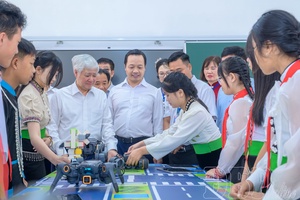
Beyond technological solutions, FPT aims to establish a UAV workforce training system directly within the province. The corporation committed not only to deploying drone services but also to building a comprehensive training ecosystem so that local youth can become high-tech engineers and technology managers. “If we move quickly enough, Điện Biên could not only lead the country in developing the low-altitude economy, but also become Vietnam’s national center for UAV workforce training,” said Nguyễn Văn Khoa. According to the company’s plan, within five years, FPT could train approximately 1,800 UAV specialists and create 450-500 high quality jobs for local workers.
Alongside emerging technology initiatives, the development of digital infrastructure and digital transformation platforms is attracting strong interest from enterprises investing in Điện Biên. Lê Minh Dương, Director of Viettel Điện Biên, stated that Viettel not only provides telecommunications infrastructure but also directly researches, manufactures and deploys various technological solutions in the province, including UAVs, autonomous robots, smart industrial park systems, smart city platforms, remote forest monitoring cameras, and software applications serving tourism, education and healthcare.
According to Lê Minh Dương, digital infrastructure is a prerequisite for comprehensive digital transformation. Currently, Viettel is the only telecommunications provider installing mobile base stations in areas without electricity or signal coverage, helping eliminate telecommunications “blind spots” for people in remote and mountainous regions. The company has also developed an Intelligent Operations Center (IOC) to support traffic monitoring, data integration and digital governance for the province’s socio-economic management.
“Investment promotion today should not stop at capital attraction alone; it also requires technological partnership to improve the investment environment, enhance governance efficiency and accelerate socio-economic development. Viettel is ready to cooperate with domestic and international enterprises to implement appropriate technological solutions in Điện Biên,” Lê Minh Dương emphasized.
Building an innovation ecosystem
The commitments and technological models introduced at the conference demonstrate that Điện Biên is gradually building a new development ecosystem based on science, technology and innovation. Assessing this orientation, Bùi Hoàng Phương, Deputy Minister of the Ministry of Science and Technology of Vietnam, stated that Điện Biên is among the provinces showing particularly strong determination in implementing Resolution No. 57 on science and technology, innovation and digital transformation, while proactively embracing new development models, especially controlled pilot frameworks for the low-altitude economy.
To build a sustainable foundation for long term development, Điện Biên must continue prioritizing investment in digital transformation, data infrastructure and workforce training. Businesses should not merely invest capital, but also accompany the province in designing, testing and refining new development models. “The Ministry of Science and Technology is committed to continuing its partnership with Điện Biên in improving mechanisms and policies, supporting technology pilot programs, and connecting domestic and international resources to effectively and sustainably develop the province’s science, technology, innovation and digital transformation ecosystem,” Deputy Minister Bùi Hoàng Phương affirmed.
With the participation of major technology enterprises, Điện Biên is gradually shaping an innovation ecosystem through a series of strategic cooperation agreements signed during the conference. The provincial People’s Committee signed a partnership agreement with the National Innovation Center to establish and operate the Điện Biên Innovation Center in accordance with national standards, while supporting startup training, consulting and international investment connectivity.
CT Group also signed a memorandum of understanding with Điện Biên, committing approximately VND 1 trillion in investment for strategic technology sectors such as Digital Twin technology, UAV ecosystems, green economy initiatives, carbon credits and near-space economy development.
In education and digital human resource development, Điện Biên signed cooperation agreements with STEAM for Vietnam to implement the Google for Education program, Gemini Academy and AI training programs for teachers, government officials, healthcare staff and journalists. The provision of 10,000 free accounts integrated with Gemini 3.0 and NotebookLM within the provincial education system is considered a pioneering step toward integrating artificial intelligence into teaching, administration and professional activities.
The participation of major technology corporations, innovation organizations and strategic investors demonstrates that Điện Biên is gradually shifting from a mindset focused solely on “attracting investment” to proactively building a new development ecosystem driven by technology and innovation. From digital infrastructure, data and artificial intelligence to green economy initiatives and the low-altitude economy, many emerging sectors are opening new opportunities for the province to accelerate growth and narrow the development gap with other localities.
Nguyễn Hiền
.jpg)
.jpg)

.jpg)
.jpg)
.jpg)

.jpg)
.jpg)
.jpg)
You have 500/500 characters left
Please enter 5 or more characters!!!