



This orientation creates livelihoods and raises incomes for ethnic minority communities, while concurrently contributing to forest management, protection, and development.
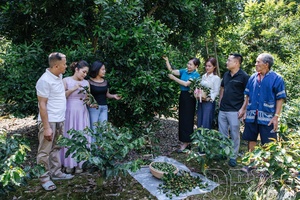
As the village possessing the largest black cardamom area in Quài Tở commune with nearly 50ha, Ten Hon currently records more than 97% of local households cultivating medicinal crops. Under ancient woodland canopies, black cardamom and amomum are emerging as reliable sources of income for many families.
The household of Mùa Sua Thào in Ten Hon village maintains nearly 2ha of black cardamom. Annually, his family earns an average of approximately VND 100 million from black cardamom sales. Come harvest season, traders journey directly to the village to make purchases, giving locals peace of mind in production. Leveraging the forest tracts assigned to his family for management and protection, he planted additional green amomum beneath the canopy to augment economic efficiency. Thào noted that deriving an income from the forest makes residents all the more responsible for safeguarding it, as forest conservation provides the very foundation for medicinal herbs to thrive.
Field realities in Quài Tở demonstrate that medicinal herbs are reshaping local production mindsets. In 2022, an enterprise based in Tuần Giáo commune partnered with residents of Ten Hon village to conduct experimental planting of 2,000 Ngọc Linh ginseng plants. After more than four years, the crop has shown healthy growth, adapting well to local soil and climatic conditions. To date, Quài Tở has established 83.5ha of black cardamom, 85ha of star anise, nearly 70ha of amomum, and 3.3ha of Ngọc Linh ginseng and Lai Châu ginseng cultivated beneath forest canopies.
.jpg)
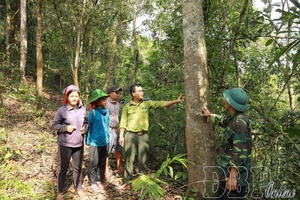
Lầu A Sính, Vice Chairman of the Quài Tở commune People’s Committee, stated that the locality identifies the development of medicinal herbs beneath forest canopies as an effort that must go hand in hand with forest management and protection. Medicinal crops can flourish only when natural ecosystems remain protected, and safeguarding woodlands represents protecting the long-term livelihoods of local people.
According to the Department of Agriculture and Environment, Điện Biên spans a total natural land area of 954,126ha, of which land planned for forestry development accounts for 592,269ha, representing 62.03%. In 2025, forested land reached 434,647.57ha, yielding a forest cover rate of 45.52%. Notably, natural forests constitute 98.4%, equivalent to 427,758.14ha. Forest tracts situated at altitudes above 1,200m cover approximately 71,000ha, while those above 1,500m encompass around 14,100ha. These factors create favorable conditions for Điện Biên to cultivate diverse high-value medicinal plant species. Field surveys conducted by specialized agencies have documented the natural distribution of numerous rare and valuable herbal species.
In Sín Thầu, Mường Nhé, and Nậm Kè, surveys identified Lai Châu ginseng, Vũ Diệp ginseng, Paris polyphylla, and pseudo-ginseng. Meanwhile, the areas of Núa Ngam, Mường Nhà, Pú Nhung, Chiềng Sinh, Sáng Nhè, Quài Tở, Mường Phăng, and Mường Tùng recorded Codonopsis pilosula, Fibraurea recisa, amomum, and black cardamom. Pilot medicinal cultivation models have also yielded encouraging outcomes. The 7/5 Cooperative in Na Sang commune piloted the cultivation of 2ha of Ngọc Linh ginseng, Lai Châu ginseng, Codonopsis pilosula, and Millettia speciosa, with plants exhibiting initial healthy development.
Lò Hồng Phong, Deputy Director of the Department of Agriculture and Environment, noted that the province designates the development of medicinal herbs, particularly valuable species beneath forest canopies, as a central orientation linking job creation and improved living standards with forest conservation and biodiversity preservation. Medicinal herb development has been integrated into the Forestry Economic Development Project for the 2021 - 2025 period, with orientations toward 2030. The province approved a plan to develop a specialized valuable medicinal herb cultivation zone in Quài Tở with an anticipated scale of approximately 3,980ha. Under the Việt Nam Ginseng Program approved by the Prime Minister, Điện Biên envisions developing 500ha of Lai Châu ginseng and Ngọc Linh ginseng beneath protection forest canopies.
To date, the entire province counts roughly 2,000ha of medicinal plants cultivated through targeted programs and self-directed household farming, including amomum, cinnamon, black cardamom, Docynia indica, Lai Châu ginseng, Ngọc Linh ginseng, and Angelica sinensis. Despite notable potential, medicinal herb development across the province continues to face bottlenecks, as production scales remain modest and fragmented, lacking centralized cultivation hubs tied to industrial processing and consumption channels. Local community resources remain constrained, and wild harvesting has paid insufficient attention to regeneration. Commodities are predominantly marketed in raw form or undergo rudimentary preliminary processing, limiting competitiveness.
Moving forward, the province will continue pooling resources to develop medicinal herbs, tying genetic preservation to plantation expansion and corporate investment attraction. Among planned efforts, the province is deploying a research project to build a 200m2 gene-banking nursery for Paris polyphylla, while integrating funding from National Target Programs. Leveraging natural forests and diverse herbal resources, Điện Biên is progressively elevating the value of medicinal plants cultivated beneath forest canopies, building sustainable livelihoods for local communities and establishing a high-value medicinal production basin in the Northwest region.
Lan Phương
.jpg)

.jpg)

.jpg)


.jpg)
.jpg)
.jpg)
.jpg)
.jpg)
You have 500/500 characters left
Please enter 5 or more characters!!!