



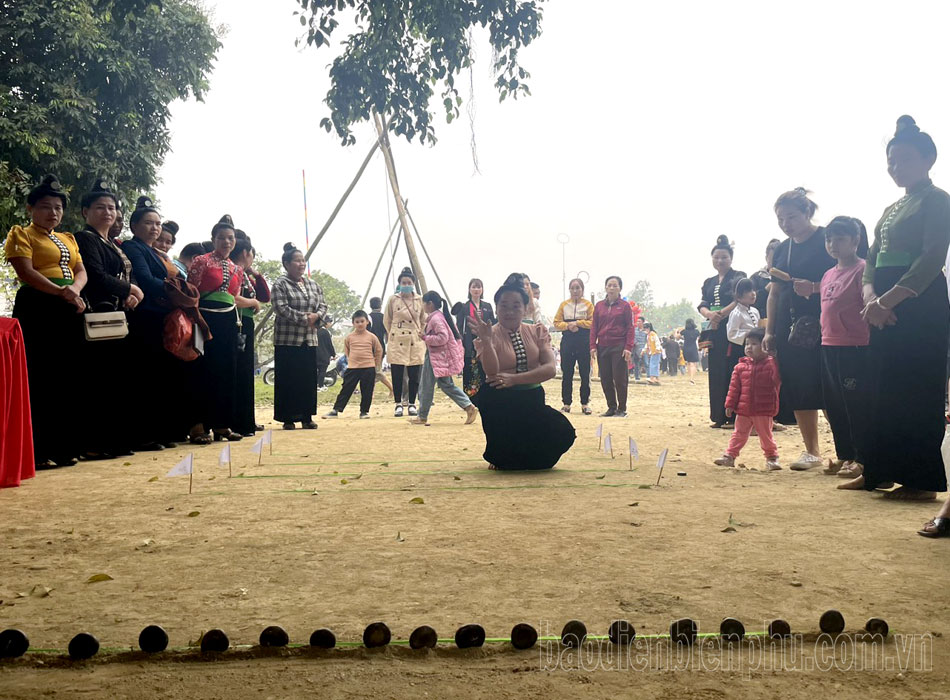
People play tó má lẹ, a popular folk game imbued with cultural identity of the Thai ethnic community in Điện Biên Province.
The community of 19 ethnic groups in Điện Biên boasts a rich and diverse traditional culture. Despite various challenges, these ethnic minorities continue to preserve and develop many of their unique traditional sports.
Every year, during festivals and holidays, competitions are organised to showcase traditional sports such as tug-of-war, crossbow shooting, stick pushing, pao throwing, tù lu (spindle turning), tó má lẹ (a game with local nuts), and rice cake pounding. These activities are not only traditional sports but also folk games closely tied to the daily lives of the ethnic people. Many of these games have been developed into official sports for various competitions, helping to preserve and promote the cultural beauty of these ethnic groups while encouraging widespread participation in sports.
Lò Văn Hỏa from Thanh Yên Commune in Điện Biên District is one of the province's outstanding athletes, having won over 100 medals in crossbow shooting at competitions ranging from district to national levels. “To achieve high results, I regularly practice and actively participate in local sports events organised by the communes and districts. These local competitions help me gain experience, refine my skills, maintain high concentration, and overcome personal limitations to achieve the best results in regional and national tournaments,” he said.
Pòng Thị Oai from Mới Hamlet, Chà Cang Commune in Nậm Pồ District shared that she often played stick pushing with friends at school and won many awards in this sport at both district and provincial levels. “Although it looks simple, good performance requires physical strength and technique. This sport helps me develop both physical and mental strength. Now, seeing many young people participating in this sport makes me very happy, as it helps preserve and develop traditional ethnic sports,” she said.
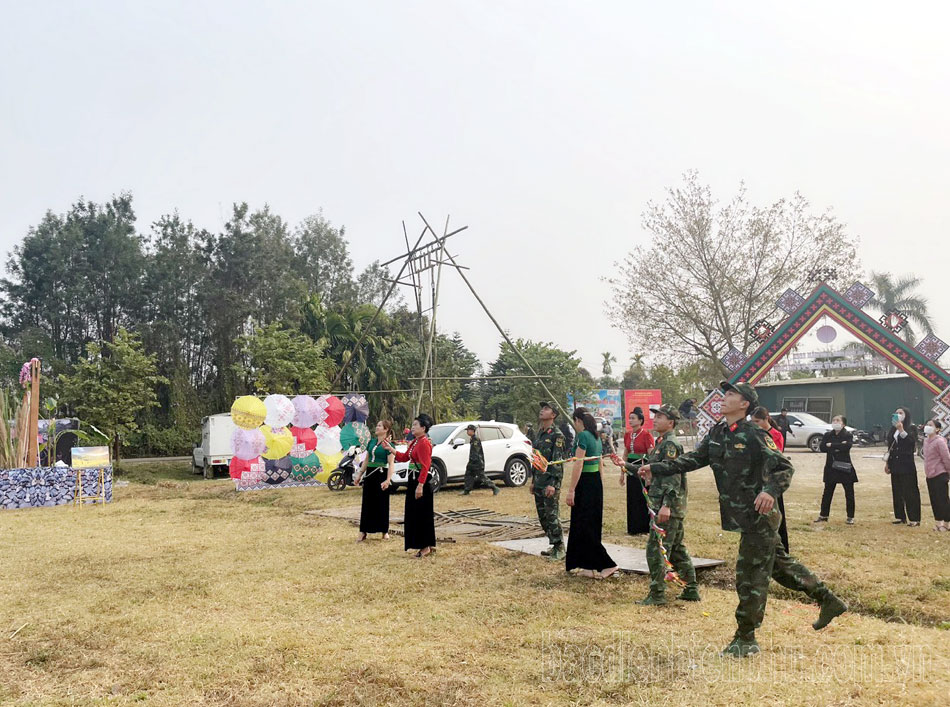
Locals and visitors play pao throwing during the Ban Flower Festival, which was held from March 13 to March 18 in Điện Biên Phủ City.
With its significant tourism development potential, Nà Sự Hamlet in Chà Nưa Commune, Nậm Pồ District has been selected for a project aimed at preserving and promoting the traditional cultural values of ethnic minorities while developing tourism, as part of the national programme for socio-economic development in ethnic minority and mountainous areas.
As part of this initiative, the traditional sports and folk games of the White Thai people have been revived. Thùng Văn Quân, the head of Nà Sự Hamlet, noted, “Reviving these traditional sports and folk games that are deeply rooted in Thai ethnic culture helps to keep them alive as they gradually fade in modern life. This process raises awareness and responsibility among the people to preserve the cultural beauty passed down by our ancestors. It also educates people about teamwork, discipline, the will to win, physical fitness, flexibility, and endurance.”
To further preserve and promote traditional folk games, Điện Biên Province has organised numerous vibrant and unique programmes and festivals, such as the Ban Flower Festival, the Mường Lay District Swallowtail Boat Racing Festival, and other ethnic-specific cultural and sports events. The province has also directed the provincial Department of Culture, Sports and Tourism to ensure that traditional ethnic sports are included in these festivities.
For instance, at the Ban Flower Festival, visitors are not only immersed in the unique cultural atmosphere of Điện Biên but also have the opportunity to participate in traditional folk games. Through interactions and enthusiastic guidance from locals, visitors gain a deeper understanding of the rich and long-standing cultural heritage of Điện Biên’s ethnic groups.
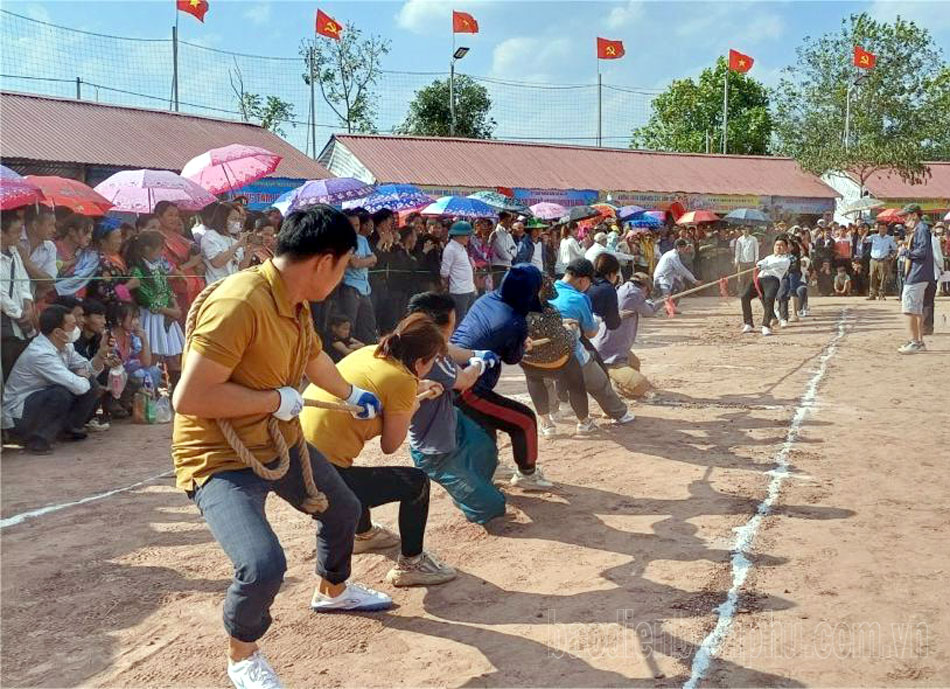
Community sports teams compete in tug-of-war at the second Nậm Pồ District Ethnic Cultural Festival.
In recent years, the sports movement in ethnic minority areas has experienced significant growth. Most localities have developed a pool of skilled and enthusiastic athletes ready to participate in sports competitions both within and outside the province.
Đào Hồng Hà, Deputy Head of the Sports Management Office under the provincial Department of Culture, Sports and Tourism, said: “Maintaining and developing traditional sports in the province is a key focus for all levels of government. Through district and provincial sports events, many outstanding athletes have been selected and trained to compete successfully at regional and national levels.”
In 2023, Điện Biên Province established four teams to compete in regional and national sports events, earning a total of 26 medals, including six gold, seven silver, and 13 bronze.
With the aim of developing both the quantity and quality of traditional sports, Điện Biên Province will continue to encourage and motivate people to maintain their practice of traditional sports. The province will organise traditional sports competitions to preserve these sports and folk games of ethnic minorities, actively teach the younger generation, identify and nurture promising talents, and expand ethnic sports clubs across various localities.
Additionally, the province is focusing on investing in infrastructure and planning facilities for sports. Local communities are encouraged to contribute land and resources for building and maintaining training and competition venues for traditional sports.
By Sầm Phúc
.jpg)
.jpg)
.jpg)
.jpg)
.jpg)
.jpg)
.jpg)
.jpg)
.jpg)
You have 500/500 characters left
Please enter 5 or more characters!!!