Điện Biên to further preserving culture amid administrative restructuring

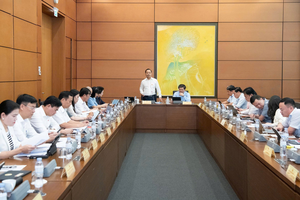
ĐBP - Localities across the country are urgently and decisively implementing the policy of merging administrative units at the provincial level, reviewing and expanding the commune level to streamline the administrative apparatus and reduce intermediaries. While the province grows larger, and districts are eliminated, with communes being expanded, this process helps simplify the political system but also brings many challenges, including preserving traditional culture.

Culture is the soul of each nation and region and cannot be measured by absolute numbers. Customs, traditional festivals, and folk games of each ethnic group have existed for thousands of years, being maintained and preserved, creating distinct and diverse cultural beauty. So, when administrative units are merged, with larger territorial boundaries, will these cultural values, festivals, and customs be preserved and maintained? In today's modern technology-driven society, the growing distance from traditional cultural values is putting pressure on efforts to preserve them.

Điện Biên hosts numerous revived and maintained ethnic festivals. In the image: The New Rice Festival of the Thái ethnic group in Noong Luống commune, Điện Biên district.

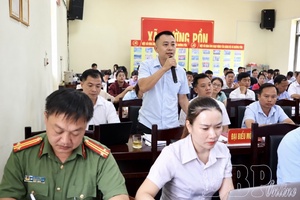
From 63 provinces and cities, the country will merge into 34 provinces and cities, reducing the number of communes by 60-70%, leaving approximately 4,000 communes to build a two-level government system that is closer to the people, more efficient, and better serves the public. Điện Biên province has established a plan, soliciting public opinions regarding the review and merger of administrative units at the commune level. Over 83% of voters in the province have agreed with the plan to merge 129 communes, towns, and wards into 45 communes and wards (3 wards, 42 communes). The goal of the merger is to streamline the apparatus, improve efficiency, and effectiveness, which has been widely supported by the people. Along with the challenges of reassigning redundant staff, preserving and promoting the cultural values of each ethnic group and region is a significant challenge for Điện Biên, with its 19 ethnic communities.

At the National Cultural Conference in November 2021, the late General Secretary Nguyễn Phú Trọng affirmed the important role of culture, stating, “Culture speaks to the identity of a nation; if culture is lost, the nation will be lost.” Culture is the essence of the nation. Each ethnic group has its distinct culture, festivals, and customs that contribute to the rich, diverse culture of Điện Biên, adding to the national cultural heritage.

The Thái Xòe dance in Điện Biên has been recognized as intangible cultural heritage of humanity.

To preserve traditional culture, several festivals in the province have been revived, such as the Hạn Khuống and Xên Bản of the Thái ethnic group, the Lao Water-Splashing Festival, the Mông Gầu Tào Festival, the Hà Nhì Rain Season Festival, and the Khơ Mú Seed-planting Festival. The diversity and distinctiveness of these cultural traditions are preserved through various revival activities, organized events, and their integration into the daily lives of the people. In addition to the 37 traditional festivals of different ethnic groups, Điện Biên is home to a system of recognized historical, cultural, architectural, and natural heritage sites, with intangible cultural heritage throughout the localities.

The province has 20 intangible cultural heritages listed in the national intangible cultural heritage list, including the Thái Xòe dance and the Tày, Nùng, Thái Then, which have been recognized as representative intangible cultural heritage of humanity. The festivals and intangible cultural heritages create unique and appealing traditional cultural values of the 19 ethnic groups, and they are a potential resource for tourism development. The 2024 National Tourism Year - Điện Biên attracted over 1.85 million visitors to explore historical sites, scenic landscapes, and cultural heritage in the province. Therefore, the effort to preserve and protect culture not only retains the soul of the ethnic groups but also preserves the spiritual values of each community, preventing cultural erosion.

The panorama depicting the Điện Biên Phủ campaign at the Điện Biên Phủ Victory Museum attracts visitors when they come to Điện Biên.

Expanding the administrative boundaries of communes will not diminish the cultural identity of the ethnic groups if we truly care and apply appropriate solutions. With larger spaces, culture can be planned, with resources mobilized for preservation, safeguarding, and revitalization. Traditional festivals, customs, and cultural practices can have wider spaces for display, attracting audiences and creating greater impact. Culture only fades away when we fail to consciously preserve and protect it. We need policies that support cultural development, creating conditions for traditional culture to adapt and thrive in the broader, modern space.

Merging administrative units is necessary for sustainable development, but it also presents an opportunity for localities to focus on preserving, protecting, and promoting traditional cultural values. When cultural preservation is prioritized during the process of merging administrative units, it opens the possibility of spreading cultural values more widely and developing culture in daily life. Researching, restoring, preserving, and promoting the cultural values of ethnic groups creates a healthy cultural environment for the community. Culture is also a resource for tourism development, contributing to making tourism a key economic sector for Điện Biên.

Gia Huy
Comment

You have 500/500 characters left

Please enter 5 or more characters!!!

Recent news

  • 'Thanh Yên creates consensus to deploy key projects

    Thanh Yên creates consensus to deploy key projects

    SOCIAL AFFAIRS -
    ĐBP - Recently, with the close direction of the Party committee and authorities of Thanh Yên commune, the work of dissemination and mobilizing people to implement projects in the area has been deployed synchronously and effectively. Thanks to that, people have increasingly raised their awareness, agreed with the State’s guidelines, actively coordinated, and contributed importantly to the project implementation process.
  • 'When cultural identity becomes “soul” of homestay model

    When cultural identity becomes “soul” of homestay model

    TRAVEL -
    ĐBP - From Thái stilt houses and Hà Nhì earthen-walled houses to decorative details imbued with the traditional culture of the Hmông people... many homestays in Điện Biên are choosing the path of “telling cultural stories” through accommodation spaces.
  • 'School rises from hardship

    School rises from hardship

    SOCIAL AFFAIRS -
    ĐBP - Despite facing numerous difficulties regarding facilities, teaching equipment, and living conditions for boarding students, in recent years, Chiềng Đông Secondary School, Búng Lao commune, Điện Biên province has been assessed as a unit with many positive changes in teaching and learning.
  • 'Crop restructuring drives sustainable agriculture in Điện Biên

    Crop restructuring drives sustainable agriculture in Điện Biên

    ECONOMY -
    ĐBP - Điện Biên province is restructuring its crop mix, identifying the expansion of coffee, macadamia and fruit trees as the backbone of a green, sustainable agricultural development strategy. This orientation is set out in the provincial Party Executive Committee’s Resolution on restructuring the agricultural sector toward concentrated, green, smart and sustainable commodity production for the 2026-2030 period, with a vision to 2035.
  • 'Expanding market for local agricultural products

    Expanding market for local agricultural products

    ECONOMY -
    ĐBP - In Điện Biên province, in the context of agriculture shifting strongly from the mindset of “producing what we have” to “producing what the market needs,” bringing local agricultural products to become specialties and conquering larger markets is opening up a sustainable direction for farmers.
  • 'Unity dance by Đà River

    Unity dance by Đà River

    CULTURE - SPORTS -
    ĐBP - In the early days of 2026, when the morning mist still lingered on the water surface of the Sơn La Hydropower Reservoir, we were present in Mường Lay ward, Điện Biên province.
  • 'Well preparing for “Compassionate Tết” program

    Well preparing for “Compassionate Tết” program

    SOCIAL AFFAIRS -
    ĐBP - The “Compassionate Tết” program for the 2026 Lunar New Year (Tết) – the Year of the Horse is a humanitarian activity of deep significance, aiming to care for and support poor households and individuals in difficult circumstances in Điện Biên province, helping them have the conditions to enjoy spring and welcome Tết.
  • 'Điện Biên builds concentrated raw material areas

    Điện Biên builds concentrated raw material areas

    ECONOMY -
    ĐBP - In highland communes of Điện Biên province, agricultural production was previously mainly small-scale and fragmented by household. This led to difficulties in scaling up and organizing consumption according to the value chain.
  • 'Bringing digital government closer to people in Điện Biên

    Bringing digital government closer to people in Điện Biên

    SOCIAL AFFAIRS -
    ĐBP - From installing the VNeID app to completing administrative procedures on smartphones, the “Digital literacy for all” movement is steadily bringing digital government closer to the people of Điện Biên. Beyond making public services more accessible, the initiative is playing a key role in accelerating administrative reform and building a modern, efficient grassroots administration.
  • 'How Điện Biên needy people escape poverty

    How Điện Biên needy people escape poverty

    ECONOMY -
    ĐBP - Once poor and near-poor households with difficult lives, thanks to timely access to support programs and projects of the Party, the State, and social organizations along with suitable livelihood models, many families in highland communes have gradually stabilized their lives.
  • 'Accompanying taxpayers

    Accompanying taxpayers

    ECONOMY -
    ĐBP - The transition from flat tax to declaration-based tax starting in 2026 is assessed as a step suitable for modernization, transparency, and integration goals, but business households must adapt to a model completely different from long-standing habits.