



This was a session of important significance: Comprehensively evaluating socio-economic development results in 2025, while clearly orienting goals, tasks, and solutions for 2026. With a spirit of innovation, action, and efficiency, delegates promoted their wisdom, focusing on discussing key solutions to complete key goals, contributing to realizing the province’s overall growth target in the coming year.
According to the report presented at the session, in 2025, in the context of complex regional and world economic developments, natural disasters, and climate change continuing to have negative impacts, Điện Biên province still maintained stable growth momentum in many fields. The province’s GRDP is estimated to reach over VND 17,547 billion, with a growth rate of 7.34%; GRDP per capita reached over VND 53 million/year. The economic structure shifted in the right direction; budget revenue in 2025 is estimated to reach over VND 2,282 billion, an increase of 31.74% compared to the previous year, reaching 178.98% of the estimate assigned by the Government.
Although achieving many positive results, the province’s socio-economic situation still has limitations: The growth rate has not reached the proposed growth scenario; public investment disbursement is still slow; total social investment capital has not met the plan; some key projects are prolonged; the province’s potential and advantages have not been fully exploited to create breakthroughs.
In that context, in 2026, Điện Biên province identifies the synchronous and drastic involvement of party committees, authorities, people, and enterprises and implements new solutions with high feasibility.
.jpg)
Speaking at the session, Chairman of the provincial People’s Council Lê Thành Đô emphasized: “This is a session with a large workload and many important contents. Requesting delegates to uphold the spirit of responsibility, aspiration for development, promote democracy, concentrate wisdom, carefully study the content, clearly demonstrate their role and opinion when discussing and deciding on issues, especially socio-economic development goals and plans for 2026.”
The highlight of this session is that delegates focused on discussing practical issues decisive for economic growth in 2026. Delegates spent time deeply analyzing draft reports, submissions, and resolutions; questioning the responsibility of leaders of departments and branches regarding project progress, public investment capital usage efficiency, budget revenue - expenditure management, and spearhead industry development.
The session agreed to pass socio-economic development goals and targets for 2026, including important indicators such as: GRDP growth rate reaching 10.5%; GRDP per capita over VND 60 million/year. Economic structure shifting in the right direction: Agriculture, forestry, and fishery accounting for 13.67%; Industry - construction 23.37%; Services 58.92%. Total budget revenue in the area in 2026 strives to reach over VND 2,310 billion; total social investment capital reaches VND 25,000 billion; poor household rate decreases by 3%.
In 2026, the Agriculture and Environment sector is assigned a growth target of 4.03%, 1.09% higher than in 2025. This is a difficult task in the context of strong restructuring shifting from short-term crops to long-term crops, causing initial output decline.
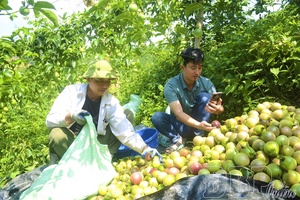
To complete the set targets, parallel to the annual production plan, in 2026 the Agriculture sector has 2 additional main growth drivers: The whole province will have an additional 1,782ha of coffee planted in 2024 entering the harvest period. With this area, in 2026, coffee will become an important bright spot supporting growth. Along with that, the rubber latex processing factory goes into operation. According to calculations, when the factory operates stably, rubber latex product revenue is expected to increase by VND 5 million/ha, contributing an additional 1% growth to the Agriculture sector.
Lê Xuân Cảnh, Director of the Department of Agriculture and Environment, said: “To ensure sustainable growth resources, the Agriculture sector requests localities to focus on caring well for 1,782ha of coffee planted in 2024 and 3,400ha planted in 2025. At the same time, promoting the conversion of inefficient one-crop rice land to planting pineapples and passion fruit - crops with short harvest times, suitable for local conditions to supplement growth for the sector. Regarding the 2026 target for the whole province to plant 2,500ha of macadamia and 5,000ha of coffee, the Department requests localities to conduct area reviews right now, allow people to register for planting, and proactively prepare high-quality seed sources to ensure planting progress according to the 2026 seasonal calendar. Although identified as difficult, the Agriculture sector is determined to complete 100% of the assigned plan.”
In 2026, the province sets a budget revenue target of VND 2,310 billion. This is assessed as a very difficult task. Because, according to the tax agency: Revenue from land is currently not clearly determined. Along with that, the tax adjustment policy for business households subject to tax increasing from VND 200 million revenue to VND 500 million/year causes revenue from business households to be expected to decrease by about VND 50 billion. Due to the small scale of business households in the area, although deploying electronic invoices and self-declaration mechanisms, revenue does not increase.
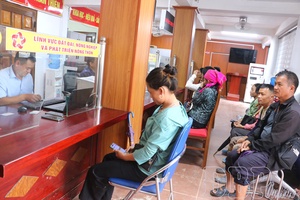
Faced with that situation, provincial People’s Council delegates requested the provincial People’s Committee to direct sectors and localities to implement drastic and synchronous solution groups: Expanding stable revenue sources from land, minerals, production - business; strengthening inspection and examination against tax loss; promoting digital transformation, raising the rate of online public services in the tax sector; supporting enterprises to restore production, nurturing revenue sources... At the same time, many delegates also requested the Tax sector to strengthen modernization, expand electronic invoices, and combat revenue loss in e-commerce and resource exploitation activities.
In the 2021 - 2025 period, the Tourism sector of Điện Biên province showed a breakthrough, with visitor numbers to the province increasing significantly, opening up many opportunities for enterprises and local communities. However, tourism still has many limitations such as: Lack of characteristic products and high-quality services; asynchronous tourism infrastructure; promotion work not yet invested in properly; human resources still limited in knowledge and skills in tourism activities.
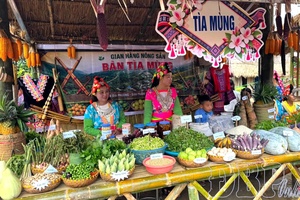
To create clear changes in 2026, provincial People’s Council delegates requested the provincial People’s Committee to focus on a number of solutions: Prioritizing investment and perfecting infrastructure at tourist areas and spots; supporting community tourism development associated with ethnic culture; developing river tourism, experience tourism, eco-tourism. At the same time, having preferential credit policies for tourism households and strengthening training in manpower, skills, and foreign languages for the community. Delegates expect that with synchronously deployed solutions, tourism will become a spearhead economic sector, a new growth driver, contributing positively to budget revenue and creating sustainable livelihoods for the people.
After 1.5 days of meeting, the provincial People’s Council highly agreed on key task groups and solutions, passing many important resolutions as a basis for the provincial People’s Committee to implement in the coming time. With high political determination, along with the joint hands of the people and the business community, Điện Biên province has grounds to believe that 2026 will create a new shift, completing socio-economic development goals and building a development foundation for the next period.
Phạm Trung
.jpg)

.jpg)
.jpg)
.jpg)
.jpg)
.jpg)
.jpg)
.jpg)
.jpg)
.jpg)
You have 500/500 characters left
Please enter 5 or more characters!!!