Promoting the role of grassroots-level authorities in military recruitment

ĐBP - The 2026 military recruitment season introduces many new points as this is the first year the two-tier local government structure is officially in place. With the guiding principle “Whoever is recruited must be a sure candidate,” localities are implementing all stages of the recruitment process in a comprehensive and disciplined manner.

According to Circular 68/2025/TT-BQP issued by the Ministry of National Defense, provincial authorities will now directly assign recruitment quotas to communes (instead of districts assigning them to communes as before). The chairpersons of commune-level People’s Committees now sign orders for medical examinations and conscription (previously handled at the district level). This shift makes the role of communes in the 2026 recruitment season crucial to ensuring both the quantity and quality of conscripts.

In 2026, Pu Nhi commune was assigned a quota of 32 citizens for enlistment: 17 for military service and 15 for the People’s Public Security. Following the administrative merger, Pu Nhi quickly established and consolidated its Commune Military Service Council, mobilizing the entire political system in the recruitment effort. The commune has focused on early and thorough review, verification, and re-checking of eligible candidates.

On September 11, the commune People’s Committee issued the 2026 recruitment plan, detailing standards of age, health, education level, and political qualifications. A working group was formed to visit every hamlet, review all youth of conscription age, and verify information directly with families.

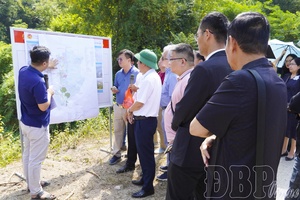
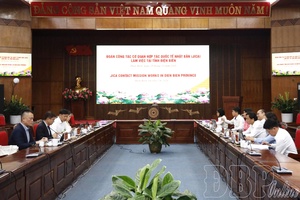
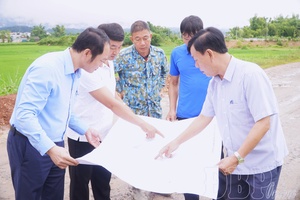
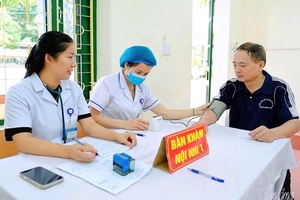
The Tuần Giáo commune Military Command meets to discuss plans for preliminary medical screenings.


According to Đinh Quang Bạo, Chairman of the Pu Nhi commune People’s Committee and Chairman of the commune Military Service Council, the screening of candidates and political vetting is now conducted at only two levels instead of three, which increases the burden on local authorities. “The greater the responsibility, the more proactive and meticulous we must be in recruitment, ensuring transparency, fairness, and accuracy at every stage,” he emphasized.

So far, Pu Nhi commune has issued orders for 116 citizens of conscription age to attend the preliminary medical screening, which is scheduled to be completed before October 15, 2025.

In Tuần Giáo commune, preliminary medical screening for 109 citizens will take place on September 29. Afterward, the commune Military Service Council will review results on October 10 and submit a consolidated report to the provincial Military Command on October 12. With a clear timeline, Tuần Giáo has mobilized the political system to ensure smooth execution of all tasks in the recruitment process.

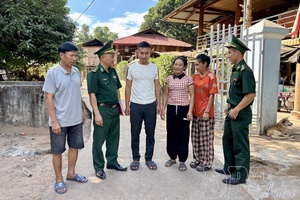
Quàng Văn Cương, Chairman of Tuần Giáo commune People’s Committee and Chairman of the commune Military Service Council, explained that council members were assigned to visit families of eligible youth to learn about their living conditions, aspirations, education, and political awareness. This fieldwork follows the “3 visits, 4 knows” approach: visiting the citizen, the family, and the locality; and knowing their health, education, background, and moral character. This ensures that both local authorities and receiving units fully grasp the number and quality of recruits before finalizing the list and issuing enlistment orders.

In 2026, the entire province is assigned a quota of 850 citizens for military and public security service. As Điện Biên continues to consolidate its two-tier government model, with shifting functions and responsibilities at the commune level, the recruitment process requires greater thoroughness, precision, and grassroots engagement.

To meet the principle of “complete process, sure candidates,” achieve 100% of quotas, and improve the political, health, and educational quality of recruits, Điện Biên has been strengthening training for recruitment officials and applying consistent, practical measures across all localities. This contributes to improving the quality of recruitment and meeting the requirements of building and safeguarding the Fatherland in the new context.

Currently, communes across the province are actively preparing for the preliminary medical screenings, scheduled from September 1 to October 20, with official examinations from November 1 to December 15. The finalization of lists and the enlistment call-up are expected in February 2026.

Thu Hằng
Comment

You have 500/500 characters left

Please enter 5 or more characters!!!

Recent news

  • 'Bringing healthcare closer to communities

    Bringing healthcare closer to communities

    SOCIAL AFFAIRS -
    ĐBP - In implementing Politburo Resolution No.72-NQ/TW on breakthrough solutions to strengthen the protection, care and improvement of public health, grassroots healthcare services across Điện Biên province are being gradually reinforced, with greater capacity to provide primary medical care.
  • 'Concentrating on fulfilling growth targets for Q4 and entire year of 2026

    Concentrating on fulfilling growth targets for Q4 and entire year of 2026

    NEWS - POLITICS -
    ĐBP - This was the focal directive of Trần Tiến Dũng, Member of the Party Central Committee, Secretary of the Điện Biên provincial Party Committee, and Head of the provincial National Assembly Deputy Delegation, at the briefing conference with leaders of the National Assembly Deputy Delegation, the Standing Board of the provincial People’s Council, leaders of the provincial People’s Committee, and the Standing Board of the provincial Việt Nam Fatherland Front Committee, held on the afternoon of October 29.
  • 'Developing tourism as a driver of growth

    Developing tourism as a driver of growth

    TRAVEL -
    ĐBP - In recent years, Điện Biên province has stepped up efforts to promote its tourism potential, diversify its products and expand connections with tourism markets. Alongside its historical sites, natural landscapes and the distinctive cultural identities of its ethnic communities, linking tourism promotion with investment and trade partnerships is opening up new development opportunities and helping drive local economic growth.
  • 'Expectations from International Investment Promotion Conference

    Expectations from International Investment Promotion Conference

    ECONOMY -
    ĐBP - The 2026 International Investment Promotion Conference opens up new opportunities for cooperation and development for Điện Biên with a series of investment approval decisions, memorandums of understanding on investment cooperation, and cross-border tourism route connections.
  • 'Lỳ Mì Lé - The imprint of the Si La people in the National Assembly (Part 2)

    Lỳ Mì Lé - The imprint of the Si La people in the National Assembly (Part 2)

    NEWS - POLITICS -
    ĐBP - Her years of teaching in highland areas helped National Assembly deputy Lỳ Mì Lé profoundly understand the obstacles highland children face in their educational journey. These include language barriers, underequipped classrooms, arduous commutes to school, and families struggling to afford basic clothing for their children. What she has witnessed firsthand has become her experiential foundation to approach issues practically, translating concrete hardships into legislative recommendations, with the aspiration that children in deeply disadvantaged areas secure better learning conditions.
  • 'Điện Biên leader works with JICA delegation

    Điện Biên leader works with JICA delegation

    NEWS - POLITICS -
    ĐBP - On October 28, Lê Văn Lương, Deputy Secretary of the Điện Biên provincial Party Committee and Chairman of the provincial People’s Committee, along with leaders of several provincial departments and sectors, held a working session with the Japan International Cooperation Agency (JICA) delegation led by Ikeda Hiroyuki, Senior Representative of the JICA Vietnam Office, regarding the investment proposal for the Inter-regional Irrigation System Project serving crop restructuring and climate change response in Điện Biên province.
  • 'Breaking through land clearance bottlenecks to keep projects on track

    Breaking through land clearance bottlenecks to keep projects on track

    ECONOMY -
    ĐBP - Land clearance is one of the most challenging stages of construction investment projects, directly affecting implementation schedules, particularly for major projects. In recent years, local Party committees and authorities have gradually addressed bottlenecks in compensation, support and resettlement by stepping up dialogue, making information public, proactively listening to residents’ concerns and aspirations, and resolving their petitions at the grassroots level. These efforts have helped build public consensus and accelerate project implementation.
  • 'Young people revitalize their homeland

    Young people revitalize their homeland

    ECONOMY -
    ĐBP - Upholding dynamic creativity and an aspiration to rise, many young people have chosen to establish their careers right in their homeland, harnessing local potential and comparative advantages to develop the economy.
  • 'Added impetus for grassroots-level civil servants

    Added impetus for grassroots-level civil servants

    NEWS - POLITICS -
    ĐBP - Following one year of implementing the two-tier local governance model, the Government stipulated public duty allowances of 25% and 55% for commune-level cadres and civil servants. This allowance officially took effect on July 1, 2026, and will remain in force until broader wage policy reforms are enacted.
  • 'Preserving sound of Tính lute

    Preserving sound of Tính lute

    CULTURE - SPORTS -
    ĐBP - Amidst the mountains and forests of the Northwest, the sound of the Tính lute and sweet Then melodies continue to resonate, serving as a bridge connecting the past with the present.