



Part 4: Aspirations for “sweet fruit” reaching far and wide
When farmers, cooperatives, and enterprises are connected through policy, technology, processing, and market outlets, these crops - once planted to escape poverty - stand before the opportunity to become value-generating drivers, raising incomes and realizing the province’s development aspirations.
From linkages to value chains
Expanding coffee and macadamia acreages will lead to a rapid surge in raw material output. Consequently, the challenge is no longer merely how many hectares are cultivated, but how procurement, preliminary processing, and commercial consumption are organized to elevate product value and mitigate dependence on middlemen.
Recognizing the practical imperative to increase agricultural product value, Pha Đin Coffee Cooperative in Quài Tở commune invested in a preliminary processing facility, progressively completing the chain from raw material zone to finished goods. Rather than selling entirely fresh cherries, the Cooperative controls input materials, manages preliminary processing, and develops Quài Tở coffee products.
.jpg)
Sùng A Dia, Director of Pha Đin Coffee Cooperative, stated that the unit is broadening linkages with enterprises and other cooperatives to organize chain-based production and refine products according to OCOP standards. The Cooperative currently maintains 11ha of elite budwood orchards to secure autonomous seedling supplies for new planting and replanting, while hiring unmanned aerial vehicles to spray fertilizers, reducing labor demands and cutting tending times across steep hill terrain.
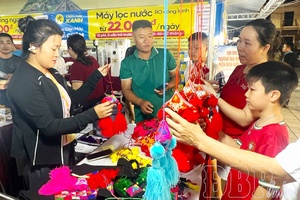
Tuần Giáo commune has developed 17 OCOP products, including 15 three-star products and 2 four-star products. The majority of items carrying the Tuần Giáo OCOP brand are processed from coffee and macadamia, prominent examples being Hồng Kỳ International Coffee HK13, Arabica Espresso HK10, Việt Hà macadamia, Thoa Quang slit-roasted macadamia nuts, and Thoa Doãn crispy roasted macadamia kernels. These products are initially distributed through cooperative channels, helping bring local coffee and macadamia closer to consumers. Nevertheless, production scales remain modest, output is limited, and markets remain largely confined within the province and selected sales channels. This underscores that OCOP is only the initial step; for products to travel further, production entities must continue standardizing quality, improving packaging, boosting processing capacity, and expanding distribution networks.
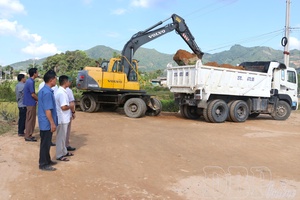
Identifying barriers confronting local agriculture, Chiềng Sinh commune proactively prepared raw material zones and necessary conditions to attract corporate investment into agro-processing. Under orientations toward 2030, Chiềng Sinh commune aims to develop approximately 1,200ha of coffee and 3,600ha of macadamia, becoming a focal locality linking raw material zones with a macadamia processing facility.
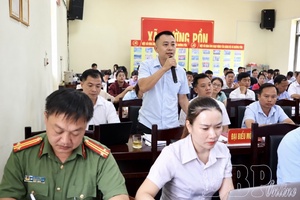
Hà Cầm Hồng, Secretary of the Chiềng Sinh commune Party Committee, noted that the locality reviewed land reserves, identified suitable tracts, and assisted farmers in accessing seedlings and technical guidance to join collaborative groups. The commune also focused on preparing infrastructure and sites, creating favorable conditions for TH Group to invest in raw material areas linked to a processing factory.
Đỗ Văn Sơn, Chairman of the People’s Committee of Chiềng Sinh commune, emphasized that corporate participation right from zoning raw material areas helps farmers adhere to standard practices while securing reliable processing inputs. However, linkages must be established upon explicit commitments concerning acreage, quality, procurement methods, pricing, and mutual responsibilities.
Policies driving processing momentum
To concretize Resolution 11 of the Executive Board of the provincial Party Committee, the provincial People’s Council promulgated Resolution No.23/2026/NQ-HĐND on July 16, 2026, regarding support policies for restructuring the agricultural sector toward concentrated, green, smart, and sustainable commodity production. Lê Thành Đô, Permanent Deputy Secretary of the provincial Party Committee and Chairman of the provincial People’s Council, stated that the support policy took effect on July 26, 2026, applicable to enterprises, cooperatives, cooperative groups, and farm households engaged in agriculture, forestry, and fisheries. Notably, the policy allocates substantial assistance for agro-processing and post-harvest preservation ventures. Enterprises with approved investment projects valued at VND 60 billion or more that establish linkages across at least 2,000ha of coffee, macadamia, or fruit trees for a minimum period of 50 years can receive support of up to 30% of construction, equipment, and production line costs, capped at VND 15 billion per project.
.jpg)
For projects applying circular technology, biotechnology, renewable energy, or treating agricultural byproducts into value-added items, the maximum support ceiling reaches up to VND 20 billion. Chairman of the provincial People’s Council Lê Thành Đô highlighted that this marks the first time such substantial support mechanisms have been introduced for agriculture, anticipated to attract enterprises into deep-processing facilities while encouraging eco-friendly technologies.
Resolution 23 also supports smart agricultural development with funding covering up to 50% of investments in greenhouse and net-house systems, water-saving irrigation, and smart irrigation. The support ceiling is capped at VND 1 billion for enterprises and cooperatives, VND 700 million for cooperative groups and household teams, and VND 300 million for individual households.
Regarding planting area codes and packing facility codes, the policy provides a one-time grant covering up to 100% of expenditures, capped at VND 50 million per code. Preliminary processing and processing facilities establishing and applying food quality and safety management systems according to HACCP, ISO, or equivalent benchmarks receive support of up to VND 80 million per system.
Furthermore, products recognized under the Việt Nam National Brand program can receive financial assistance of up to 70% of costs for developing and refining brand identity kits, intellectual property protection, traceability systems, and brand strategy formulation, capped at VND 500 million per product. New products entering the OCOP Program are supported with up to VND 30 million, while OCOP introduction and sales venues receive up to 50% of investment costs, capped at VND 150 million per establishment.
Forging high-value agriculture
Driven by the imperative to advance agriculture toward concentrated, green, smart, and sustainable commodity production, Điện Biên is progressively pivoting its focus from acreage expansion to elevating product quality, value, and competitiveness. Establishing stable raw material zones, deploying science and technology, accelerating processing, driving digital transformation, building brand identities, and organizing tight linkages among farmers, cooperatives, and enterprises are defined as pivotal components.
.jpg)
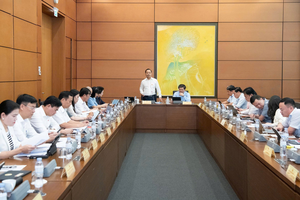
Speaking at the forum on “Sustainable agricultural development associated with green transition and value chain enhancement of key products in Điện Biên,” Lò Văn Cương, Member of the Standing Board of the provincial Party Committee and Permanent Vice Chairman of the provincial People’s Committee, affirmed that with a natural land area exceeding 954,000ha - of which approximately 93% is agricultural and forestry land - the province holds abundant potential to form concentrated raw material zones linked to processing and market consumption. On this foundation, Điện Biên is restructuring agriculture toward concentrated, green, smart, and sustainable commodity production, advancing circular economy practices and emissions reduction, with core priorities placed on raw material zone expansion, scientific and technological applications, digital transformation, branding, product traceability, and value chain linkages. The objective extends beyond producing output to raising added value, competitive strength, and producer incomes.
Notably, directions established at the forum were quickly concretized. On July 29, the provincial People’s Committee issued directives rolling out follow-up tasks, assessing expert recommendations regarding green agriculture, concentrated material zones, post-harvest processing, value chain development, and market expansion as critical foundations for departments, sectors, and localities to apply. Concurrently, provincial departments, agencies, and commune- and ward-level People’s Committees were requested to review and integrate relevant contents into mechanisms, policies, programs, projects, and development plans.
The Department of Agriculture and Environment was tasked with leading research and adopting solutions concerning variety testing, crop management protocols, pest management, post-harvest preservation and processing, digital transformation, and production modeling for key staples, while advising on a scientific and technological cooperation program between the People’s Committee of Điện Biên province and the Việt Nam Academy of Agricultural Sciences.
Issuing execution documents just over 10 days following the forum demonstrates that expert recommendations were swiftly absorbed and transformed into actionable assignments. From raw material zones and technological innovation to industrial processing, digital transformation, and market expansion, each link is being embedded within a unified supply chain rather than developed in isolation. This remains essential for the thematic agricultural resolution to bear tangible fruit.
Crops that once carried hopes of poverty alleviation, coffee and macadamia are now embedded in an updated development strategy equipped with raw material reserves, processing plants, technical standards, brand recognition, and commercial markets. When raw material zones are organized systematically, cooperatives realize their capabilities, enterprises invest in processing, and products are tied to brand identities, technology, and market demand, agriculture will generate greater economic returns, serving as a vital engine realizing Điện Biên’s development aspirations.
Song Phương
.jpg)
.jpg)
.jpg)
.jpg)
.jpg)
.jpg)
.jpg)
.jpg)
.jpg)
.jpg)
.jpg)
You have 500/500 characters left
Please enter 5 or more characters!!!