Improving effectiveness of citizen reception and handling complaints and denunciations

ĐBP - In recent times, the work of citizen reception and handling complaints and denunciations has been synchronously and effectively implemented by provincial levels and sectors. This has led to the prompt resolution of issues arising at the grassroots, minimizing complex, level-skipping, and prolonged petitions, and contributing to ensuring political security and social order in the area.

Clearly identifying the importance of citizen reception and complaints and denunciations settlement, the provincial Inspectorate has advised the provincial People’s Committee to direct departments, branches, sectors, and localities to thoroughly implement the directives from the Government and the province on this work. They have been urged to proactively grasp the complaints and denunciations situation and citizen feedback, promoting responsibility and enhancing the efficiency of citizen reception and complaints and denunciations settlement. At the same time, the Inspectorate provides counsel on the timely handling of complaints and denunciations content falling under the authority of the Chairman of the provincial People’s Committee, focusing on the prompt resolution of new cases arising at the grassroots and of backlogged, prolonged cases.

The inspectorate sector has also focused on implementing solutions to improve the efficiency of citizen reception and complaints and denunciations settlement, correcting and overcoming shortcomings, strengthening dialogue, listening to public opinion, and prioritizing reconciliation and persuasion. Communication work has been promoted to raise awareness and responsibility among the heads of agencies and units, as well as officials, civil servants, and public employees, in performing their duties. The application of information technology and digital transformation in document management and petition processing has helped enhance transparency and minimize errors and confusion. Furthermore, the inspection of responsibility regarding the implementation of laws on citizen reception and complaints and denunciations has been strengthened to elevate the sense of responsibility among agency and unit heads.

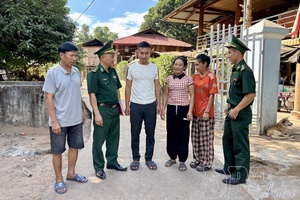
Trần Văn Chiến, Deputy Chief Inspector of the province, chairs a dialogue session to resolve a citizen’s complaint. Photo: Đức Linh

The results of citizen reception and complaints and denunciations settlement in the province have shown clear progress, generally meeting the aspirations of people, protecting the interests of the State, and the legitimate rights of organizations and individuals, while promptly detecting and strictly handling legal violations.

The provincial Inspectorate has coordinated with relevant departments and the provincial Citizen Reception Board to participate in regular citizen receptions and direct dialogues with people. This coordination has created unified linkage in resolving and responding to citizens and definitively settling complaints, especially those involving large, level-skipping groups.

In the first 9 months of 2025, agencies, units, and localities held 750 citizen reception sessions with a total of over 950 people. From these receptions and other sources (postal services, organizations, individuals), agencies received 1,442 petitions. The reception, classification, and processing of complaints and denunciations and feedback petitions were carried out in accordanceA with legal regulations and procedures. To date, 100% of petitions have been processed; 1,201 were eligible for handling, and 241 were not. Regarding the resolution of complaints and denunciations and feedback under competent authority, 551 petitions and cases have been resolved (achieving 73.66%), with the remaining cases still being processed. Relevant agencies have strictly complied with regulations on protecting the confidentiality of whistleblowers and coordinated with functional bodies to ensure their safety, promptly preventing acts of revenge or persecution.

Alongside the achievements, the work of citizen reception and complaints and denunciations settlement still has shortcomings. Some agencies have not linked citizen reception with the monitoring, inspection, and follow-up resolution by various levels, leading to low efficiency. Some agencies are slow in resolving complaints and denunciations petitions, causing citizens to travel multiple times and creating frustration. There are still instances of slow resolution, evasion of responsibility, and a lack of decisiveness in handling complex, prolonged cases. Coordination between agencies in resolving cases is not yet synchronous or highly effective, causing difficulties in the final resolution process.

In the coming time, the province will implement many key projects directly related to the rights and interests of people, especially in the fields of land and policy regimes. In addition, the operation of the commune-level government, following its rearrangement, still has some limitations in management; commune-level officials are not yet familiar with new tasks and face a large workload, leading to a risk of errors in handling administrative procedures. Therefore, the number of petitions, reflections, and complaints and denunciations is forecasted to increase, and citizens will continue to visit reception offices at all levels to make petitions.

To overcome limitations and improve efficiency, the provincial Inspectorate will advise the provincial People’s Committee to continue disseminating and thoroughly implementing central directives on citizen reception and complaints and denunciations settlement. It will strengthen state management, effectively organize the implementation of legal regulations, and focus on directing agencies and localities to inspect and urge the resolution of backlogged and prolonged complaints and denunciations cases to advise on definitive solutions. It will also effectively protect whistleblowers and resolutely handle cases of buck-passing, evading responsibility, or slow and improper resolution. At the same time, it will increase training to improve the professional qualifications of the contingent of officials and civil servants involved in citizen reception and complaints and denunciations settlement to meet the new demands of the task.

Trần Văn Chiến (Deputy Chief Inspector of Điện Biên province)
Comment

You have 500/500 characters left

Please enter 5 or more characters!!!

Recent news

  • 'Bringing healthcare closer to communities

    Bringing healthcare closer to communities

    SOCIAL AFFAIRS -
    ĐBP - In implementing Politburo Resolution No.72-NQ/TW on breakthrough solutions to strengthen the protection, care and improvement of public health, grassroots healthcare services across Điện Biên province are being gradually reinforced, with greater capacity to provide primary medical care.
  • 'Concentrating on fulfilling growth targets for Q4 and entire year of 2026

    Concentrating on fulfilling growth targets for Q4 and entire year of 2026

    NEWS - POLITICS -
    ĐBP - This was the focal directive of Trần Tiến Dũng, Member of the Party Central Committee, Secretary of the Điện Biên provincial Party Committee, and Head of the provincial National Assembly Deputy Delegation, at the briefing conference with leaders of the National Assembly Deputy Delegation, the Standing Board of the provincial People’s Council, leaders of the provincial People’s Committee, and the Standing Board of the provincial Việt Nam Fatherland Front Committee, held on the afternoon of October 29.
  • 'Developing tourism as a driver of growth

    Developing tourism as a driver of growth

    TRAVEL -
    ĐBP - In recent years, Điện Biên province has stepped up efforts to promote its tourism potential, diversify its products and expand connections with tourism markets. Alongside its historical sites, natural landscapes and the distinctive cultural identities of its ethnic communities, linking tourism promotion with investment and trade partnerships is opening up new development opportunities and helping drive local economic growth.
  • 'Expectations from International Investment Promotion Conference

    Expectations from International Investment Promotion Conference

    ECONOMY -
    ĐBP - The 2026 International Investment Promotion Conference opens up new opportunities for cooperation and development for Điện Biên with a series of investment approval decisions, memorandums of understanding on investment cooperation, and cross-border tourism route connections.
  • 'Lỳ Mì Lé - The imprint of the Si La people in the National Assembly (Part 2)

    Lỳ Mì Lé - The imprint of the Si La people in the National Assembly (Part 2)

    NEWS - POLITICS -
    ĐBP - Her years of teaching in highland areas helped National Assembly deputy Lỳ Mì Lé profoundly understand the obstacles highland children face in their educational journey. These include language barriers, underequipped classrooms, arduous commutes to school, and families struggling to afford basic clothing for their children. What she has witnessed firsthand has become her experiential foundation to approach issues practically, translating concrete hardships into legislative recommendations, with the aspiration that children in deeply disadvantaged areas secure better learning conditions.
  • 'Điện Biên leader works with JICA delegation

    Điện Biên leader works with JICA delegation

    NEWS - POLITICS -
    ĐBP - On October 28, Lê Văn Lương, Deputy Secretary of the Điện Biên provincial Party Committee and Chairman of the provincial People’s Committee, along with leaders of several provincial departments and sectors, held a working session with the Japan International Cooperation Agency (JICA) delegation led by Ikeda Hiroyuki, Senior Representative of the JICA Vietnam Office, regarding the investment proposal for the Inter-regional Irrigation System Project serving crop restructuring and climate change response in Điện Biên province.
  • 'Breaking through land clearance bottlenecks to keep projects on track

    Breaking through land clearance bottlenecks to keep projects on track

    ECONOMY -
    ĐBP - Land clearance is one of the most challenging stages of construction investment projects, directly affecting implementation schedules, particularly for major projects. In recent years, local Party committees and authorities have gradually addressed bottlenecks in compensation, support and resettlement by stepping up dialogue, making information public, proactively listening to residents’ concerns and aspirations, and resolving their petitions at the grassroots level. These efforts have helped build public consensus and accelerate project implementation.
  • 'Young people revitalize their homeland

    Young people revitalize their homeland

    ECONOMY -
    ĐBP - Upholding dynamic creativity and an aspiration to rise, many young people have chosen to establish their careers right in their homeland, harnessing local potential and comparative advantages to develop the economy.
  • 'Added impetus for grassroots-level civil servants

    Added impetus for grassroots-level civil servants

    NEWS - POLITICS -
    ĐBP - Following one year of implementing the two-tier local governance model, the Government stipulated public duty allowances of 25% and 55% for commune-level cadres and civil servants. This allowance officially took effect on July 1, 2026, and will remain in force until broader wage policy reforms are enacted.
  • 'Preserving sound of Tính lute

    Preserving sound of Tính lute

    CULTURE - SPORTS -
    ĐBP - Amidst the mountains and forests of the Northwest, the sound of the Tính lute and sweet Then melodies continue to resonate, serving as a bridge connecting the past with the present.