



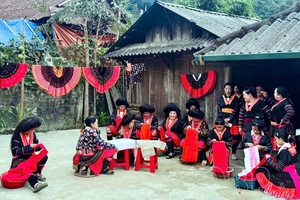
In Nậm Kè village, Nậm Kè commune, Hù Thị Châm, Leader of the Cống Dance Team, always dedicates herself to perseveringly guiding members and local children through every movement. Every footstep and rhythm of the hands is practiced repeatedly until the tempo and melody are perfected. For her, the crucial element is helping learners understand the narrative behind each dance, so that during execution, they feel the life and sentiments imbued by their ancestors. Châm recounted that the traditional dances of the Cống people stem from daily living and labor. After exhausting days working the swiddens, villagers would dance and sing together to relax and bond. Familiar items like bamboo tubes, wooden sticks, winnowing baskets, and bamboo baskets were integrated into the dances to recreate agricultural work, express joy, and convey hopes for bountiful harvests and a peaceful life.
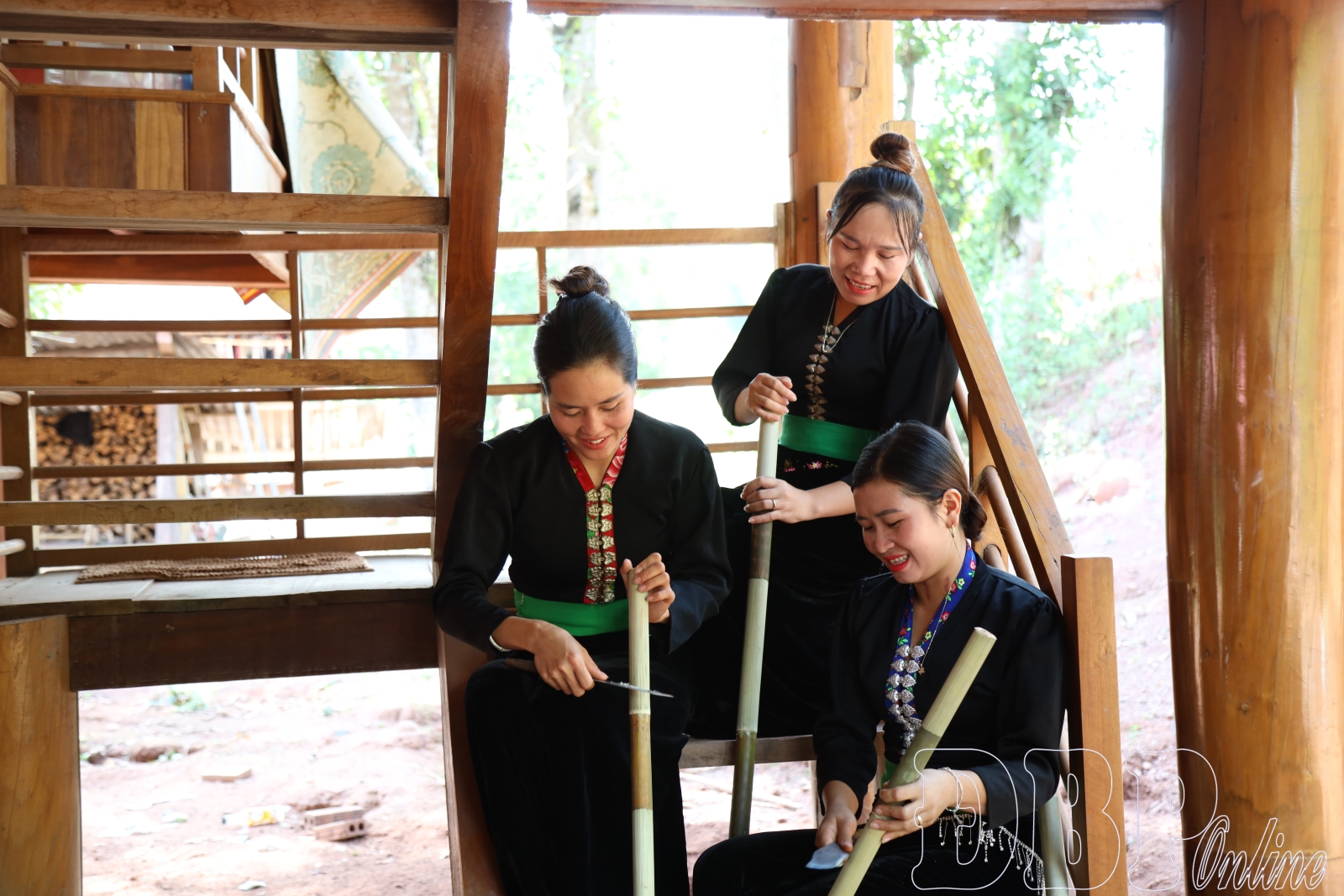
There was a time when the anxieties of making a living caused cultural activities to wane, and the number of people versed in traditional dances gradually dwindled. Yet over the past decade, as lives gradually stabilized and the local administration paid closer attention, villagers began collecting, restoring, and encouraging one another to practice and preserve the beauty of traditional culture. Those who knew how to dance guided those who did not, and proficient members mentored the younger generation. Hù Thị Châm dedicated substantial time to maintaining the dance team, meticulously correcting every movement for the learners. Through these practice sessions, the dances were gradually revived and became featured performances in cultural exchange events.
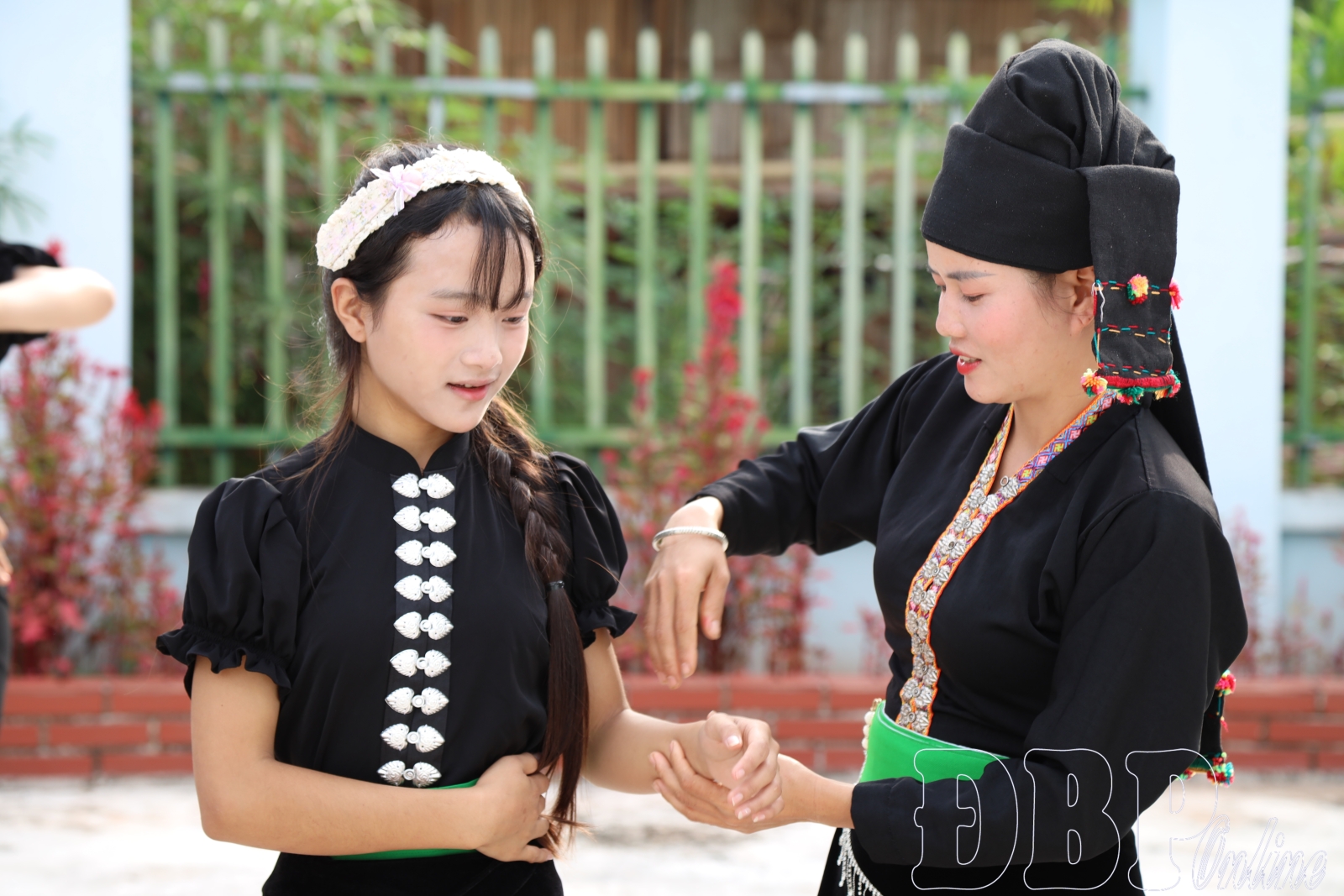
Lý Thị Ín, a member of the Nậm Kè village Traditional Dance Team, stated that the team currently has 8 members, all proficient in the ethnic group’s dances. “The more we practice, the more we understand the customs and the Cống people’s concepts of nature and life. Every time I dance, I feel as though I am living out my dreams and thoughts about beautiful natural landscapes and a peaceful life under every roof.”
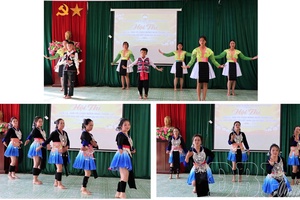
Nậm Kè village is home to 74 Cống ethnic families who have lived there for generations. According to Lý Quang Tám, Secretary of the village Party Cell, facing the reality that the number of people versed in traditional dance remained small, the Party Cell mobilized residents to participate in collecting, restoring, and transmitting the dances. Concurrently, they assigned Party members to monitor the dance team’s activities and grasp members’ aspirations to propose support. Transmission efforts expanded to schools to progressively build a succeeding generation. Lù Thị Diễm Quỳnh, a student at Nậm Kè Primary and Secondary Ethnic Boarding School, shared that initially, she felt awkward with every movement. Guided by her teachers, she gradually caught the rhythm and now confidently dances with her friends during school and local festivals.
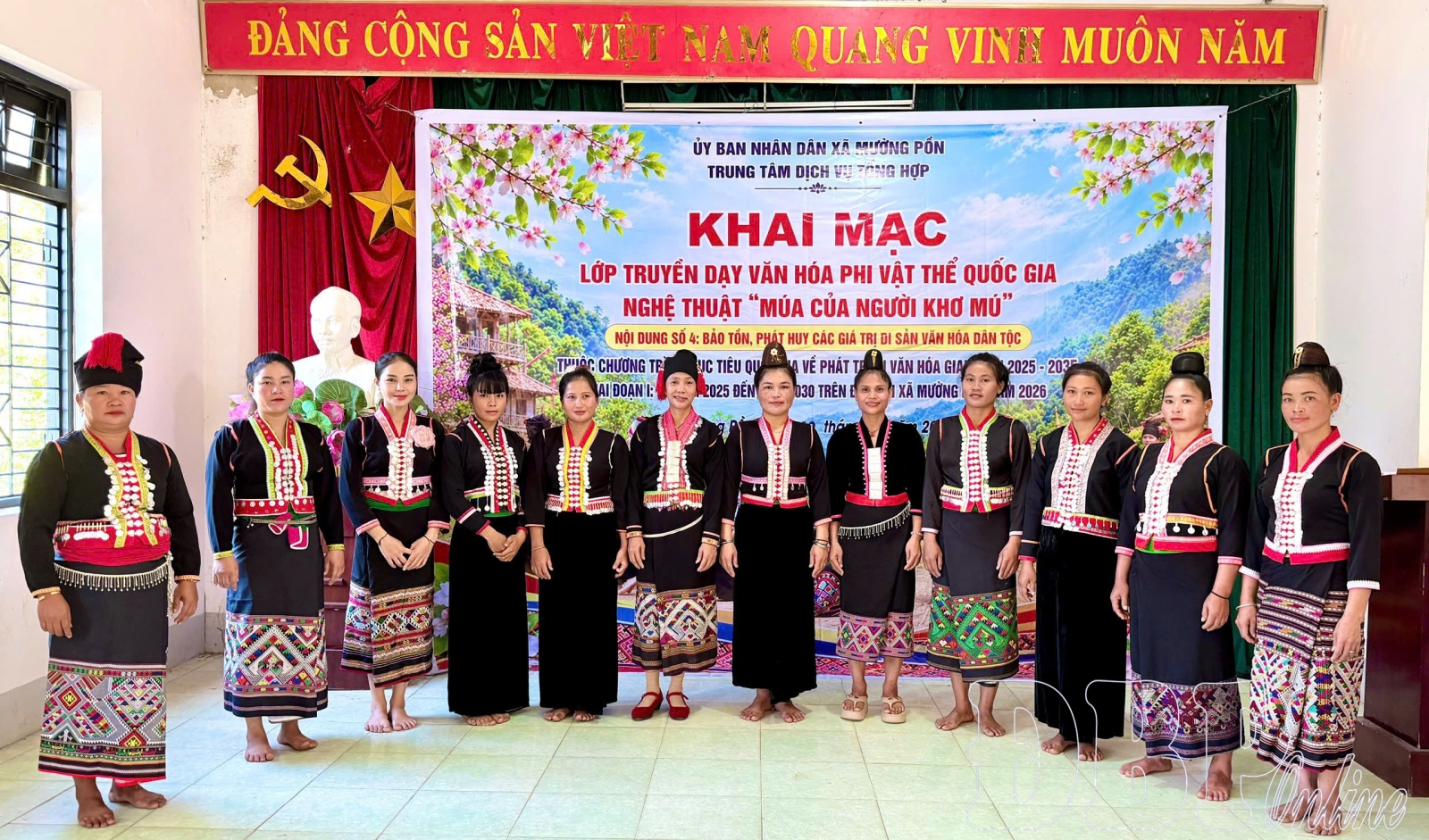
Sharing the desire to carry forward heritage, in Lĩnh village, Mường Pồn commune, a Khơ Mú traditional dance transmission class was organized under the guidance of Meritorious Artisan Quàng Thị Típ. Co-organized by the commune Integrated Service Center and the village from October 19 to 25, the class provided residents an opportunity to methodically learn and practice traditional dances.
During practice, artisan Quàng Thị Típ personally demonstrated, guiding trainees to follow along and correcting each movement. Drawing on knowledge and experience accumulated over many years, she helped learners master the techniques and understand how to express the distinctive traits of traditional dance art.
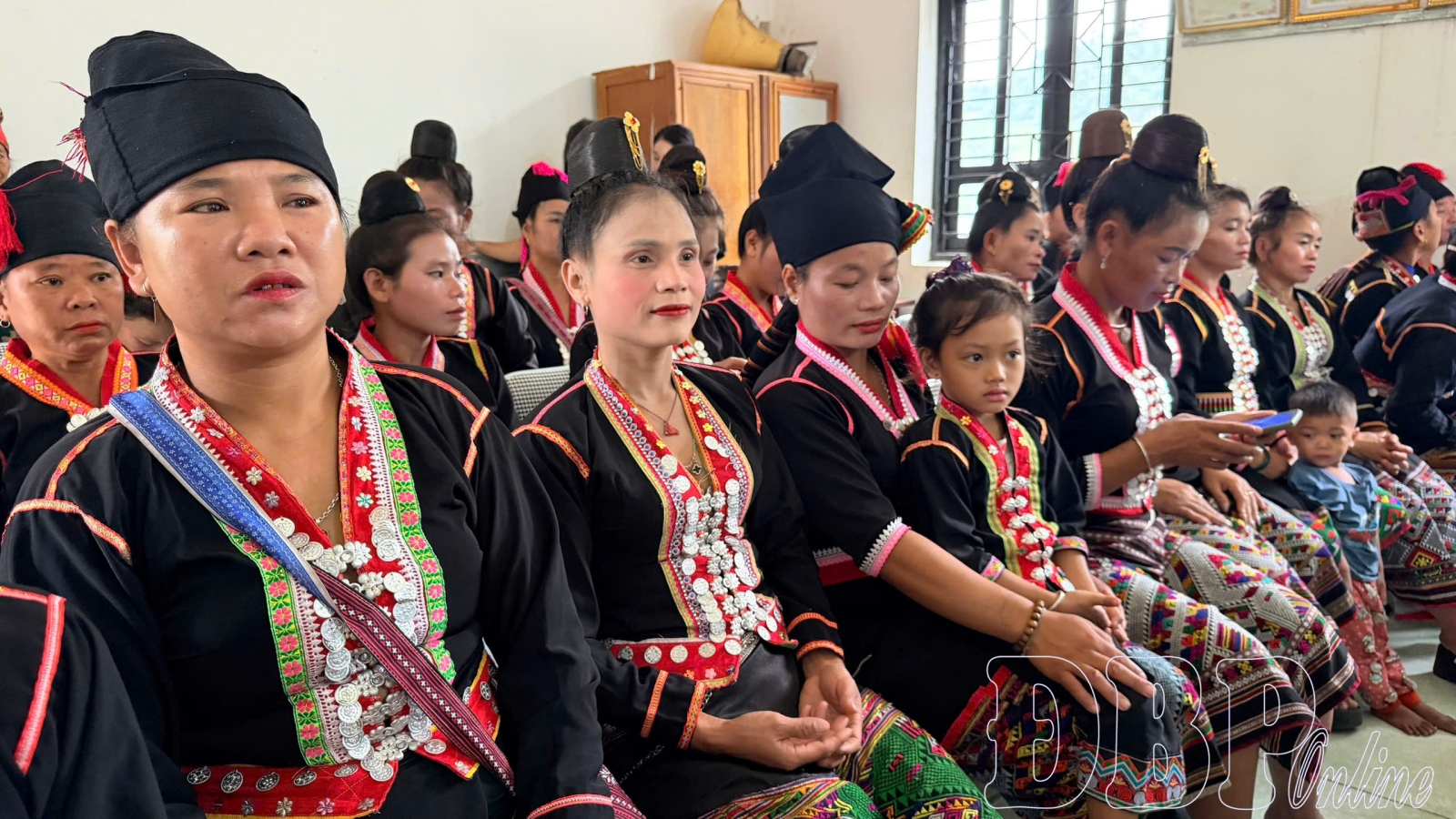
Through practice, learners recognized incorrect movements, progressively adjusting their dancing style to coordinate rhythmically with one another. The knowledge absorbed in class also serves as a foundation for trainees to continue practicing, participate in cultural activities, and provide further guidance to their relatives.
In Mường Nhé commune, traditional folk song and dance transmission classes continually attract large numbers of community members. To the sound of music, trainees attentively observe the instructor, practicing every movement to capture the defining characteristics of the dance. Thái folk melodies resound, carrying sentiments for family, homeland, and community bonds.
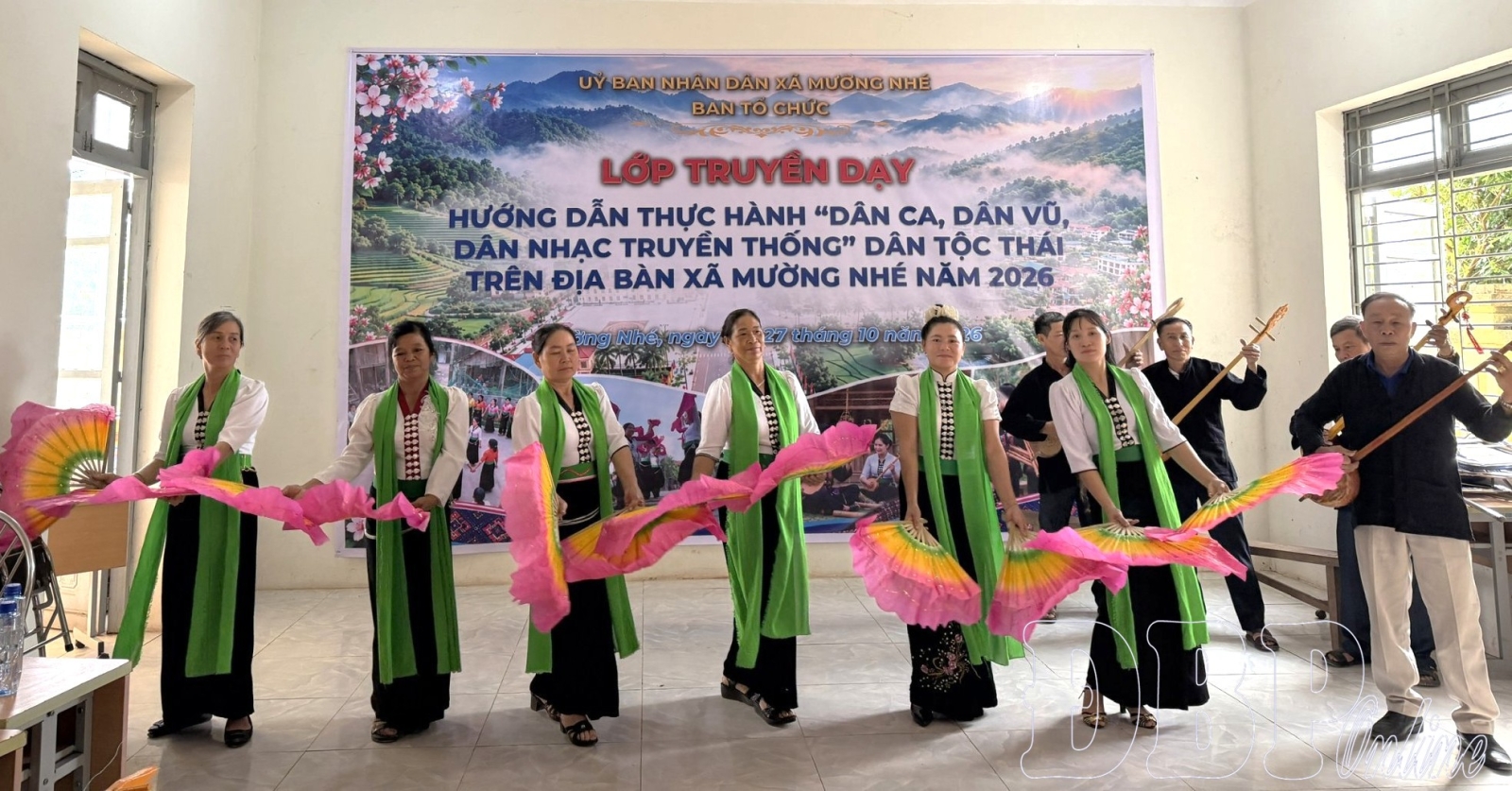
Quàng Thị Hường, from residential group No. 2, Mường Nhé commune, shared: “I am deeply honored and proud to participate in the traditional folk song and dance class. Through this class, I hope to learn from the instructors to better understand the customs, folk songs, and dances of my homeland’s Thái ethnic group.”
Participating as an instructor at the class, Lường Văn Sinh from Mường Nhé village shared with villagers his personal knowledge of the folk songs, dances, music, and musical instruments of the Thái people. His deepest wish is that the knowledge accumulated over many years will be absorbed and preserved by his descendants and the village art performance team.
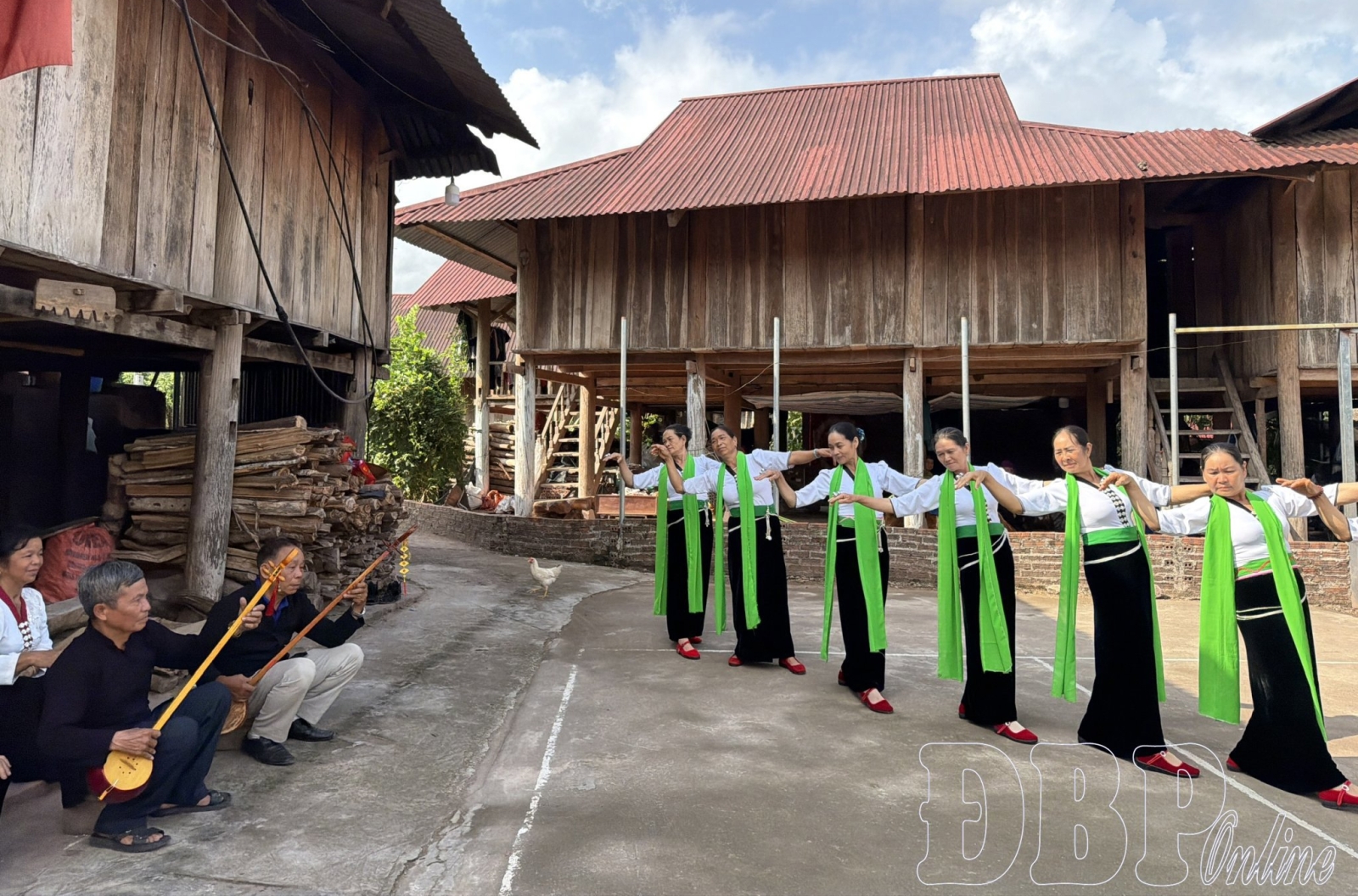
“We hope that traditional cultural values will not fade away, so that the songs of the White Thái people in particular, and the Thái ethnic group in Điện Biên province in general, continue to be preserved and handed down to subsequent generations,” Sinh expressed.
According to statistics from the Department of Culture, Sports and Tourism, the entire province currently has 463 intangible cultural heritages included in the inventory list; among these, 24 are inscribed on the national intangible cultural heritage list. This represents a rich cultural value repository demanding the shared preservation efforts of the community. For heritage is only truly conserved when the people know how to practice it, cherish it, and continue transmitting it across generations.
Đào Phương

You have 500/500 characters left
Please enter 5 or more characters!!!