Preserving dances and songs of Si La ethnic group

ĐBP - Folk songs and folk dances are vital elements creating each ethnic group’s cultural identity. For the Si La people in Mường Nhé commune, traditional folk songs, dances, and musical instruments preserve memories of labor, daily life, and community affection across many generations.

Organizing classes to teach and guide the practice of traditional folk songs, dances, and music contributes to arousing pride, raising awareness, and enhancing residents’ capacity in preserving and handing down ethnic cultural heritage.
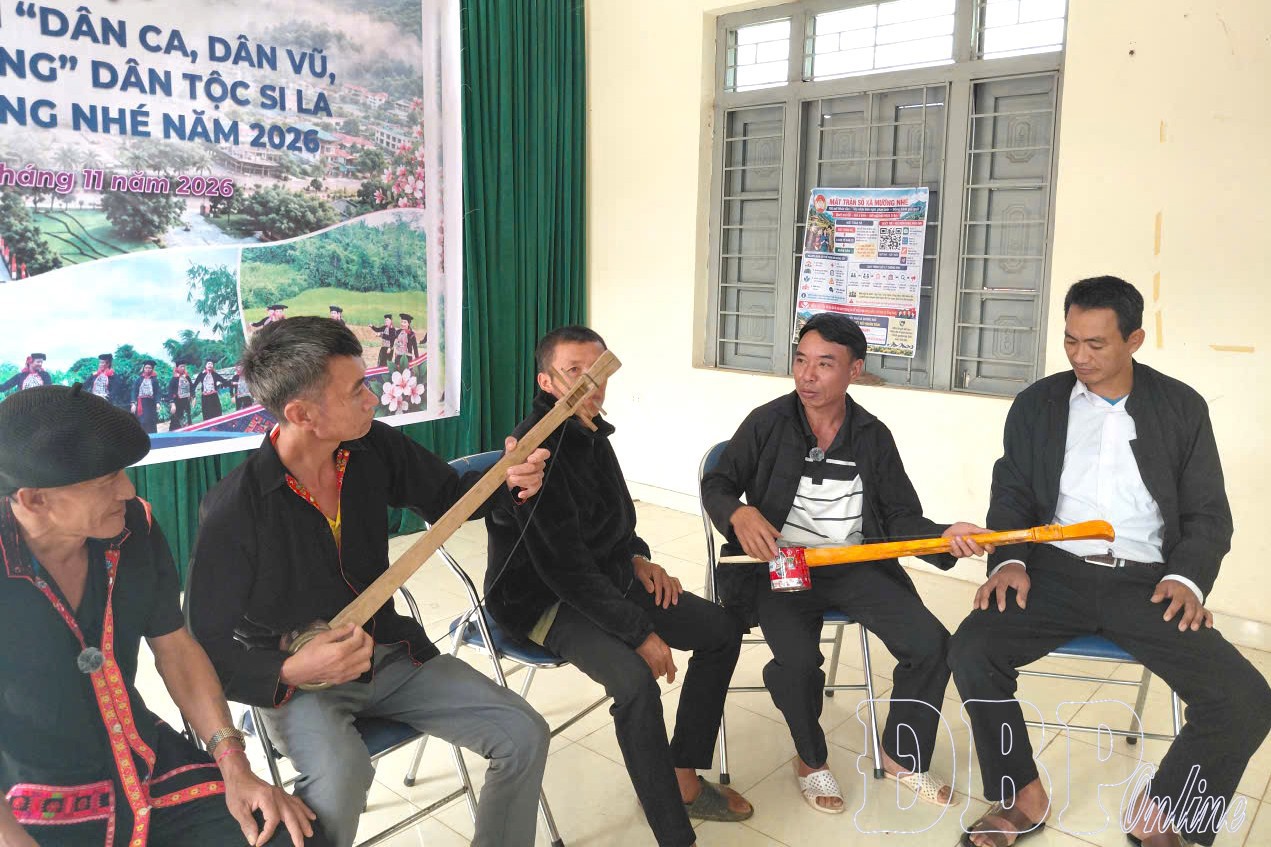
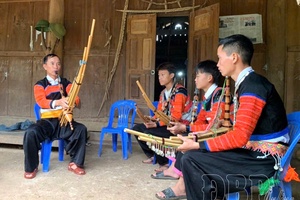
Hù Chà Khớ (second from right) teaches how to use traditional musical instruments of the Si La ethnic group.

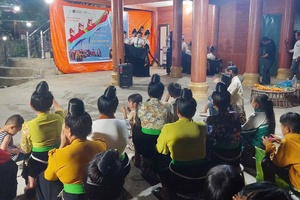
In Nậm Sin village, traditional folk tunes and dance rhythms of the Si La ethnic people are revived through the guidance of those knowledgeable in ethnic culture. Movements may still appear hesitant and not yet fully practiced, and verses are repeated time and again, yet each practice session offers an opportunity for learners to access and understand more about their ethnic culture. In 2026, Mường Nhé commune organized 4 classes teaching and guiding the practice of traditional folk songs, dances, and music of the Hà Nhì, Si La, Hmông, and Thái ethnic groups, with a total of 89 participants. In particular, the class for the Si La ethnic group had 18 participants, focusing on introducing folk songs, dances, musical instruments, and folk cultural activities associated with community life. The activity aims to enhance community capacity in preserving, restoring, and promoting intangible cultural heritage values in connection with local tangible cultural heritage.
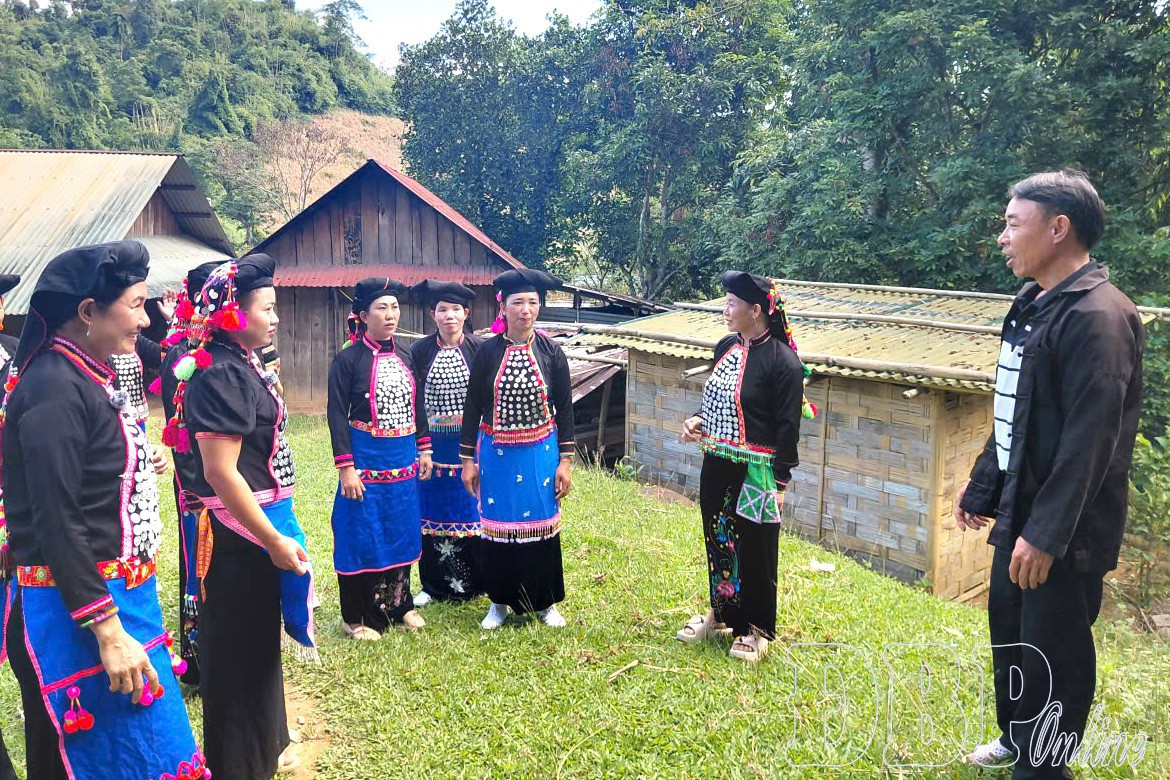
Hù Chà Khớ teaches learners the song “Brothers and Sisters Sing Under the Moonlight.”

In class, each song and dance tune is introduced in terms of both expression and cultural significance. For folk songs, participants are guided in traditional songs, performance melodies, lyrics, and contents preserved within the community. A prominent example is the song “Brothers and Sisters Sing Under the Moonlight” (Mỳ nhú, mỳ tu), carrying the content of courtship singing under the bright moon: “My love, let us go enjoy the moonlight together / the night of the 16th, the full moon has risen / … Brothers and sisters, let us hold hands / … Sing together and smile brightly.” Through the lyrics, emotions and sentiments in the spiritual life of the Si La people are conveyed in a rustic and intimate manner.
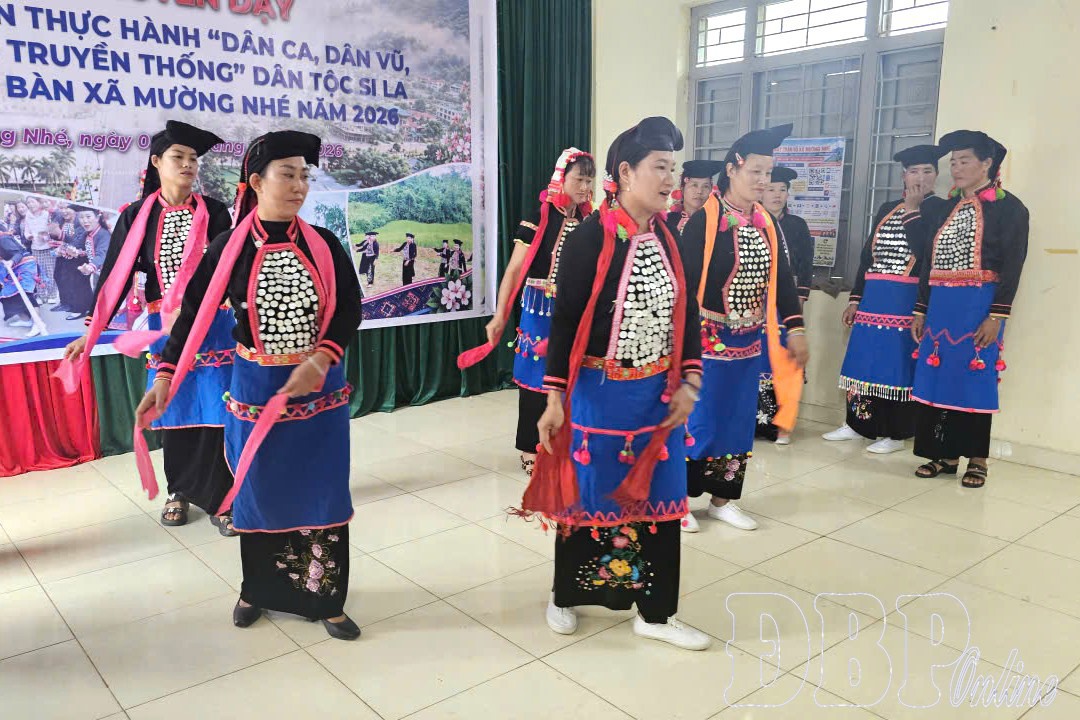
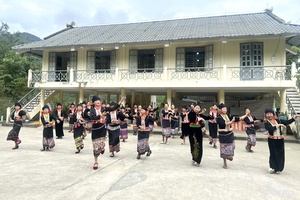
Learners practice the dance “Praising Costumes.”

Hù Chà Khớ shared: “Folk songs and folk music of the Si La people were handed down by our ancestors through many generations. I want to pass on to my children and grandchildren traditional songs and how to play our ethnic group’s hand lute and flute. Only when the younger generation knows how to sing and play instruments will traditional cultural values continue to be preserved and not lost.”

The classroom space is arranged flexibly, sometimes indoors, sometimes in the yard or on the porch. The learning atmosphere is lively with folk dances. Each dance introduced has its own content and performance style, reflecting distinctive features in the cultural life of the Si La people. A prime example is the dance “Praising Costumes” (Bì khứ chọ chừ), in which performers sing while dancing and use scarves as props. The dance content aims to praise the beauty of traditional costumes, detailing patterns and embellishments. Through each movement, aesthetic values associated with ethnic costumes are vividly portrayed, helping the younger generation understand the cultural beauty of their community.
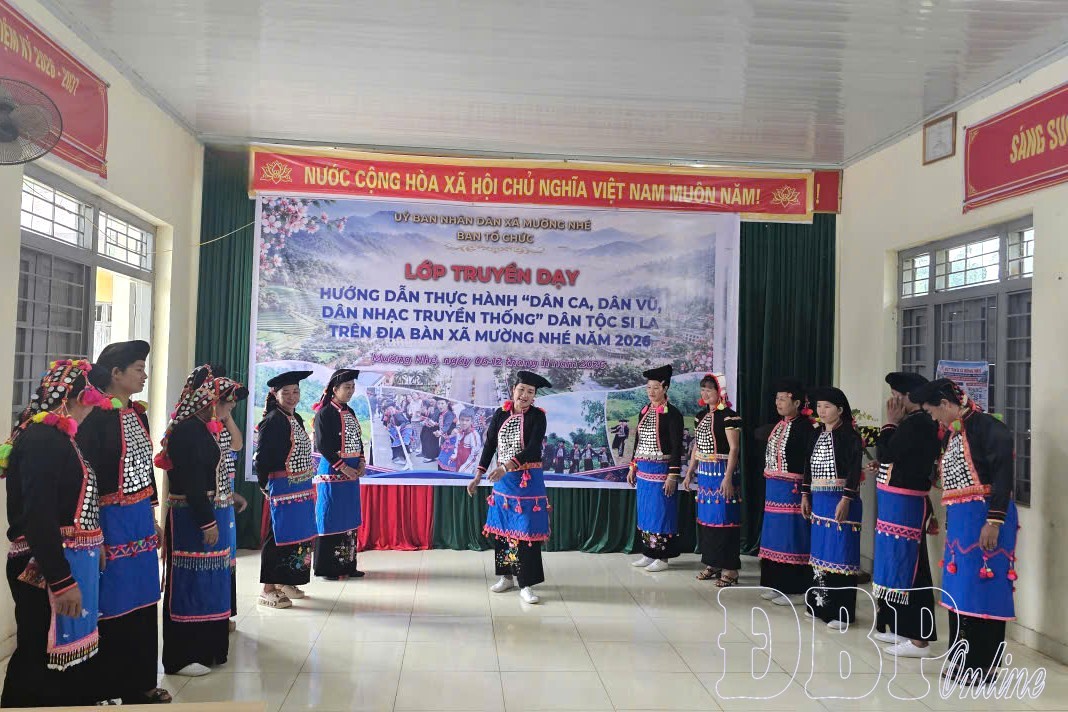
Pờ Cố Trái guides learners in practicing the dance “Quick Hands.”

The dance “Quick Hands” (Nhăm nhăm bơ) carries a tone close to productive labor. The movements simulate labor processes, expressing an encouraging spirit that urges everyone to work swiftly and enthusiastically. Body movements and rhythmic coordination among members create the distinctive character of the dance, while reflecting community solidarity and mutual assistance.

Pờ Cố Trái, an instructor of Si La ethnic dances, shared: “Dances of the Si La ethnic group all carry specific meanings, tied to daily life and labor. The costume praise dance depicts the beauty of traditional costumes, while the Quick Hands dance simulates productive labor. I guide the younger generation from basic movements to coordination so they understand and dance in accordance with our ethnic culture.”
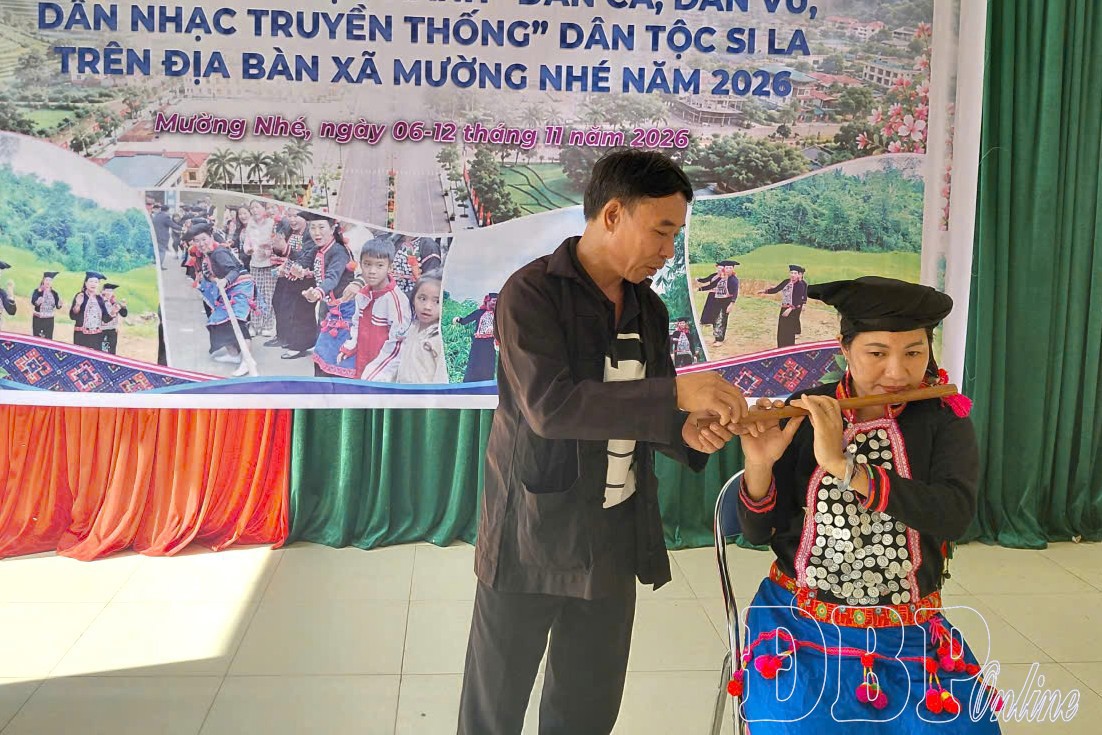
Hù Chà Khớ teaches a learner how to play the flute.

Beside folk songs and folk dances, traditional music is also integrated into the program. Learners are introduced to the hand lute (Tứ phè là thu) and the flute (Lạ pí), learning performance forms and how to use traditional instruments according to practical class conditions. Behind each instrument, melody, or dance lies cultural knowledge accumulated and preserved in community life. However, amid socio-economic changes, maintaining practice and transmission of traditional values faces the risk of fading away.

Hù Cố Oanh, born in 1993, from Nậm Sin village, said: “I attended the class wishing to learn more traditional folk songs and dances of my ethnic group to join in preserving them. Nowadays, fewer young people know how to sing and dance traditional Si La pieces. If the younger generation does not learn and practice, these cultural features risk fading and may even cease to be handed down. After the course, I will guide my children and other young villagers so that together we understand and preserve our ethnic culture.”
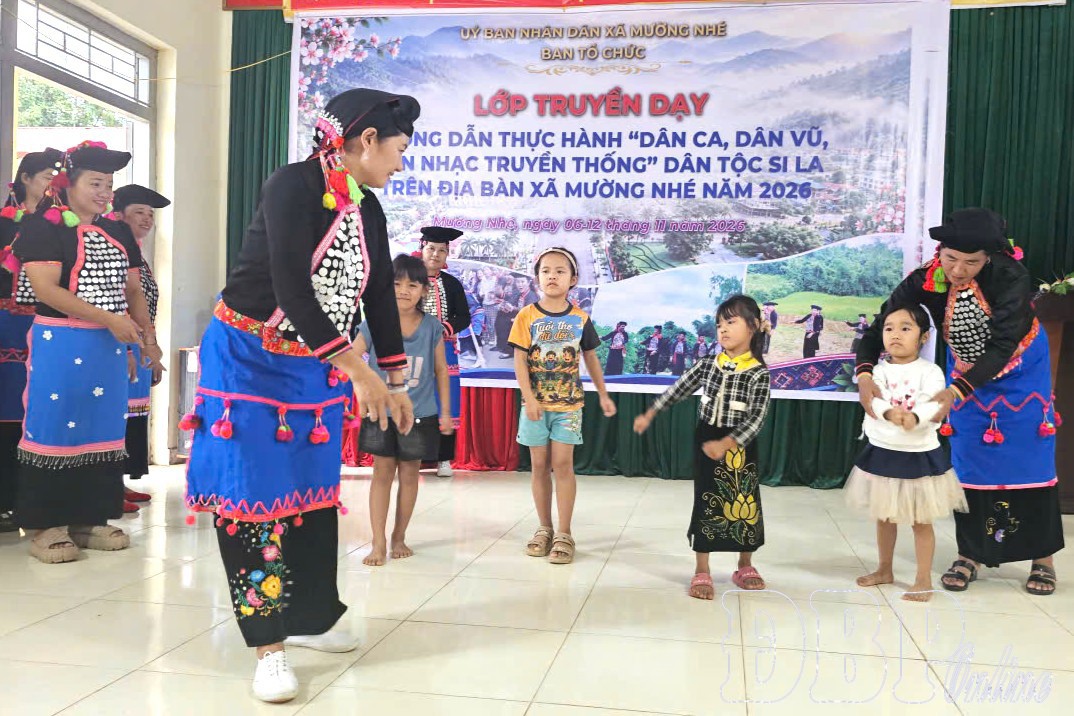
Individuals knowledgeable in folk songs and dances of the Si La ethnic group teach the younger generation.

Through teaching classes, cultural practitioners have the opportunity to directly transmit knowledge and skills; learners gain understanding of the origins, meanings, and performance spaces of heritage genres. Thanks to this, a core force capable of participating in organizing cultural and artistic activities in the village is gradually formed, helping maintain a heritage practice environment right within the community.

Values of folk songs, folk dances, and folk music are sustained sustainably when people understand, cherish, regularly practice, and proactively transmit them to subsequent generations. When courtship songs, costume-praising dances, labor-simulating rhythms, and the sounds of the hand lute and flute continue resounding in community life, Si La cultural identity will be preserved and promoted.

Anh Nguyễn
Comment

You have 500/500 characters left

Please enter 5 or more characters!!!

Recent news

  • 'Preserving dances and songs of Si La ethnic group

    Preserving dances and songs of Si La ethnic group

    CULTURE - SPORTS -
    ĐBP - Folk songs and folk dances are vital elements creating each ethnic group’s cultural identity. For the Si La people in Mường Nhé commune, traditional folk songs, dances, and musical instruments preserve memories of labor, daily life, and community affection across many generations.
  • 'Caring for people’s health

    Caring for people’s health

    SOCIAL AFFAIRS -
    ĐBP - Caring for, protecting, and improving people’s health is an important task, contributing to ensuring social security and elevating the quality of life.
  • 'Building consensus to move projects forward

    Building consensus to move projects forward

    ECONOMY -
    ĐBP - Land clearance is a critical stage in construction investment projects, directly affecting their implementation schedules. To accelerate work on major projects, local Party committees and authorities are mobilizing the entire political system, stepping up public information campaigns and dialogue, and promptly addressing difficulties and concerns at the grassroots level. These efforts aim to build public consensus, speed up site handovers and enable projects to move forward sooner.
  • 'Awakening Hmông cultural stream

    Awakening Hmông cultural stream

    CULTURE - SPORTS -
    ĐBP - Every afternoon in Mường Toong, the sound of the panpipe blends with flutes, songs, and traditional dances. From the dedication of artisans to the continuity of the younger generation, the fine traits of Hmông culture are preserved, handed down, and spread throughout the daily life of people in the border region.
  • 'Fast-tracking Điện Biên’s key development projects

    Fast-tracking Điện Biên’s key development projects

    ECONOMY -
    ĐBP - In 2026, Điện Biên is implementing numerous projects of major significance to its socio-economic development. Construction progress and capital disbursement have improved, although performance varies considerably from one project to another. While some are largely on schedule, many key projects continue to face obstacles, requiring project owners and relevant agencies to take more decisive action to ensure implementation targets are met and the province achieves its 2026 public investment disbursement goals.
  • 'Opening avenues for cooperation between Điện Biên and British enterprises

    Opening avenues for cooperation between Điện Biên and British enterprises

    ECONOMY -
    ĐBP - On November 25, in Hà Nội, Trần Tiến Dũng, Member of the Party Central Committee, Secretary of the provincial Party Committee, and Head of the provincial National Assembly Deputy Delegation of Điện Biên province, worked with the British Chamber of Commerce in Việt Nam (BritCham Vietnam) to discuss directions for cooperation, investment, trade, and tourism promotion, and business connections.
  • 'Enhancing official capacity to meet task requirements

    Enhancing official capacity to meet task requirements

    NEWS - POLITICS -
    ĐBP - Amid increasingly demanding task requirements, Điện Biên province focuses on innovating training and fostering work, improving professional qualifications, operational expertise, and political resolve for its contingent of cadres, civil servants, and public employees. Thereby, it step by step builds a contingent of officials with integrity, capacity, and responsibility, meeting task requirements in the new situation and contributing to enhancing the efficacy and efficiency of the political system.
  • 'Mường Ảng green-skinned pomelo targets sustainable markets

    Mường Ảng green-skinned pomelo targets sustainable markets

    ECONOMY -
    ĐBP - With about 70 ha planted with green-skinned pomelo and an estimated output of 400 tonnes per year, the area of Mường Ảng, Nà Tấu, Búng Lao, and Mường Lạn communes has step by step tapped economic efficiency from green-skinned pomelo. However, for stable development, improving quality, building brands, and expanding consumption markets remain issues requiring attention.
  • 'Keeping Điện Biên’s heritage alive for generations

    Keeping Điện Biên’s heritage alive for generations

    CULTURE - SPORTS -
    ĐBP - Điện Biên is home to a rich tapestry of cultural traditions aHmông its ethnic communities. From the rhythmic Thai xòe dance and the sound of the Hmông flute to traditional festivals and brocade weaving, each heritage embodies stories of history, customs and community life. In today’s rapidly changing world, preserving these traditions means more than safeguarding the past. It also means ensuring that cultural heritage continues to be practiced, passed down and celebrated in contemporary life.
  • 'Hoong Lếch builds a new life

    Hoong Lếch builds a new life

    SOCIAL AFFAIRS -
    ĐBP - Hoong Lếch village, Thanh Nưa commune, was merged from Hoong Lếch Cang and Hoong Lếch Cuông villages. As one of the long-standing settlements of the Thái ethnic people in the Mường Thanh valley, the residents of Hoong Lếch actively preserve and promote the unique traditional cultural values of their ethnic group.
  • 'Điện Biên races to accelerate public investment

    Điện Biên races to accelerate public investment

    ECONOMY -
    ĐBP - Public investment disbursement is a key driver of economic growth, infrastructure development and the expansion of development opportunities. With the year drawing to a close and substantial funds still to be disbursed, Điện Biên province is stepping up efforts to address bottlenecks and accelerate project implementation. Provincial authorities have called on departments, local governments and project owners to take decisive action, with the goal of disbursing 100% of the allocated capital.